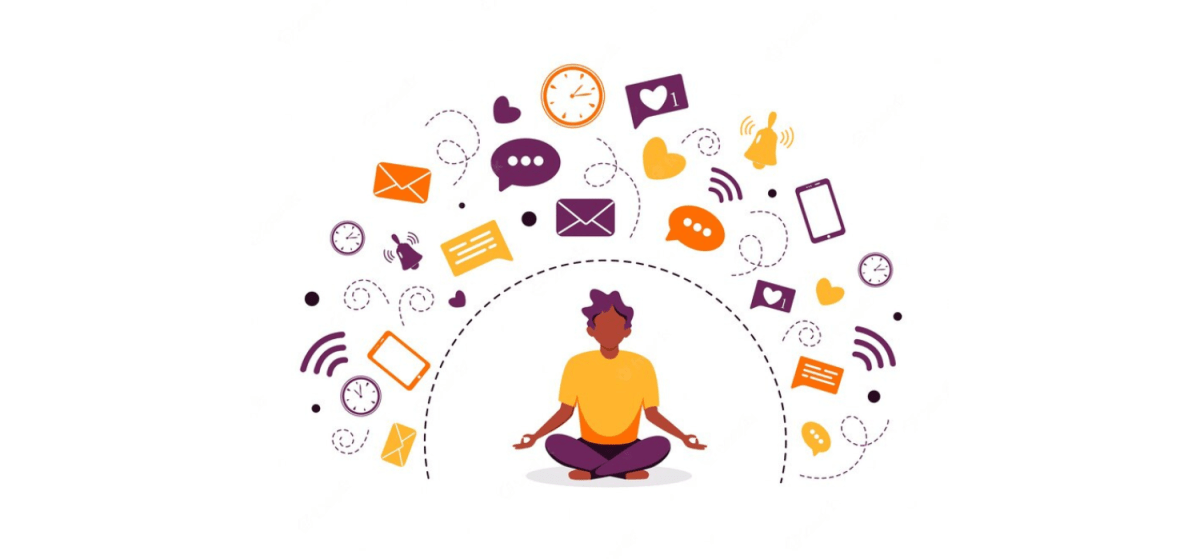
What is the first thing that you do after waking up? Do you get a glass of water, stretch your muscles to ease the tension and soreness, meditate to calm your mind, start the day by basking in the sun, or reach out to your mobile phone?
Most of us even wake up listening to the resounding alarm on our phones. Then comes the buzzing notifications. Flipkart is having a sale; it’s your friend’s distant cousin’s birthday and messages from your friend. Oh, and there is an email from your professor, manager, and peers.
I know it is relatable for most of you. It is overwhelming to reply to all the messages, send reactions to your friend’s Instagram stories, and acknowledge all the emails you have received. People expect you to be available online round the clock, which can be tiring mentally and physically. This has resulted in a large number of people trying a digital detox.
But what is digital detoxing? What are the benefits of detoxing, and how do we practice it? Let me try to answer these questions for you so that you can consider them before deciding if digital detoxing is suitable for you or not.
Digital detoxing is a period of time for disconnecting from tech devices such as smartphones, tablets, television, computers, and social media sites. It enables a person to focus on real-life social interactions without distractions and can help release the stress brought on by continual connectivity to digital devices.
Being connected and involved in the digital world has become essential to everyone’s life. It has taken the time that we could have devoted to ourselves. Our device use has become excessive that we are addicted to it. It is adding a lot of stress to our life. The constant desire to check social media, emails, and messages is to blame for the majority of this stress. Heavy device use, especially before bedtime, can affect sleep quality and quantity. In-bed social media use increases the likelihood of insomnia and anxiety. This, in turn, affects our mental health. We might start comparing our lives to our friends, strangers, and celebrities based on the brief episodes of their lives on social media. It creates a perception that others lead a richer, more fulfilling, or thrilling life than ours. It might also trigger a fear of missing out, known as FOMO. Constant connectivity can feed this fear that you are missing the experiences that everyone else is having. This disappointment in one’s life makes people strive for more attention and recognition, and unfulfillment will lead them to severe depression or other mental health issues.
Practicing digital detox is one way to keep yourself away from all this stress and keep a check on your mental health but the real question is how we will detach ourselves from devices in an increasingly digital world. Some suggest that a proper digital detox involves complete abstinence from all digital devices for long periods of time; however, it is crucial to adapt your gadget use to your needs and way of life. It is not about having a complete separation from the digital world. It is often more about setting boundaries and ensuring that you are using your devices in a way that benefits, rather than harm, your emotional and mental health.
As the first step, you have to set realistic goals. For most of us, completely detaching from the digital world might not be possible, especially when our work or studies demand us to stay connected online. In such situations, the key is understanding your priorities and drafting a detoxing plan that works for your work schedule and life. If your job demands you to stay connected during the day, pack a time in the evening when you can turn off your devices. It will help if you define or set the timings when these digital connections are allowed to intrude into your life. Setting such boundaries can ensure that you can involve in real-world activities free of digital distractions. Another way to kickstart your digital detox is by turning off the push notifications on your phone. Instead of checking the notifications whenever it comes, you can allot a certain amount of time, around 25 minutes, to catch up with these. You can start practicing digital detox in the aforementioned ways. Further, you can incorporate a digital fast, recurrent digital abstinence, or a specific detox like restricting the use of an app or a site that consumes much of your time.
As I said, digital detoxing has no hard and fast rules; it can be whatever you want it to be and of any form. It is all about setting your priorities right. It can be difficult for some to go device-free. We ought to remember that it can be a rewarding experience that will improve your understanding of your relationship with your devices and teach you how to be more present and mindful in all other activities in your life.

 The IIM Kashipur Blog