HRhythm - The HR Club | IIM Kashipur

Human Resources is one of the most sought-after domains for students who enrol every year to pursue an MBA. HRhythm-The HR club of IIM Kashipur comprises aspiring HR professionals, focused on providing HR-related content and making students abreast of the current industry practices. Hence, they leave no stones unturned to make the students aware of the opportunities and competition present in the domain in terms of B-school and corporate competitions.

HRhythm conducts a plethora of activities to cater to the interest in the Human Resources domain. The club has adapted to changes in the learning behaviour. It continues to implement them to efficiently impart knowledge and develop the interest of people in the field of Human Resources.

HRhythm conducts events encompassing various HR themes to accomplish the objective of amassing the HR enthusiasts nationwide by providing them with a platform for showcasing their HR skills. Apart from discovering and honouring the country’s talents, these events also provide a conducive environment to sharpen the ‘HR skills’. Some of the famous events by the club include – 

No alternative text description for this image
  1. Scribble Dribble

Scribble Dribble is a Pan India article writing competition which encourages the bright minds of Indian B-Schools to draft an innovative article pertaining to the domain of Human Resources. It is conducted every year with an additional attribute that makes the event more stimulating than before. Both undergraduate and MBA students, across the country participate in huge numbers with great enthusiasm to demonstrate their writing skills and HR acumen. This year, a quiz-round was added to the existing competition structure, before the article-writing round to test the basic understanding of the HR concepts in a participant.
2. Pragyan

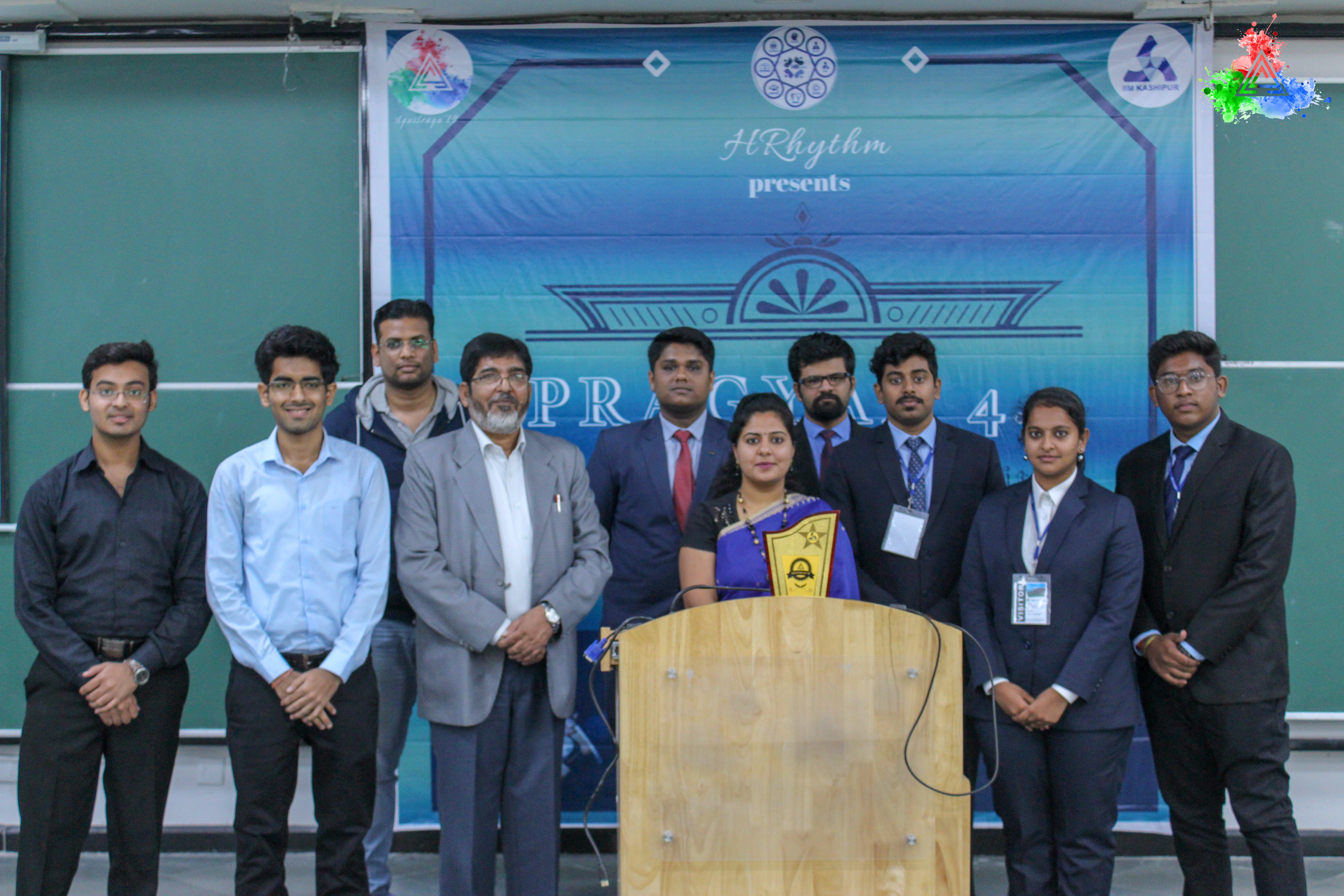
This is the annual flagship Case Study Competition hosted by the club. The participants are given a set of real-world scenarios that reflect the current problems faced in the corporate world, specifically in the HR domain. The motive is to let the participants take a peek into the state of affairs in most organizations and to make them savour the essence of solving simulated real-life corporate problems.

3. HResilience

In HResilience, the participants wear the hat of Labour Union Leaders and Employee Relation Manager, to showcase their bargaining expertise, problem-solving skills, and empathy for solving the persisting employee problems via reaching an amicable solution at the end. This event is also conducted to provide students with the industry conflicts that emerge in real case scenarios and apply HR concepts to come up with the optimum solution.
4. Negotiator 

This event encourages students to display or showcase their negotiation skills when confronted with a real-life business case. ‘Negotiator’ allows participants to be in the shoes of the CHRO and provides them with a platform to present their solution for the problems prevailing in the organization. It challenges their critical thinking, decision-making ability, analytical skills, and emotional intelligence to come up with the best possible solution in the given scenario.

The club utilizes its social media handles as a platform to impart knowledge about the HR world, with an additional essence to the content to make them cater to an average individual with even little to no interest in Human Resources. The club has consistently posted articles, and other relevant content on social media handles to promote students’ interests and keep them updated with the relevant information. Following is a walk-through of the HRhythm’s efforts:

  • Interactive content in the form of small videos and slides facilitates human resource learning lucidly. Audio-visual content aims at learning, brushing, implementing HR concepts.
  • A regular series of content uploads in the form of infotainment. Articles based on an amalgamation of HR concepts with mainstream Pop-Culture to generate interest in the student community.
  • Personality development and interview tips which help students to survive, sustain, and flourish in today’s competitive environment.
  • To complement classroom learning with corporate implementation, HRhythm is currently working towards organizing a series of interviews with industry experts. A summary of the same would be shared with the students in the form of a write-up or video. Inputs from industry experts will help students in gaining insights into the real-life HR world.

These efforts have not only increased the club’s social media presence but most importantly, it has been able to spark the desire inside many people towards the HR domain and it continues to do so.

Also, the team invites leaders from the corporate world to share their understanding of the domain and talk about the experiences that shaped their career as a young HR aspirant. They believe students should always perceive the reality and not illusions, which reflects in the engagement activities carried out by the club. Knowledge sharing sessions by Executive Members have been conducted to make students aware of recent happenings in the field of Human Resource Management, which will help them in acing selection processes for HR roles.

HRhythm also undertakes the responsibility of representing IIM Kashipur in the Human Resources domain and this involves maintaining relations with HR Clubs of other premier B-Schools across the country. This, in turn helps the students at IIM Kashipur to seamlessly participate in HR events of these institutes and thus creating synergy. Such relations would provide mutual benefits as students can participate, learn and win competitions. With this, the club has been able to establish the flag of IIM Kashipur in the sphere of human resources.
Unraveling the Natural Gas Industry with Mr. Shikhar Gautam | Alumnus, IIM Kashipur

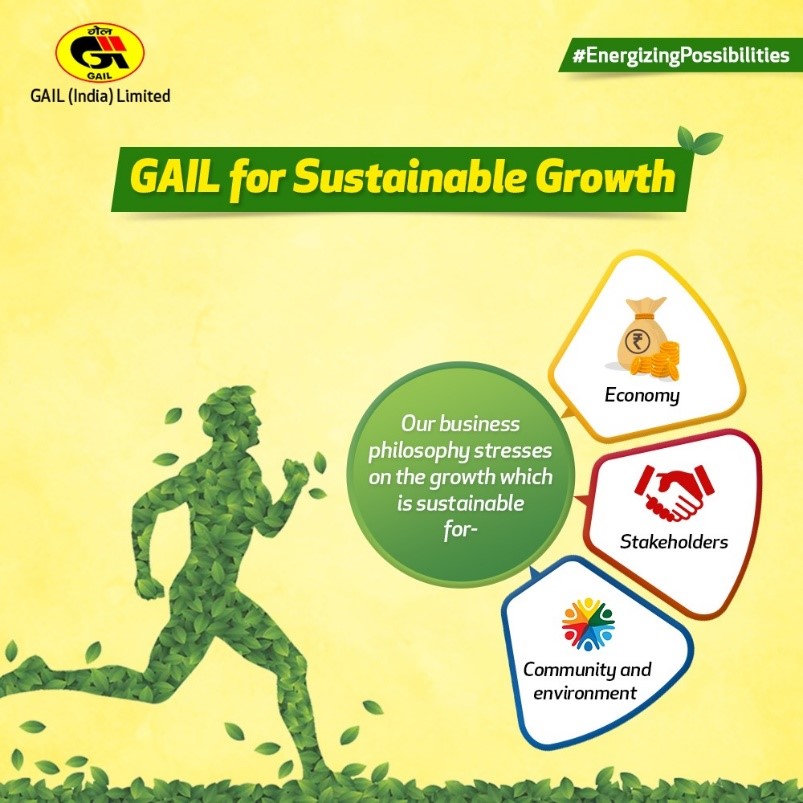
Mr. Shikar Gautam, Alumnus of IIM Kashipur who has completed his PGP in the year 2017 is currently holding the position of Senior officer at GAIL (India) Limited. The Alumni Relations Committee of IIM Kashipur has served as a bridge to beget  valuable insights about the Natural Gas Industry from our erudite alumnus. This article covers the holistic perspectives on various questions dealing with the Natural Gas Industry through the lens of GAIL (India) Limited.

Q. Why is there so much accentuation around a gas-based economy?

The government released Natural Gas Marketing Reforms in October 2020 to work in that direction, how will it boost natural gas marketing and increase domestic production, while ensuring a fair competitive market.

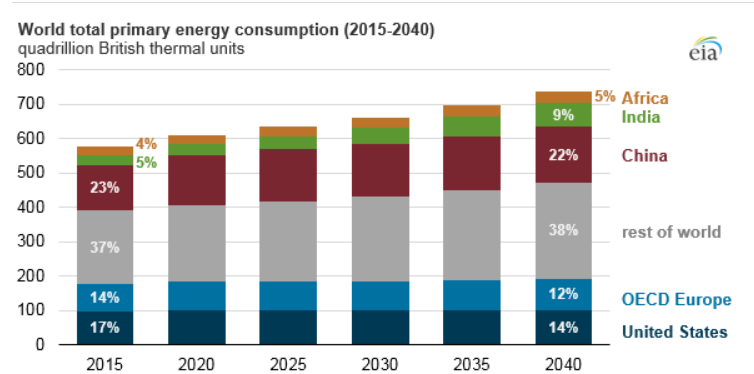
India comprises 17.7 % of the world population but only consumes about 5.8% of the total energy. As per the World Bank, the world average per capita energy consumption is 3 times over India’s energy consumption. Countries like the United States, China with 10X per capita energy consumption as compared to India are still adding energy capacities to their existing portfolio and are shifting towards cleaner energy alternatives.


India’s energy consumption has doubled since 2000 yet around 240 million people remain without electricity. To cater to and satisfy the energy requirements of the country, India’s power system needs to quadruple in size by 2040 and focus on the choice of fuel it uses. To fulfill the rising demand and restrict the use of polluting fuels like coal and oil, India needs to plan and strategize the right energy mix which can sustain the changing environment. In 2018, global wind power capacity grew 9.6% and solar power accounted for about 2% of global power requirements. 

India’s endeavor towards a Gas Based Economy and natural gas has been identified as a sustainable option to create a balanced Indian energy basket. Hydro and nuclear plants are usually operated at 100 % capacity therefore it is not feasible and recommended to operate them under capacity or to shut them on/off frequently. Due to the unrivaled capacity of gas-fired power plants to ramp up and down quickly, gas-fired power generators are much more adept at adjusting output based on residual demand resulting from wind and solar power than other hydrocarbons such as coal. Accordingly, natural gas electricity generation is increasingly employed to support wind power as the latter continues to grow. As the market share of wind power increases, the amount of fuel needed to provide backup to wind will also increase. This means that natural gas power, wind, and solar power are likely to be tightly linked in the short-to-medium term.


By 2040, Electric Vehicles which are thought to be competing against Natural Gas Vehicles would comprise 55% of new car sales and 33% of the global car fleet. Electrified buses and cars would displace a combined 7.3 million barrels per day of transportation by 2040. In order to shift to a cleaner energy system and cater to such a volume of electricity requirement, it can be deduced that the EV charging stations would require electricity from cleaner sources keeping in mind the emissions from the use of coal in electricity generation. With the natural gas infrastructure in place, the future electricity requirements can be fulfilled by Natural Gas through large power plants as well as small captive plants at commercial parks/ residential complexes where natural gas can be directly used at the point of electricity consumption.  A pilot plant of 10 MW capacity is already operational and supplies electricity to DLF’s Cyber City, a major commercial centre housing multinational corporations and leading business house.

Natural Gas Marketing Reforms in October 2020:

Government now also allows pricing freedom for new and upcoming fields to domestic producers as the existing domestic pricing formula is making natural gas production economically unviable. The system was based on the crude price indices of the US, Europe, Canada, and Russia. This system was becoming irrelevant day by day and needed to be scrapped.  

The objective of the policy is to prescribe the standard procedure to discover the market price of gas to be sold in the market by gas producers, through a transparent and competitive process, permit Affiliates to participate in the bidding process for the sale of gas, and allow marketing freedom to certain Field Development Plans (FDPs) where Production Sharing Contracts already provide pricing freedom.

Oil Secretary recently revealed that govt. is planning some more reforms in the upstream sector to make it attractive for investors

Q. Can you please shed some light on the recent GAIL project of the Kochi-Mangalore which was virtually inaugurated by PM Narendra Modi?

The 444-km long natural gas pipeline was launched in 2009 at an estimated cost of Rs 2,915 crore and was to be commissioned in 2014. But opposition on safety and commercial grounds wherein the land price was the main hurdle, both from political parties and the public, ensuring that the project lingered on. This led to the project cost nearly doubling to over Rs 5,750 crore.

Situations like these are common in projects which involve dependency on external agencies for their completion.

Some common problems include:

  • Difficulty in route planning because of the growing population 
  • Farmers demanding higher land compensation, route diversion, etc.  
  • Records of ownership and land possession certificates are not easily available
  • Inadequate Mobilization of construction equipment, Specialized equipment
  • Like in this case: Resistances of farmers, Farmer bodies – instances of associations, PIL, litigations, etc.

GAIL was ready to complete the project this August, but a 540-meter stretch across the Chandragiri River became a nightmare. The project crosses as many as 96 waterbodies south of the Chandragiri River. So as a way out, GAIL reduced the diameter of the pipe to a fourth — from 24 inches to just 6 inches now. But this is only a temporary arrangement and the work to lay the 24-inch pipe will resume soon 

Today the pipeline supplies 3.8 million cubic metres of gas every day to industrial and residential customers in Kochi and is set to cross 4 million cubic metres soon in the city itself, while Mangalore has a potential of 2.5 million cubic metres per day

With the commissioning of the pipeline, gas demand in the state will touch 80-90 million cubic metres per annum from 60 million cubic metres now.

The pipeline is also a big boost to the struggling Kochi LNT Terminal of Petronet which has a capacity of 5 million tonne annually but 90 percent of capacity has been idling due to the delay in completing the Kochi-Mangalore pipeline and with the commissioning the capacity utilization of the LNG terminal will go up to 25-30 percent.

Apart from huge environmental gains, the state can also gain monetarily as it can get up to Rs 1,000 crore by way of taxes alone. Supplying to the Kochi region alone helps the state earn over Rs 340 crore annually in tax revenue.

Q. GAIL won the Leader Award at Frost & Sullivan and TERI’s Sustainability 4.0 Awards 2020. Where does sustainability stand for GAIL, especially in an industry where resources can be easily exploited.

Talking about sustainability from GAIL’s point of view. GAIL has engraved the word “Environmental Responsibility” in the company’s vision statement.

GAIL has a dedicated Sustainability department working towards a Sustainable Future.

The company has been disclosing environmental, economic, and social performance since 2011 through annual sustainability reports. Through sustainability reporting, the company analyses its strategy, set goals and targets, measure and advance performance, and ultimately develop a sustainable business model that adds value to the society

Along with Frost & Sullivan and TERI’s Sustainability 4.0 Award, GAIL also received FTSE4. Good Index series certificate in June 2020.FTSE4Good is a global sustainable investment index series, designed to identify companies that demonstrate strong Environmental, Social, and Governance (ESG) practices measured against international standards.

Apart from this, some Initiatives of GAIL towards sustainability:

  • Hawa Badlo (Change the Air) is a one-of-a-kind initiative by GAIL. It is a campaign to drive behavioral changes in making our cities air pollution-free. The campaign has digitally touched more than 100 million lives, enabling people to make a direct link between their energy consumption patterns and the impact on their health and the environment. The goal is to motivate people to voluntarily switch to more economic and environmentally friendly ‘natural gas’.
  • SATAT’ (Sustainable Alternative Towards Affordable Transportation) is a scheme launched by the Ministry of Petroleum and Natural Gas to promote Compressed BioGas(CBG) as an alternative, green transport fuel and is being implemented by GAIL
  • THE estimated CBG Potential from waste/biomass in India is 62 MMTPA. Under SATAT, it is planned to target 25% of this potential ~ 15 MMTPA by 2024 through 5000 CBG plants (~ 8 TPD ~ 10000 SCMD). CBG shall be produced by Entrepreneurs and OMCs, GAIL along with it’s Associates and Joint Ventures will provide marketing tie-up to CBG Entrepreneurs

Other environmentally conscious decisions include –

  • Having more than 40% of GAIL landholdings covered by green belts and water bodies across all the locations
  • GAIL has carried out multiple studies to assess the potential for the installation of solar power plants at its sites pan India. Implementation of solar power is in progress at shortlisted sites.
  • GAIL has also embarked upon the journey of adoption of the GreenCo Rating. This rating helps in making products, services, and operations greener.
  • GAIL revised its Sustainability Policy considering the new national and international developments such as UN Sustainable Development Goals, India’s Nationally Determined Commitments among others.

When we talk about renewable energy GAIL has a portfolio of-

  • 130 MW – Renewable energy portfolio (118 MW– Wind and 12.26 MW – Solar) 
  • 120 Sustainability projects – Investment of INR 80 crore 
  • Renewable energy generation– 1,76,200 MWh (Moving towards renewable energy)

Econs – The Economics Club | IIM Kashipur

Image may contain: text that says "ECONS ECONOMICS CLUB IIM KASHIPUR"

Econs – the Economics Club of IIM Kashipur is one of the seven academic clubs of IIM Kashipur. Econs bears the responsibility of increasing awareness, generating inquisitiveness, and fostering passion among the students and faculty in the field of economics. 

The economics club was founded in the year 2019 as an interest-based club to impart knowledge, invoke discussions and conversations pertaining to economics, and highlight its importance and linkages to different business domains. Late American scholar Warren Bennis said that “Success in management requires learning as fast as the world is changing”. Keeping up with this notion, the club has found it extremely pertinent for aspiring managers to be aware of “Economics” affecting their daily lives and make them better prepared to tackle business situations efficiently. Since its inception, Econs has gradually attained the status of a core academic club and has carried out a plethora of activities in this direction.

Image may contain: 1 person, sitting, text that says "Budget Highlights the current fiscal. For FY21, Rs 4.99 lakh crore; FY20 fiscal deficit revised .8% from 3.3% fiscal deficit ena 3.5% Net market borrowing for FY20 crore. Nominal GDP growth 2020-21 estimateda 10% Receipts 2020-2 estimated Rs 22.46 lakh crore. Expenditure the year 2020-2 Rs 30.42 lakh crore. FY21 it's pegged"

In the first year of its functioning, the club conducted ‘Arthashastra’, the flagship event of Econs, during Agnitraya 2019, which saw participation by around 450 teams from various B-schools across India. In this competition, different teams designed a feasible economic policy of their choice that resonated with India’s ultimate goal of achieving a five trillion-dollar economy. Along with that, Econs also conducted an ‘Infographics Making Competition’ covering topics like the future of banking, green Economy, and the effects of immigration on the Indian Economy. Econs also conducted the ‘Union Budget Prediction Competition’ wherein the participants had to guess highlights of the Union Budget and the participant with the closest prediction took away the prices. The event was welcomed with utmost enthusiasm.

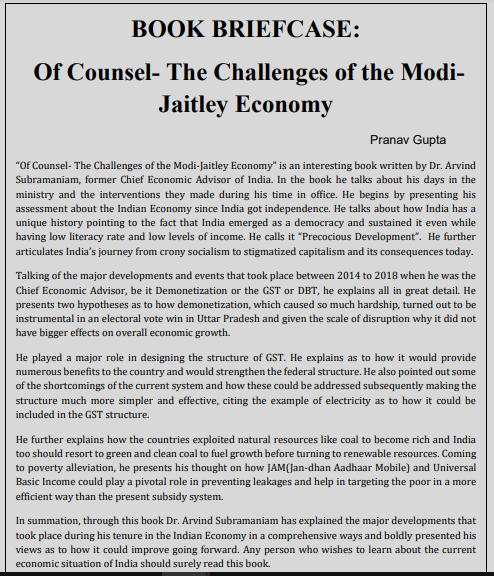
The club makes the students aware of the domain by posting short articles bi-weekly through its social media handles on Twitter, Instagram, Facebook, and LinkedIn. For the academic year 2019-20, the posts have covered topics like RBI monetary policy highlights, US elections impact on the Economy, and Atmanirbhar Bharat 3.0 to name a few. Along with the weekly posts, social media handles also feature monthly newsletters. The club shared this academic year’s first newsletter for the month of October 2020. The comprehensive issue featured the fragile state of the NBFC sector in India along with articles on comparing the Chinese Economy with the Indian Economy and giving a brief about the economic aspect of “Stubble Burning”. With an objective to inculcate the interest in reading in the field of economics, the newsletter also featured a review of a famous book ” Of Counsel-The Challenges of the Modi-Jaitley Economy” written by our former Chief Economic Adviser, Government of India, Mr Arvind Subramanian. Along with these, the newsletter had lighter sections like “Jargons” and “Current Affairs” too.

The club provides a platform for all the people to discuss, debate, and design on the current economic developments and government or regulatory policies and announcements. Throughout the year members of the club also conduct knowledge sharing sessions through case studies, quizzes, and games to instil and fuel a growing interest among students to understand and analyze their theoretical concepts towards practical applications.

Image may contain: one or more people, text that says "Conscientia 2020 27 SEP Dhiraj Nayyar Director, Economics & Policy Vedanta Resources Limited Former- Officer Special Duty Head, Economics, Finance Trade, NITI Aayog 4 PM LEADERSHIP TALK SERIES ECONS IIM KASHIPUR vedanta transforming elements MKASHIPUR KASHIPUR"

On the corporate front, the club extensively interacts with experts and industrial stalwarts in the field of business and economics to share insights regarding the latest happenings through a seminar or a lecture. Econs became the first academic club in IIM Kashipur to conduct a guest lecture in Conscientia 2020 leadership talk series. The eminent speaker of the guest lecture was Mr Dhiraj Nayyar, the Chief Economist of Vedanta Group and a former member of NITI Ayog, who delivered an insightful session on the relevance of economics for the managers.

Through its numerous strides in continuously highlighting different aspects of economics, Econs has achieved a distinct recognition in keeping up with its mission and being a forerunner for the same. The aim is to increase awareness about Economics among students. Our mission is to inculcate interest among the students of IIM Kashipur in economics and help them understand how economics is interlinked with various fields. We work to bring together all the economics and business enthusiasts inside and outside the campus together to discuss and debate the major economic events of the world to foster new ideas for the future.

Consilium - the Consulting and Strategy Club | IIM Kashipur

Opportunities! “Consultants must find newer opportunities. If you can’t find one, create one.” This is precisely what Consilium strives to do – creating opportunities!

Consilium, the academic club of IIM Kashipur deals with Strategy and Consulting aspects of  Management. Since its inception, Consilium is determined to assist the students with preparation, comprehension and expertise in this domain. The club continuously collects and updates relevant resources to enhance the knowledge of the community. With the changing business dynamics across the globe and shift in the recent global order, Consilium ensures that the students are equipped with the latest trends and have hands-on learning experience throughout the academic year.

Established with the vision of nurturing students to become the future leaders in the domain of consulting and business strategy, Consilium has been consistently working in this direction by conducting case study competitions, knowledge sharing seminars, guesstimate workshops and the most anticipated-industry interactions.

The Domain

“Without strategy, execution is aimless. Without execution, strategy is useless.” – Morris Chang

Consultants often find themselves interacting with different verticals and domains of the business. It requires solving problems not just through single domain optimization but via a collective approach encompassing all domains. The problems can be visualized with say an example where an organization wishes to analyze the pros and cons of venturing into a new market, which will require an understanding of marketing, finance, supply chain, operations, and a fair knowledge of relevance between all of these. That is where strategy comes into play. The methodology does not limit to one vertical but through a broader lens for looking at multiple domains.

Roadmap

The journey with Consilium starts with the very first month in the MBA curriculum at IIM Kashipur, where students are provided with the introduction to Strategy Frameworks, Consulting interview questions and reference materials. These resources assist students not just to gain a perspective in the domain, but also to comprehend highlights of the practices that are used in further stages.

Moving forward, Consilium provides a variety of hands-on opportunities through case competitions, business simulations, questionnaires and industry connections. The club is managed by Executive members who have demonstrated the knowledge and expertise at National level having a flavour of participating and winning reputed B-school and corporate case study competitions like Flipkart Wired, Thoucentric Bottoms Up, etc.

Consilium Insider

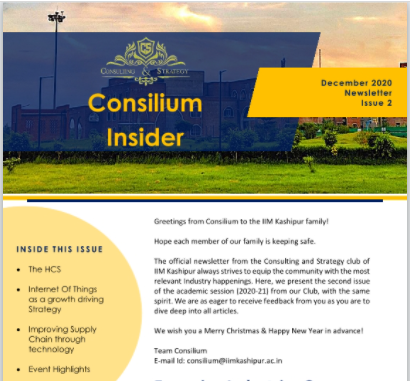
Consilium’s monthly newsletter shares the best practices, strategies and changing dynamics from different industries ranging from sports, FMCG, Petrochemical to latest Industry 4.0. Further, the newsletter comprises frameworks and their usage in real-life business problems from these industries. The club also ensures that the resources are not just limited to a monthly basis, and provide consistent updates through our social media channels.

The theme for the November Newsletter had been Covid-19 impact on business strategies covering the impact on the Sports and Oil industry along with the role of Digital trends in business expansion.

ForeSight Series

“It’s not about money or connections – it’s the willingness to outwork and outlearn everyone…And if it fails, you learn from what happened and do a better job next time.” – Mark Cuban

In Foresight Series, the academic experience in consulting and strategy is tested through gamified quizzes, guesstimates and infographics. Foresight comprises three events throughout the year, offering a constant opportunity to compete with peers and test their mettle in solving real-world problems. Due to pandemic, Foresight 4.1 was conducted online with a mix of quiz to cover domain knowledge and guesstimates problems to prepare students for interviews.

Industry Connect

Consilium brings together experience from industry leaders in the consulting and strategy domain. Students get to explore from real-life experiences of consultants and explore insights from the challenges they face, the thought process behind critical decisions taken and the key takeaways from years of experience in the domain.

EndGame

EndGame is a national level simulation designed on a business scenario wherein the students walk the consultants’ shoes and apply their knowledge to compete with peers from other B-schools. It involves the application of academic knowledge from various facets of decision making, marketing and economics. It also tests the strategic forecasting and understanding of competitive dynamics in real-life situations. Further, the event demonstrates the presence of zero-sum game, to create similarity with as much real-world dynamics as possible.

Consulting Knights and Ranbhoomi

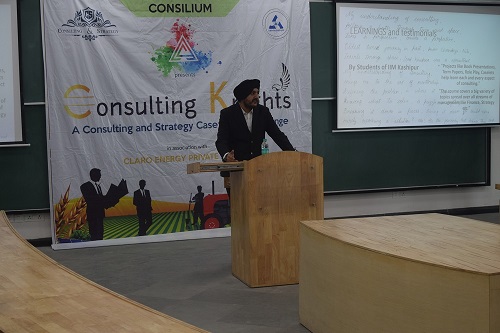
Consulting Knights and Ranbhoomi provides a diverse and enriching experience in solving cases at Pan-India level. Students utilize their knowledge of all disciplines to prepare strategies for business cases in teams. This event is organized in collaboration with various organizations like Havish M Consulting, to get an essence of existing business problems.

Consilium Conversations

In the academic year 2020-21, the club initiated a strategy-talk series “Consilium Conversations” wherein it invites budding entrepreneurs and industry stalwarts from various domains for a conversational interview. It focusses on unearthing the strategies that go behind creating a successful business or project. The motive behind the series is to inspire the students to develop strong critical-thinking skills required in strategy & consulting roles and learn about the latest developments in the industry. With each initiative, Consilium creates a robust environment for the students to learn and challenge themselves in the field of consulting and strategy.

How National Winners of case study competitions approach the case!

“I wish to improve my skill set and learn from real-life scenarios.”

The statement mentioned above is one of the most common reasons why candidates wish to pursue an MBA degree.

Immersed in an arduous curriculum following a case-based pedagogy, a B-school graduate learns to look at various challenges an organization faces from multiple angles, analyze potential areas of improvement, and design campaigns or reforms accordingly, all within the confines of the classrooms. These case-study competitions thus serve as arguably the best means for B-School students to satisfy their ultimate objective of solving live industry problems, honing their skillset, and applying all that they have learned in a classroom environment.

Cracking case study competitions comes with its own thrills. Working in teams with people possessing diverse skillsets, brainstorming together to understand the problem statement at depth, formulating the feasibility of alternative solutions, and finally presenting your best solution in front of current business leaders. All this fills you with a rush of adrenaline which remains unparalleled and functions as a vital cog in the holistic development of candidates as a future business leader.

As important as it is to understand the objectives of participating, it is equally important to choose the competitions you wish to ace. For those who are beginning their journey of case study competitions, the best thing you can do for yourself is to grab every opportunity that comes your way. It is imperative to experience problem statements from different domains and analyze the feasibility, scalability, and practicality of your solutions to maximize your learnings from respective domains. As you learn to analyze your performance in each domain better, you can play to your strengths and give preference to competitions that lie in your area of strength. However, the general advice here would still be to continue attempting cases from various domains as it helps in the overall development across multiple disciplines, which is the ultimate objective behind participating in such competitions.

Furthermore, one should emphasize on research and execution behind each competition. The guiding principle behind acing case-study competitions is to provide solutions that are backed by data, and this requires extensive research. Platforms like IBEF, Statista, multiple college databases, Google Scholar, and research papers from top companies should be your go-to for researching and trying to understand what lies between the lines in these case-study competitions. Outside of the means of secondary research mentioned above, always look to conduct some primary research for your topic as it is crucial to gauge the understanding and requirements of your potential customer-base while formulating any solution.

We know, this must sound hectic at first, but in reality, it is manageable if the team works in full cohesion. It is of paramount importance to team-up with members having diverse skillsets for each competition and then distribute the work accordingly. Not only does this allow you to work with people possessing varied sets of skills and learn from them, but also helps you manage your workload so much so that these case-study competitions feel a part of the regular MBA curriculum.

A final word of advice for all our readers: As you begin your journey, you will face multiple challenges in almost all aspects of these case-study competitions. Thus, it becomes equally essential not to get bogged down by a few results. For each case-study competition that you don’t win, you enrich yourself with the experience. Learn from each endeavour, and then it will just be a matter of time before you win your first competition, which will only be the beginning of many more victories to come in the future.

Stay focused, stay determined, and most importantly, stay hungry!

Team Data Crunchers

[Pranav Bhardwaj, Sahil Sondhi, and Aditya Bharadwaj (MBA Batch 2019–21)]

National Winners, ( Udyami by IIT Madras, Brand Aficionado by IIM Visakhapatnam)

How National Winners of Vigyaapan — The Advertising Challenge by IIT Bombay approached the case!

Ever since I started pursuing an MBA, my interest in marketing and advertising started increasing. So, whenever I saw any competition related to this field, I got excited to work on it. Neeraj also has a similar interest in marketing, so it was relatively easy to work with him even though he had just started his MBA journey. Your core values and beliefs should match when you want to form a team, and that happened when I met Neeraj.

Image for post

‘Vigyaapan- the advertising challenge’ by IIT Bombay precisely had all in store for us. On the surface, it looks like an advertising challenge, but it was not just making an advertisement for a known brand or product. After the quiz round, they shared with us some products that don’t exist at all in the real world. So first, we had to create a product strategy, give it a name, price, packaging, and everything related to product development. After a lot of brainstorming and considering all pros and cons, we chose to work on ‘Intoxicating Tea’. The case was simple. We had to plan a campaign for this product and execute it on social media in the form of an image and video. So, we researched tea and alcohol brands, studied their social media advertising and communication strategy. Then in the second round, we created a brand logo, product package, brand tagline, and structured an STP for the launch of the campaign. I have worked on Adobe illustrator before so creating a poster was a bit easy task but most of the time went into the creation of the advertising copy.

Image for post

We discussed a lot of ways in which we can tell our message, but everything was lengthy and complicated. We wanted something in minimal illustration with the right message. Eventually, we came to a consensus and went ahead with ‘teacup and a man going high with the fumes of the tea above the cup’. Later the idea was appreciated by the judges in the finale round.

The difficulty arose in the finale round where we had to submit the video ad as Neeraj and I were not in the same city. We could easily address this problem by compiling some stock images and showing something. But we believed originality is the key to winning and thought of producing our own film. So, we needed a script considering parameters such as ease of editing, minimal dialogues as we didn’t have proper cameras, and most importantly, a good story. Storytelling is the most crucial part of your communication strategy when you advertise. We needed a story where the consumer will have a surprising element by aligning it with the product benefits.

Beginning with this complex task, we first divided the work. Neeraj took the recording and editing work as he had some equipment and I worked on the script and direction. It was the first-ever experience of doing remote work in the direction of the film. We realized that challenges are inevitable and can be handled with proper communication and teamwork. There was a point where we thought we should give up as Neeraj had his exams while we were in the finale round. But his exams finished just two days before the presentation round. So, we had only two days to work on the script, then shoot it and post it on social media. But he worked all day and night and then created the final copy with all iterations that I had suggested. At the same time, I worked on the deck, which was to be presented in front of the judges.

Judges liked our idea, the out of the box thinking, and the way of storytelling. When the results came out, we were thrilled and thought that our sleepless nights have finally paid off. The experience in this competition was marvelous and unforgettable. On a leaving note, I would like to give a message — be focused, be original, push yourself a little harder, and you will find the key to winning hearts.

-by Rohit Jagtap

Team The Vikings [Rohit Jagtap (MBA Batch 2019–21), and Neeraj Tulsani (MBA Batch 2020–22)]

National Winners, Vigyaapan — The Advertising Challenge by the Indian Institute of Technology, Bombay

How National Winners of DigiBytes, IIM Bangalore approached the case!

B-school competitions are the first and foremost thing that the students are required to prepare for soon after they enter college. Let alone winning or losing, just by taking part in a competition and honestly putting efforts into research and data collection — which are the starting points of the competition can make one learn a lot. B-school competitions are an invaluable experience and an essential part of an MBA.

Image for post

When it comes to choosing a team for a competition, it is important to remember that all of the members need not be the best in everything — this may work reverse bringing in a lot of rework and discussions that forever go on a loop instead of adding value to the team. A short description of our team for DigiBytes a digital marketing competition conducted by IIM Bangalore will help you get the perspective rightly. One of the team members is a good initiator. With an idea in hand, he knew from where to initiate and was able to give a face, body, and life to the idea. The second member of the team is good at crunching numbers, bringing in facts to support the idea, and draw out revenue plans and cost structures, in short, a person good with data interpretation and understanding numbers. Our third member is a person who is creative, good at presenting his ideas simply, and understandably without diluting the essence of all the efforts that the team has put into building the case solution. Having diverse members in a team helps in bringing different perspectives and formulating a unique winning strategy. Adding on to the above merits, dividing work among the team becomes easy when the team is diverse, which saves a lot of valuable time given our hectic MBA schedules.

The context of DigiBytes case was to launch a new product in a given set of industry sectors and market them organically on social media handles. We can break down our approach in the following steps. The first step is to understand the category (fitness, food and beverages, chocolates, etc.) in which you are competing, whether the category is already established or it is new and developing.

The second step is to identify your immediate competitors and other competitors. For example, for launching new chocolate, its immediate competitors would be other chocolates such as Dairy Milk, Snickers, Milky bar, etc. and other competitors could be native Indian confectioneries, cookies, cakes, etc.

The third step is to understand the offerings of the competitors, what are the benefits that the competitors are communicating to their target group. This process will help in finding white spaces where your product can cash in and win.

The fourth step is to list down a set of your potential target customers, prepare a discussion guide, and conduct in-depth interviews. The fifth step is to identify your final target customer group, define his/her characteristics in-depth by answering questions like who is he, what is his behaviour and why does he behave so. This will help not only in understanding your target group better but also enables you to find tension or say a need state for your target group that you will go on to fulfill with your product.

The sixth step is to create an effective communication strategy for your product which is in line with your brand strategy and purpose, which serves the need of your target group that you identified in the previous step. The final brand communication must be impactful and should guide your target group from their current state to the desired state. For example, the current state of the target group is “ I believe starting my day early is good and healthy, but doing so is difficult, and I don’t find a motivation to do so”. The desired state is “Winners and achievers wake up early and start working towards their goals, and results don’t come easily, one has to work hard to achieve one’s goals”. The brand communication for your product should act as a bridge that moves your consumer from his/her current state to their desired state. For example, “I want my target consumer to believe that A cup of Sleepy Owl coffee is the best possible way to start my day and stay active throughout the day”.

The next step goes on to developing creatives and running campaigns that will take this brand communication to the desired target group. Better content categorization can be done using a funnel approach. The success of this step depends on the impactfulness and creativity of the campaigns.

To conclude, working towards winning a B-school competition along with the regular academic rigour not only adds value to the CV but also sparks innovation, shows the competitive part of you that you never knew existed. Humans are competitive and have been competing over territories, food, mates, etc., for hundreds of years now, and competition makes you better in what you do. The high that you get from winning will push you towards expanding your limits and thrive more for success. All the best. Keep working towards a better tomorrow. The right idea, at the right time and the right place will definitely win.

Team Black Clover

Aravind R, Gaurav Gopal, and Vignesh M (MBA Batch 2019–21)

National Winners, DigiBytes organised by IIM Bangalore

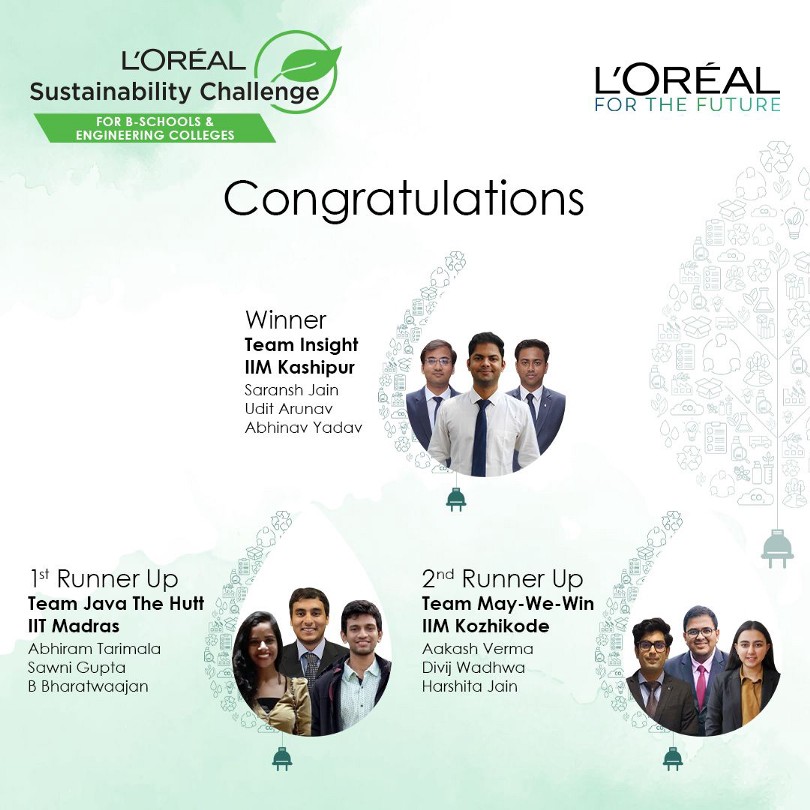
How National Winners of L’Oréal Sustainability Challenge 2020 approached the case!

IIM Kashipur has been building a culture among the students to participate in the case competitions and find ways to express themselves by competing with the other B-schools. Last year, IIM Kashipur saw success in numerous competitions making the culture even stronger. We got to know about corporate case competitions after joining the MBA program at IIM Kashipur. The first year of MBA was no less than a roller-coaster ride, spent in learning key business concepts and time management, we decided to participate diligently in the second year. It took us a while to understand how the case competitions work and what needs to be done to crack them. Firstly, we would say, selecting a good and coordinating team is of utmost importance. A team should consist of members who respect each other’s opinions and believe in having constructive discussions. The strengths and weaknesses of members should be known and utilized well. Above all, there must be strong bonding and a 100% commitment towards teamwork. Three of us worked together on an academic project in the first year and gelled up well. Consequently, we decided that we will team up for case competitions and started preparing for the same. We focused specifically on the presentation skills and having done multiple class presentations in the first year helped us a lot in this aspect.

Image for post

The next thing is to select the right competition. With the busy curriculum of the MBA, it is difficult to compete in all the case competitions. Therefore, it is better to research and select a few competitions based on your domain, interest, or industry and work hard towards understanding and approaching those competitions. At the end of the first year, we had prepared a list of all the competitions and their tentative dates that we were expecting to be floated during our second year. We even tried to plan our electives and other curriculum activities accordingly.

Coming to the competitions, no matter how much you prepare for the case challenges, you will not be able to reach the case study round, unless you clear the preliminary elimination rounds which are usually quiz or simulation rounds. Hence, it is important to take them seriously with a fitting approach specific to each competition. It is important to stay calm and focused even when you are not able to make through the first round in a few competitions. We always tried to stay positive and looked forward to moving ahead.

The main challenge comes after clearing the first round. It is important to understand the case problem clearly. The companies generally organize a webinar or doubt clearing sessions after floating the case. We preferred to attend these sessions — well prepared with our doubts to get everything clarified. Also, efforts should be made to understand the ‘expectations of the jury’ and ‘judgement parameters’ set by the organizer.

Image for post

L’Oréal Sustainability Challenge 2020

L’Oréal Sustainability Challenge was a challenge of ideation, where we had to provide an innovative solution on how L’Oréal could enable its consumers to reduce the greenhouse gas emissions resulting from the use of its products. Now that is a challenge specific to the behavioral change of L’Oréal’s consumers and at the same time open to any idea which is feasible and scalable to the world. Hence, we focussed on the novelty and simplicity of our idea. We believe that extensive research from reliable sources and brainstorming are the keys to get a novel idea.

For the preparation of the Grand Finale, we thought and discussed on every aspect being brought to our notice by the mentors from L’Oréal. We prepared the final presentation following their suggestions. We tried to keep it as simple as possible to understand, such that it included all the nitty-gritty of the idea. We also kept backup calculations in the appendix. We felt that the Q&A session plays the most crucial role in winning a competition, the jury would be ready to dive deep in your solution and we had prepared for every possible question in advance, at least the ones we could think of.

Winning the L’Oréal Sustainability Challenge was an enriching experience and gave us some key learnings. We faced quite a few challenges as we had our midterm exams just before the final round and the virtual setup had its concerns to deal with. But with some luck, and some sleepless nights of hard work, we are happy that we were able to sail through.

Our Learnings

“If you try to win, you might lose, but if you do not even participate, you lose for sure”

So, participation should be done leaving all the expectations aside. Winning or losing depends on a lot of factors that are difficult to define. Some things are not in our hands. That said, we can always focus on a few factors which have the potential to create a difference.

If we are to say three things that helped us in our journey, it would be Confidence, Simplicity, and Dedication.

Team Insight

Abhinav Yadav, Saransh Jain, Udit Arunav (MBA Batch 2019–21)

National Winners, L’Oréal Sustainability Challenge 2020

Essential learnings from shift to online education amidst Covid-19

Image for post

The business schools have conventionally been staid in their approach to teaching methods — the area in which there have been but few innovative developments for decades. The face-to-face teaching-learning process still dominates despite the advent of online learning. Faculty prefer the face-to-face mode from the viewpoint of convenience in responding to questions from a mass of students, carrying out interactive discussions and explanations, derivations or solving problems on the whiteboard.

However, the change seems to be a constant in education. The paradigm shift in pedagogy to online mode offers one means of making such change due to pandemic. Online teaching is helping us to beat the Covid-19 lockdown and catch up with the academic schedule. Nevertheless, at the same time, I fear that the paradigm shift in pedagogy to online mode may alienate economically disadvantaged students who do not have access to digital classes.

We do have some essential learnings from the online classes.

  1. The online teaching-learning process in business schools is undoubtedly useful. In some ways, such as making (theory and lecture) more structured, promoting self-learning, and prior class preparation among students, reducing spoon-feeding, it is perhaps more effective than the face-to-face mode.
  2. Examinations need not be in sit on-campus mode; open-book take-home exams designed to assess higher-order thinking skills or online exams are more effective, at least at the post-graduate level.
  3. Blended learning as a pedagogy appears superior to the conventional face-to-face teaching-learning process from the student’s perspective, to cater to fast and slow learners equitably.

In general, I believe that the current crisis and the response mechanisms put in place by the institute and other leading business schools will bring about a paradigm shift in pedagogy and that these new teaching-learning processes will be more effective.

Dr. Sunil Kumar Jauhar

Assistant Professor

Operations Management & Decision Sciences

Switching to the virtual mode of learning during the pandemic

Imparting formal education has been traditionally conceived through a single-mode within a close setting. Within this concept, the learning and knowledge are possessed, selected, structured, and transmitted by a teacher to students. This mode does not provide an opportunity for the formation of a dialogue between a teacher and students. Though this mode is rationalized as the finest, the present scenario calls for constructing an alternative virtually based mode.

Image for post

Virtual or online mode creates a co-constructed approach in learning and facilitates the development of online learning communities. This approach allows students to engage actively in the discovery of alternative forms of knowledge and denaturalize the assumptions of a subject. This paradigm shift in pedagogy transmutes the usual transmission of knowledge into cooperative learning, assists in neutralizing the power relations between the positions of instructor and student and brings them together and elevates their creative potential.

In the context of higher education, this shift embraces constructivist pedagogy and technology. The philosophical assumption in constructivist pedagogy is the learner constructs a version of reality that is situated in a context of social interactions with other learners and institutions. As the shift promotes collaborative learning and enhances reflexivity, an action extends thought — reflection shaped by the consequences of the action. It allows learners to actively engage one another in ideas and perspectives they hold to be educationally valuable, exhilarating, and stimulating. It is through the design of the online learning environment, with an emphasis on shared educational goals, support, collaboration, and trust that these processes can be most effectively and functionally activated.

Dr. Rahul Ashok Kamble

Assistant Professor

Organizational Behavior & Human Resource