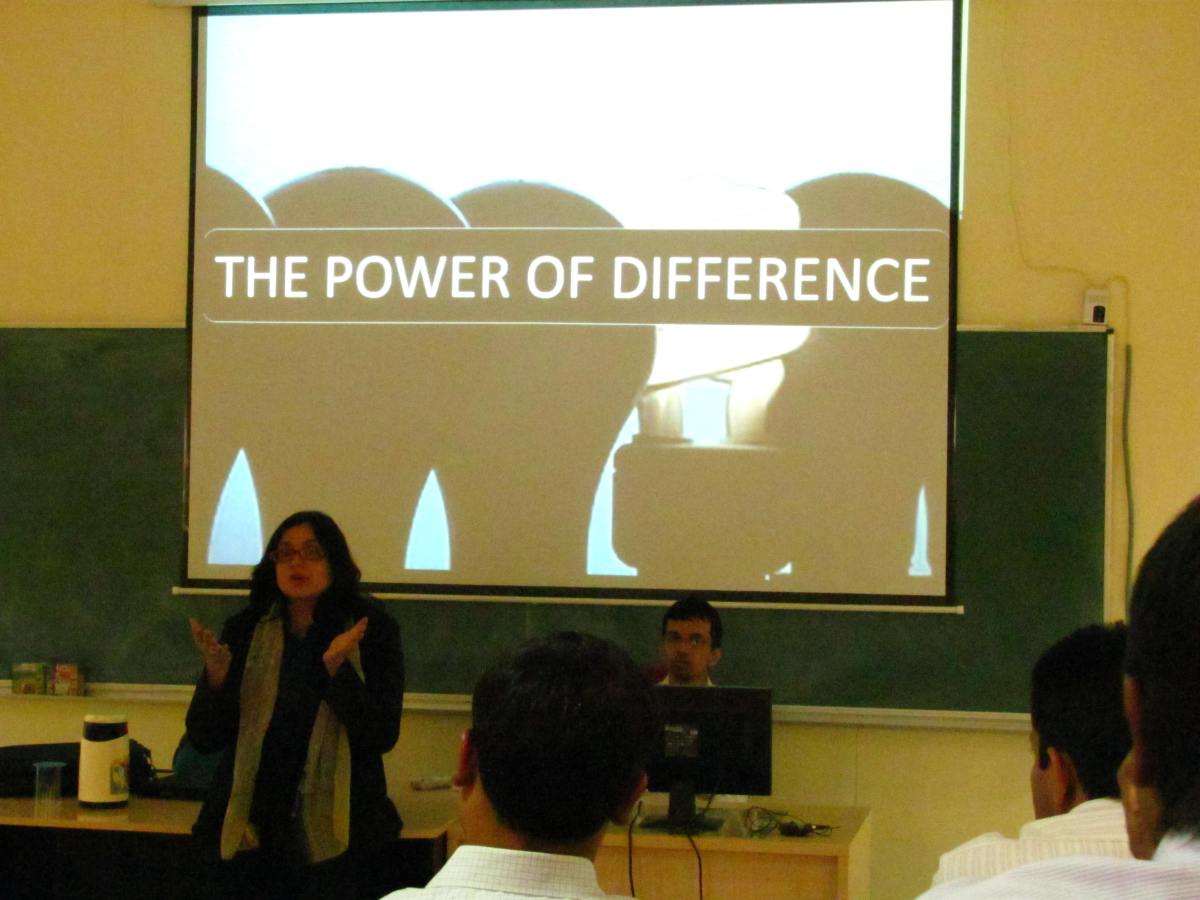
Guest lecture by Ms Lubna Khan, Associate Vice President & Strategic Planning Director, JWT

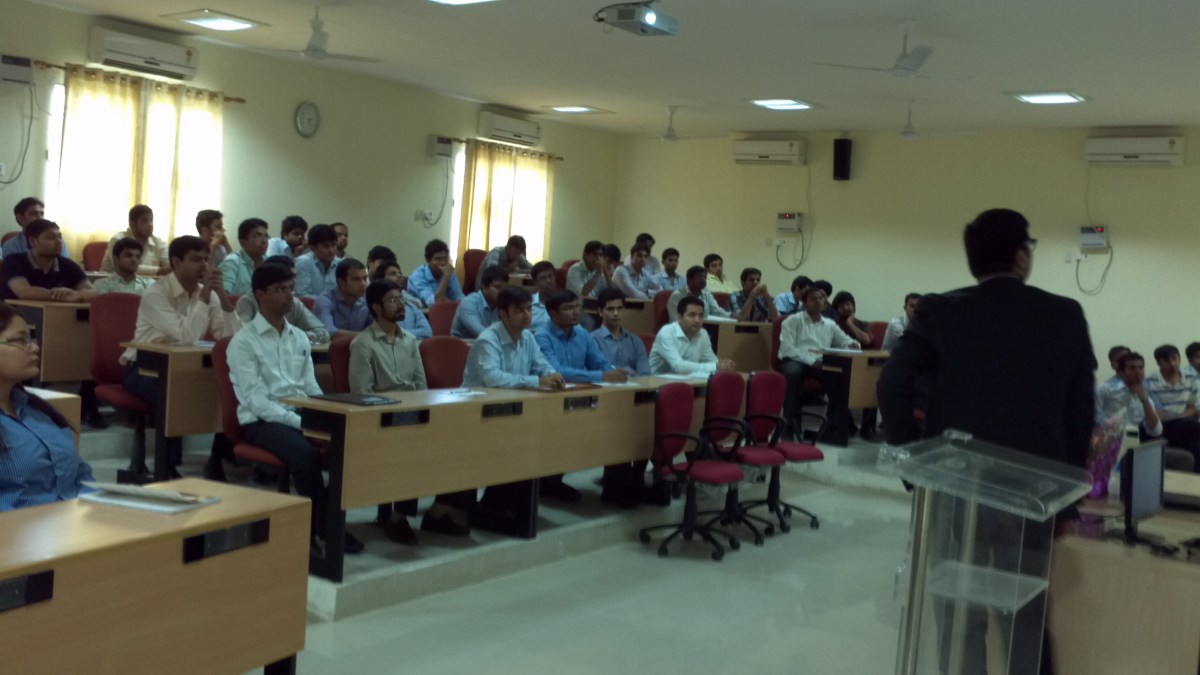
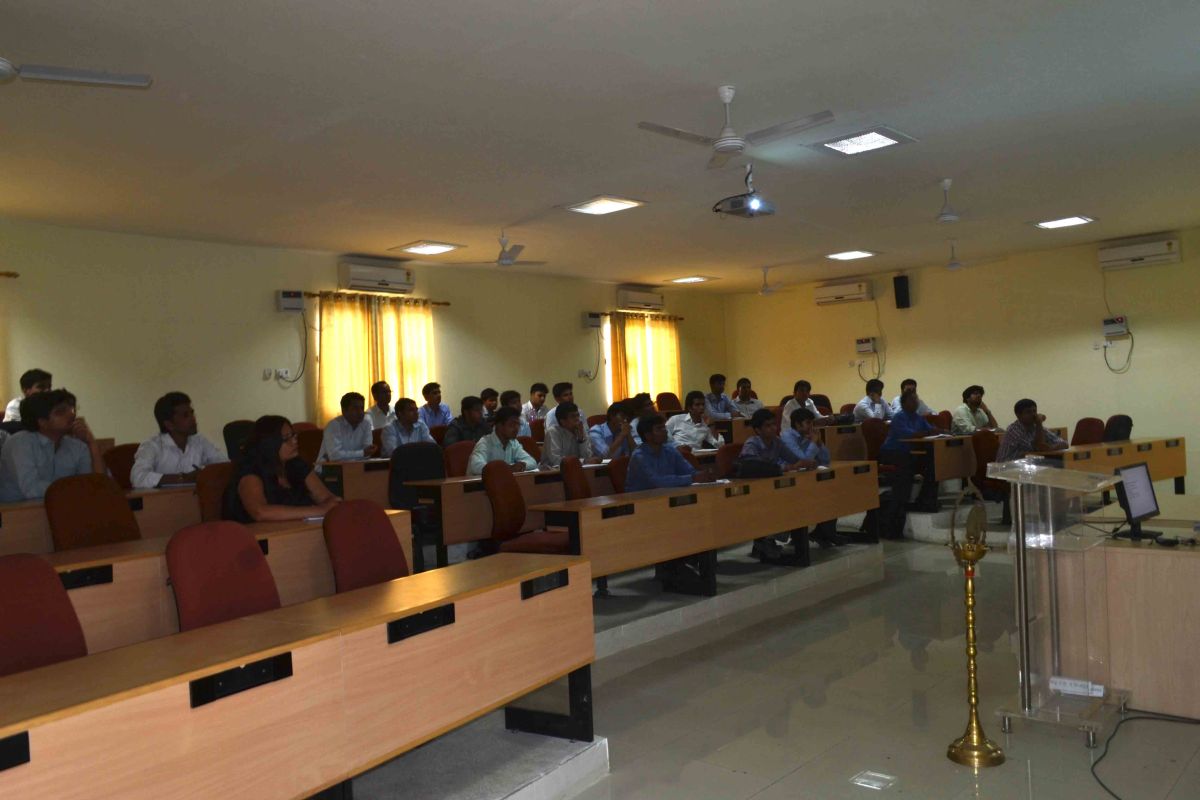
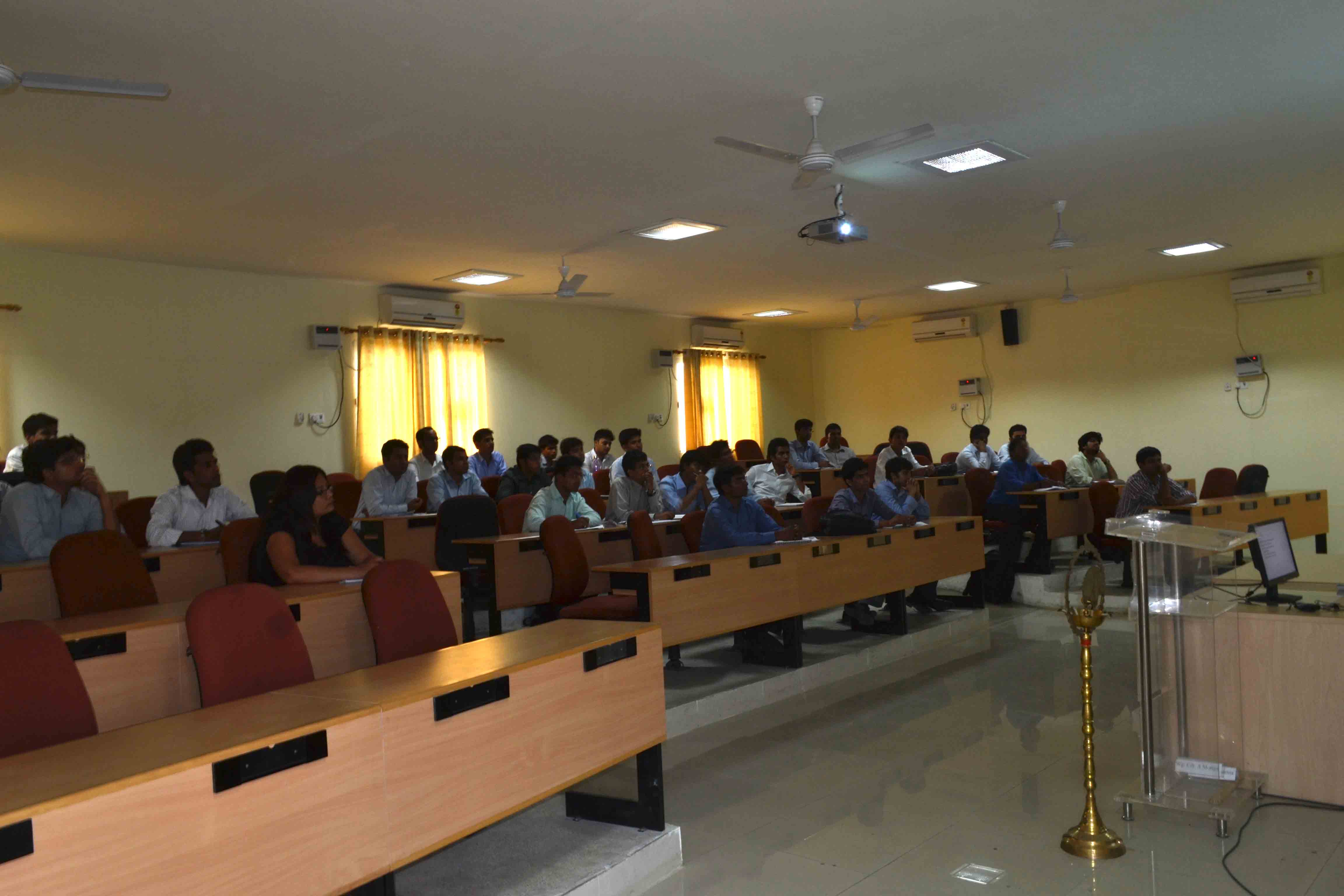
Ms Lubna Khan, Associate Vice President & Strategic Planning Director, JWT interacted with PGP students of IIM Kashipur and shared her experiences in the field of advertising.

J Walter Thompson (JWT) is the fourth largest advertising agency in the world with a strong presence in India, having started its operations in 1929. Since then it has been an acknowledged leader of the Indian advertising scene. It has continuously helped break new ground in advertising practices with a string of creative Ad campaigns to its credit.

Ms Lubna Khan has more than fourteen years of industry experience, in which she has served as a cognitive behavioural therapist, a researcher, and a communications consultant, before assuming her current role of being a strategist. She has worked across a diverse set of categories, on some of the most recognized brands globally – Horlicks, Nestle Kit-Kat, Samsung, Microsoft, Nokia, Airtel, and LG. She has two postgraduate degrees in psychology, one from Delhi University and the other from the University of Leeds, UK.
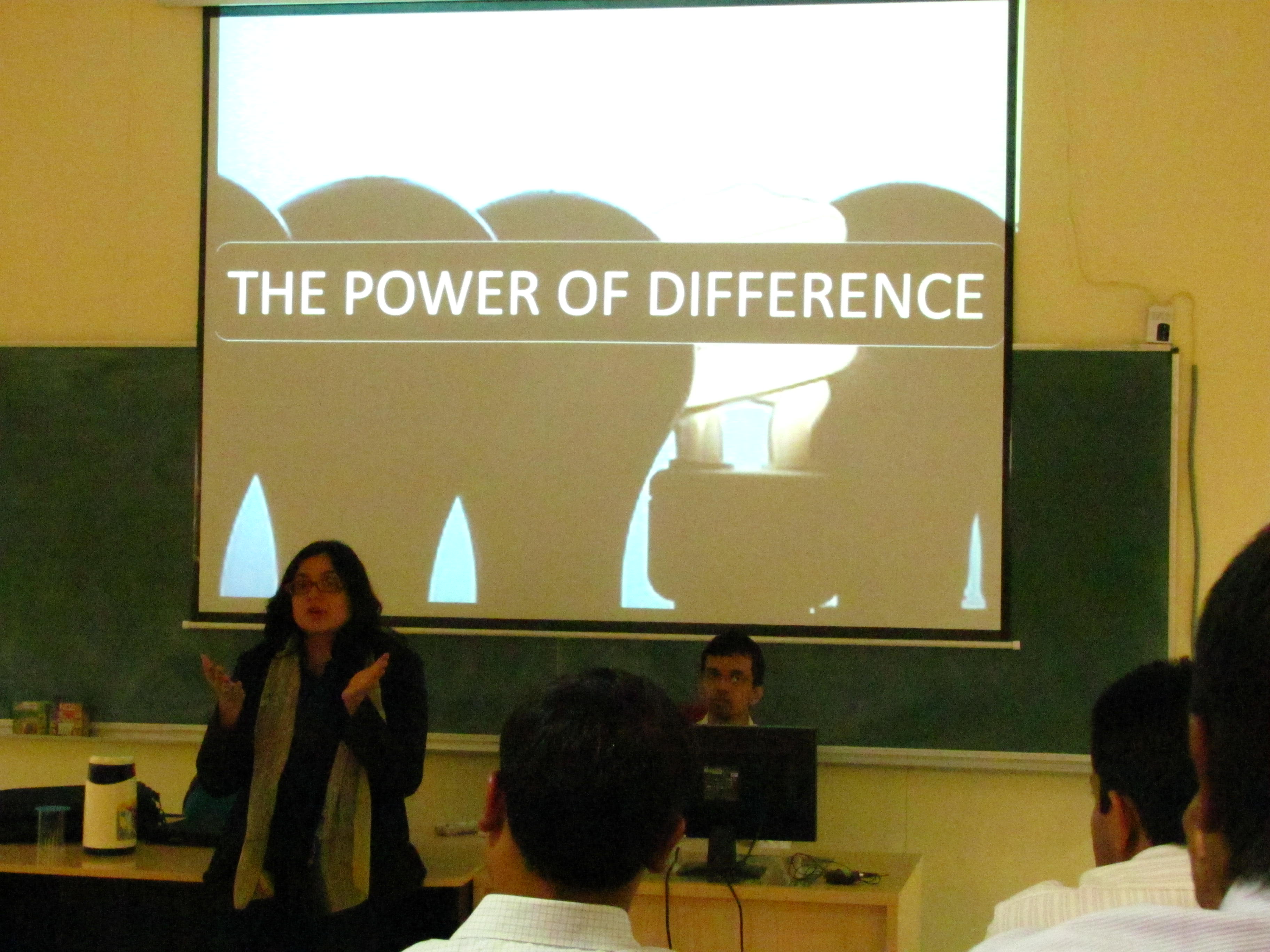
The interaction started with a screening of some ground-breaking ads which helped in creating a cult following for the products. With insights from the ads, Ms Lubna Khan dwelled on the pitfalls of ‘playing it safe’ attitude and how it causes failure of many a campaign in capturing the attention of the consumers. She explained the need for creativity to model perfect business solutions for the clients. Later on, Ms Lubna talked about her educational background and her role as a strategic planner in JWT. The students were also informed of the non-creative side of the Advertising agencies.

The lecture left a lasting impact on the students as they developed a better understanding of the challenges involved in communicating brand image.

A few words by Ms Lubna Khan: –

“It’s nice to interact with a young bunch of enthusiastic students out here in IIM Kashipur. I will look forward to have such interactions in the future.”

Interaction with Industry Expert: Mr. Faisal Siddiqui, Vice President, HealthCare division at Technopak Advisors Pvt Ltd.

Interaction with Industry Expert: Mr. Faisal Siddiqui, Vice President, HealthCare division at Technopak Advisors Pvt Ltd.,

Mr. Faisal Siddiqui, Vice President of Healthcare division at Technopak Advisors Pvt Ltd., visited IIM Kashipur campus on 13th August 2012 as a part of the rolling guest lecture series. Technopak is a leading organization providing advisory solutions in setting up of companies in the field of Textile, Retail, Healthcare and Food & Agriculture.

Mr. Faisal did his masters in business from University of Wisconsin. He has also worked at key positions in Apollo hospital group, Fortis Healthcare, GE Health Care and Siemens.

The topic for the discussion was “Service Excellence – the new strategy paradigm”. Mr Siddiqui elucidated the changing trends and the new strategy paradigms in the service industry vis-a-vis the healthcare industry. The two key strategy areas that were discussed were “Process Optimization” and “Customer Services”. He also demonstrated briefly the healthcare sector from different
stakeholders’ point of view, the immense opportunities t

hat lie in this sector for years to come and the qualities that MBA graduates should possess to excel in the field of healthcare consulting.

The session ended with Mr. Faisal’s candid conversation with the students where he shared his personal experiences in the healthcare sector. The session was very informative and increased awareness among the students about the bright prospects in this sector.


Interaction with Industry Expert: Mr. Amol Maheshwari, Head – Corporate Business, North and Central India at Bajaj Allianz Life Insurance Company

Interaction with Industry Expert: Mr. Amol Maheshwari, Head – Corporate Business, North and Central India at Bajaj Allianz Life Insurance Company.

On 12th August 2012, IIM Kashipur PGP Students engaged in an interactive session with Mr. Amol Maheshwari on the topic “Marketing Strategies for Financial Instruments”. Mr. Amol heads the Corporate Business Division of Bajaj Allianz. He has rich experience in domains such as Channel Sales Management, Wealth Management and Corporate Sales. Prior to joining Bajaj Allianz, Mr. Amol was Vice President, Channel Sales Management of HSBC. Mr. Amol started the session with a brief introduction of the current state of Insurance Market and the scope of gr

owth for this sector. He touched upon the recent downturn faced by the industry due to regulations and restrictions imposed on FDI in the sector. Later on, he elucidated the differences in the sales process for Individual buyers and Institutional buyers. Advertising strategies for Insurance schemes such as appealing to emotions of the buyer were discussed through different ad campaigns of financial institutions. Through this session, the students were acquainted with the sales and marketing strategies used in the Insurance sector and also got exposed to the various opportunities available to them in the Insurance sector.

Mr. Amol’s Views on IIM Kashipur

The quality of IIM Kashipur students is par excellence. I was overwhelmed to see their participation and passion in making IIM Kashipur a great success.”

I am overwhelmed to see the live projects that are being taken up by IIM Kashipur students. IIM Kashipur is leveraging its presence in one of the richest industrial belts of India as well as its proximity to New Delhi.”

I am sure that IIM Kashipur will rise through the ranks of IIM fraternity and will create a niche of its own. I wish IIM Kashipur students the very best of success in all their future endeavors.


Workshop on Career Planning and Design

A two-day workshop on Career Planning and Design was conducted on 24th and 25th of July at IIM Kashipur for the benefit of First year students.

 The Workshop was conducted by the following 2 counsellors:-

  1. Mr. Anamitra Chatterjee (Director& Head – Executive & Career Coaching, INSEAD-ILPSIE at ERUDITUS Education) and
  2. Mr. Subhajit Mazumder (Senior Consultant at Ernst & Young).

 Mr. Anamitra Chatterjee is an alumnus of the London School of Economics (LSE), UK where he studied Economics as a British Chevening scholar. He holds a PGDM from IIM, Calcutta. He held the positions of Head-Human Resources (HR) and Head-Learning & Education (L&E) in PricewaterhouseCoopers (PwC) India.  He had a long stint at Deutsche Bank AG in client relationship management. Mr. Subhajit Mazumder is a management consultant with several years of experience in E&Y and PwC. He has rich and diverse experience in the areas of business strategy formulation, process transformation and IT enablement. He is a regular speaker at IITs, IIMs and Industry forums.

            The workshop mainly focussed on self awareness and identifying one’s natural inclination to any specialisation in management. The session on day one started with a Belbin test. Belbin test evaluates and rates a participant on various roles called as Belbin team roles and helps in identifying ones suitability to a particular kind of role. The day was followed by knowledge sessions on Consulting, IT, operations and HR. These sessions provided insight on the kind of profiles offered to MBA students for summer internship and final placements. The character traits required to excel in each of these fields was also discussed. Afterwards, sessions on Group Discussions were conducted. The session sensitised the students on what to do and what not to do in a Group Discussion.

            Day Two of the workshop began with a Career Development action plan. It focussed of constructing a Positioning statement, which would best describe our past, present, and logically connect it with the future aspirations. Thereafter, Knowledge sessions on Finance and Marketing sectors were conducted. The sessions focussed on the career options within these broad sectors and enlightened students on some very basic things such as the difference between Finance & Commerce; and the difference between the roles of MBAs & CAs in financial services firms. The day concluded with mock interviews and analysis for the summer internships.

The workshop gave the students a new perspective on managerial roles and responsibilities pertaining to different sectors. It also gave the students a chance for introspection, making it easier for them to choose from myriad career paths. The workshop programme was a huge success and will surely become an important part in moulding the success path of IIM Kashipur students.


Prof. Ajay Garg

Prof. Ajay Garg – 24thMarch 2012

A workshop on Ethics and Governance was conducted by Prof. Ajay Garg on 24thMarch 2012. The issues discussed in the workshop included the board of director’s functions and issues associated with them, the SEBI guidelines corporate governance, parallel between the US and Indian guidelines on corporate governance, difference between the corporate structure of US and Indian companies and lastly Enron scam. The basic function of board of directors of any company is to protect the shareholders rights. Because of differencein the concept of ownership and management of a company there is a need to protect the rights. A person is appointed to the board of directors by the management of the company. This person has to be as independent as possible from the company i.e. he shouldn’t have any financial or any other kind of interest either directly or indirectly in the company. The directors are not involved in the day to day management of the company but being independent they have the right to ask pointed questions to the management regarding any decision it takes. Also since they don’t involve in day to day management they are not liable to criminal proceedings. However it is observed that there forms a cross membership of board of directors meaning that A can be on the board of company owned by B who is on the board of a company of owned by C who is on the board of the company owned by A and thus the
purpose of having an independence board gets defeated. Also many guidelines on the good corporate governance given by SEBI are similar to those given by SEC in US. However there exist a basic difference between the corporate structure of US companies and Indian companies. In US companies the ownership of companies is more widely distributed i.e. the promoters own comparatively less owner ship which is in stark contrast with the structure of Indian companies. This renders some of the guidelines useless. The workshop ended with the discussion on the fall of Enron. Even with the strong compliance guidelines by the US SEC there many corporate frauds happened in US implying that for better governance it is the internal motivation to follow good practices that going to bring a change rather than stronger guidelines.

Prof. Sushil Kumar – Ethics and Environment

Prof. Sushil Kumar – 11thMarch 2012
Prof. Sushil Kumar conducted a workshop on Ethics and Environment on 11thMarch 2012. In the session many points related to the unethical practices followed by entities and its effect on environment were discussed. He also discussed the concept of carbon footprint and water footprint, oil leaks, communities developed on the waste dumping land and entry of harmful chemicals in the food chain. Carbon foot print refers to the amount of greenhouse gases that an entity emits. The concept of water footprint takes a more comprehensive view by considering the consumption of water at every step right from the raw material procurement to end product manufacturing. Apart from that the huge oil leak in different parts of world were touched upon also pointing out the double standards adopted by US when dealing with oil leaks claiming billions of dollars while shielding the Bhopal gas perpetrators. Also discussed was the phenomenon where waste dumping lands are used for community settlements and the water or food from these regions have high amount of certain chemical thus affecting the human health. The dumping of CFL that contain high mercury content will lead to entry of mercury in the food chain at some point of time causing health related problem.


Mr.Jatinder Salwan, Associate Vice President, Mphasis conducted session on “corporate Governance and Ethics”

Mr.JatinderSalwan – 25thFeb 2012

Mr.Jatinder Salwan, Associate Vice President, Mphasis took session on “Corporate Governance and Ethics” on 25th Feb 2012. Mr. Salwan talked about the importance of ethics in corporations and how important it is to adhere to strict code of values and rules. Citing various examples, Mr. Salwan elaborated on how various frauds in recent years have changed the dynamics of industry and how laws have correspondingly evolved. Apart from the main topic, Mr. Salwan shed light on what recruiters look in a prospective candidate and how students should continually strive for improvement with the changing needs of the industry. He motivated students to work and persistently strive for excellence.

Guest lecture – Mr.Shivang Jambusaria

Mr.Shivang Jambusaria – 18th Feb 2012

Mr.Shivang Jambusaria, Head of Derivatives Division, HDFC conducted session on “Hedging Strategies/Emerging Trading Strategies” on 18th Feb 2012. Mr.Shivang discussed in detail about the need for hedging and the various institutions which hedge their risk. Currency fluctuations and their implications to various industries and forward curve are widely discussed. Session is highly practical with real time examples and discussion on movement of Indian currency in the last one year. A video on the trading desk at BNP Paribas grabbed the attention of students. Apart from these, Mr.Shivang talked about the requirements that students should possess to succeed in the field of derivatives trading.

Guest lecuture – Prof. Kallol Bagchi

Prof. Kallol Bagchi – 2nd Feb 2012

Dr. Kallol Bagchi, Professor of Information and Decision sciences at College of Business, University of Texas at El Paso. He has many research publications in the computer science and information systems area. His present research interest is in global ICT (Information and Communication Technologies), diffusion of ICT, impacts of trust and culture on ICT, security issues, digital divide. Prof. Bagchi interacted with the students over various socio cultural aspects related to usage and adaptation of information technology for sharing and dissemination of knowledge. Furthermore, a model of willingness to use ICTs based on personality attributes was shared with the students. Inputs for the model are gathered via a survey form, which was also shared with the students. The students provided their inputs in the form, and a quantitative analysis was conducted in the session using SPSS
software are the results were analyzed as well.