“Life is either a daring adventure or nothing. To keep our faces toward change and behave like free spirits in the presence of fate is strength undefeatable” – Helen Keller.
The crisis precipitated by COVID-19 has pushed educational institutions to move all physical classes online to ensure that there is little or no disruption in the learning process in this “new normal”.
Rather than working round the clock in our gorgeous campus (ahh IIM Kashipur, you beauty), we are stuck at home, sitting suited up in front of our laptops and attending academic sessions and guest lectures.
While I was preparing for CAT, I never thought that I would be doing an MBA from home. It was a bittersweet day when I got my admission letter because even though I had managed to clear the rigorous admission process, I realized that I would have to spend the first few months of my MBA life, working remotely from home.
Who would have thought their induction to the “IIM in the North” would happen from their homes.
I still remember my first day at IIM Kashipur, where three hundred and forty students sat in front of their device screens, with backgrounds green with envy! It felt like winning a lottery with no prize money.
But the circle of life continues, and I knew it was not worth giving up on this beautiful journey, not even for the pandemic!
What appeared to be impossible became possible. IIM Kashipur planned a schedule so well keeping in mind various factors like strain on one’s health due to increased screen time, availability of the Internet, etc. which led to a smooth transition. Soon Zoom sessions replaced classroom learnings and options like polling, chat, and breakout rooms have successfully managed to keep classes interactive without making them chaotic. Raising hands has a new synonym, and appreciating peers takes the form of digital applause. “Am I audible?”, “Am I visible?” is the new introduction phrase for a presentation.
The level of FOMO (A popular B -School jargon that implies Fear of Missing Out) these days has reached another level, that makes us all check our phones and WhatsApp messages very frequently and consequently makes us stick to our laptops and phones. One nap and there are hundreds of messages regarding assignments, case competitions, and corporate presentations.
It gives me chills when I think that this all started just eight months back, and we are already done with the third semester as of now. But all these small little shifts made us realize one very important facet which we learn in MBA-Crisis Management.
Seniors/Student Body members became our rescuers. From giving us stories of Agnitraya (Our Annual Fest), classroom anecdotes to the banter at the night canteen, each new adventure invoked feelings of a better tomorrow and made us more excited for what awaits us on campus.
In a virtual learning mode, there are numerous distractions but one thing which we ought to remember is why we are doing all this, why we are spending our valuable time and resources in getting this degree and we need to make them count. This can be only achieved by advanced preparation of pre-reads, active listening, and involvement through sharing of perspectives and experiences as well as by asking questions.
Remember the end goal each day and this Online learning will no longer be a barrier.
About the Author: Sakshi Poddar a Computer Science Engineer by qualification is now pursuing MBA(Analytics from IIM Kashipur. She is a part of various student bodies like the Media and Public Relations Committee and Admission Support Body. She is an IT professional with 2 years of experience in Hewlett Packard Enterprise. She loves traveling and dancing. You can connect with her on LinkedIn
“Life in an IIM is a completely different ballgame when compared with the life before it. If normally you are progressing at 50 KMs per hour, after joining an MBA college, things start happening to you at 200 KMs per hour. It’s that much different.”
I still remember the day I was offered admission from IIM Kashipur for their MBA(Analytics) Program and I was on cloud nine because doing an MBA in Analytics was my long-fetched dream.
Well, I feel everyone has his or her definition of how to make the most of the two years in a B-school. So there is no fixed rule.
While I was working I always thought peer-learning was overhyped, but now I think every word of it was true. The class discussions, study group assignments, and in-general interactions take the learning to a completely different level. The sheer diversity in backgrounds and profiles opens so many avenues for learning which, at times, are far more profound than the in-class exercises. MBA is the only platform where you find the perfect amalgamation of fresh graduates sharing desk space with professionals having five years of work experience, or commerce grads rubbing shoulders with engineering graduates. An IIM offers enough chances for students in two years. It is also necessary to use time in the best possible way. It’s a place where there’s no space for the average. So you ought to manage your priorities to be the best person in your field. And it can only happen when you are diligent towards whatever is assigned to you. One common thread connecting all B-schools is that there’s always a lot to be done. Along with academics, you get involved with corporate and inter B-school competitions, corporate projects, festivals, committee and club work, internships, and many other activities. It’s very important to prioritize what you want to do and chalk out a plan for yourself based on your interests and skills early on. This will help you navigate the MBA with a purpose. Apart from that, networking, honing skills that give you an edge, staying updated on current affairs are a few things that you are expected to do throughout your course. Once you acquire the knowledge, you will gain self-confidence and that will hold you in good stead for your stint of two years in a B-school. Interacting with the professors is a good idea and that will help you not only with the academics but also get a glimpse into the industry you are headed for.
MBA is more about getting knowledge at a broader level. Your success during and after MBA is determined by how well you can connect the dots distributed across various functional fields. The first year covers the core courses and gives you business knowledge. Second-year allows you to experiment by offering loads of electives. The middle of the second year is packed with semester exchange programs that are very interesting. It’s crucial to identify the functional areas of business and explore them. Don’t consider your peers as competitors; treat them as your companions in your journey because after graduating these very people will give you an extensive network of professionals spread out across industries. Networking is important especially when you move into executive positions or you begin to start-up because you leverage your contacts to get business.
The final advice I would give to all the budding managers is that enjoy every minute of your life because, at the end of the day, when one looks back, one would want a lot of good memories to ruminate over.
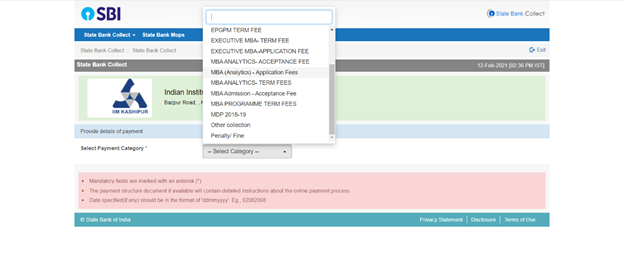
Click on the ‘New User Sign-up Here’ option. It will direct you to the following page
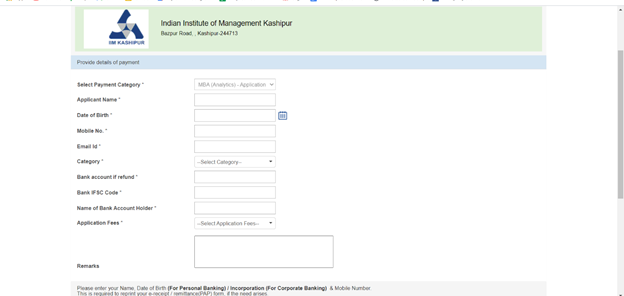
Fill in your name, valid email ID, Mobile Number, and set a password. Click on REGISTER NOW.
Following this, you will receive an activation link on your registered email ID.
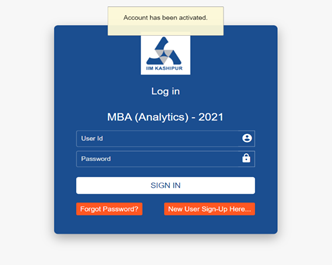
The next step is to click on the activation link which will direct you to the following page
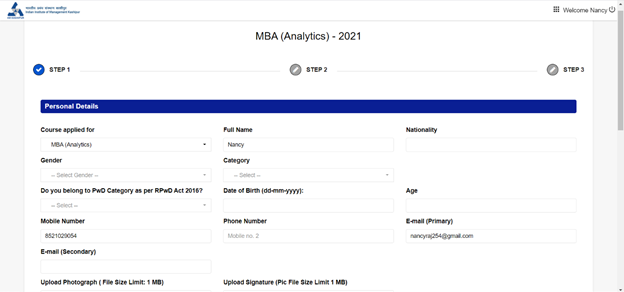
Following this, you will get a message that your account is activated. Login with your credentials and move ahead with the registration. After logging in, the form asking for your personal details will open.
Step 4:
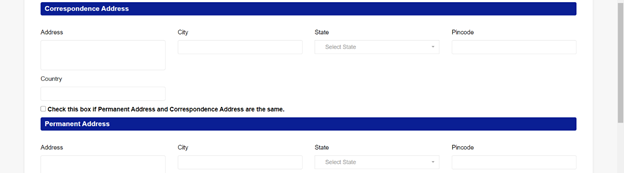
Fill in all the details in the next step. Ensure the desired file size limit when you upload your photograph and signature. Fill in your temporary and permanent address details.
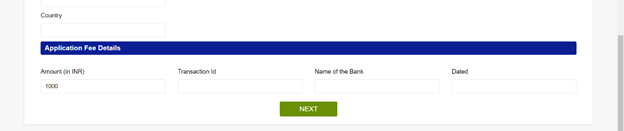
Finally, fill in your transaction details, name of the bank along with other details, and click on NEXT.
Step 5:
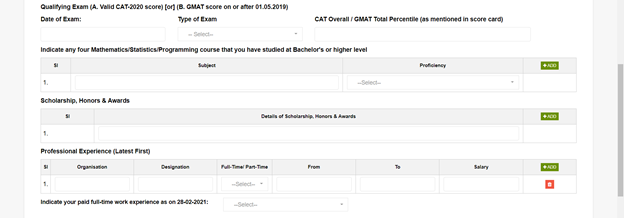
In this step, you have to fill in your educational background and related details. Make sure you fill in the exact figures as mentioned in your original documents. Further, you need to fill in the details of your qualifying exam (CAT or GMAT)
Also, fill in your scholarships and professional work-experience details. Click on NEXT
Step 6:
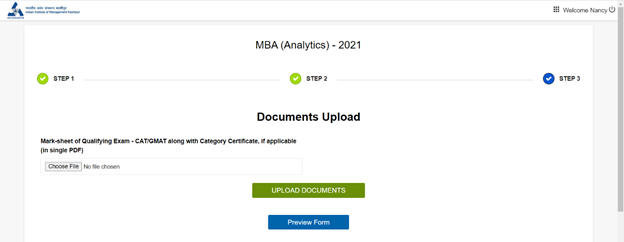
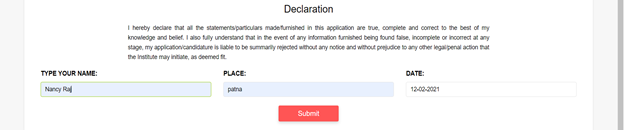
The next step is to upload the mark sheet of your qualifying exam. Post that, you can preview the entire form and check for any errors. Sign the declaration and submit the form.
The Operations and Supply chain Management (OSM) club at Indian Institute of Management Kashipur incessantly works in operations, production & manufacturing, supply chain management, operations strategy, operations research, and project management. The club acts as a perfect medium completely dedicated towards the students. It helps them enhance their domain knowledge and explore new horizons by assisting them in pursuing their interests related to the field. Being established in the initial years of the Institute, the OSM club is one of the oldest academic clubs in IIM Kashipur. By successfully carrying out several inter-college events and interactive sessions, the club has marked its supreme presence amongst the corporates & fellow institutes and has been a front runner in demonstrating excellence & commitment in educating as well as in spreading the domain advancements.
To bring out the best from the Institute’s students, the club organizes different activities throughout the year. This ranges from quizzes, case study competitions, knowledge sharing sessions to guest lectures and industrial visits. The club believes in the philosophy that sharing knowledge is not just a single-day activity and thus operates open platforms in various social media handles for continuous debates & discussions on different topics, sharing recent trends, and molding the students for case study competitions related to the domain. The club, which had already been connected to a vast network over mediums like LinkedIn and Facebook, has chartered its Instagram presence in the AY 2020-21 and regularly posts different articles and updates through these social media handles.
Certifications
The club perfectly aligns with the Institute’s philosophy of ‘Learning by Doing’ and provides a medium for students to understand the practical applications of the theories they learn. Working on these lines, the club leaves no stones unturned on gauging the batch’s interest and facilitating relevant certification courses that can help in imbibing the culture of continuous learning & improvement. This also allows the students to learn new concepts and apply them in real-life business scenarios and case studies. In the AY 2019-20, the Club organized the Six Sigma Green Belt Certification by KPMG where around 40 students had participated and successfully completed their certification. Through the CII certification opportunity facilitated by the Club, 9 students were able to gain valuable inputs on notions such as supply chain analytics and warehouse management. The Club had also been successful in connecting with ISCEA (International Supply Chain Education Alliance). It was able to gain benefits through access to practical implementations, certification courses, and easily connect to the Industries in Operations. The Club had also thrown up a CDDP certification program for the IIM Kashipur student fraternity in the AY 2019-20.
Industrial Interactions / Guest Lectures
The club also bridges the gap between academia and industry by organizing interactions and lectures with industry stalwarts where the elite industrial professionals share their experiences and guide students to make them acquainted with the relevant skills required to excel in the industry. The club conducted the operations summit of Coalescence on 14th Sept.’19 and erudite speakers from leading organizations like McKinsey, Emami Ltd, Patanjali Ayurved Pvt.Ltd, Globelink India Pvt.Ltd, and IVY Technology India enlightened students on the topic of Process Re-Engineering.
Knowledge Sharing Sessions
The club also emphasizes conducting knowledge-sharing sessions and their effectiveness in helping students, especially those who don’t have any pre-requisite knowledge about different Operations and Supply Chain domain courses. Through this, a platform is being offered to the students to improve their public speaking skills and be on the other side of the table. The club also seeks guidance from the esteemed faculties and helps students embrace the academic culture & rigor of IIM Kashipur.
Industrial Visits
To bring clarity and exposure to students in a practical working environment, the club organizes industrial visits at different manufacturing facilities. It leverages the most densely industrialized regions in the country with over 180 industrial plants in and around the area. This also serves as a platform for budding managers to understand the manufacturing facilities with a practical lens and learn about best practices opted by different companies. The club has organized industrial visits to companies like Ashok Leyland, Mahindra & Mahindra, and IOCL Bottling plant.
Events
The club believes that the knowledge without application is like a book that is never read and challenges students to work on their toes and organize different intra-college and inter-college competitions throughout the year. The events include treasure hunts, marshmallow games, quizzes, case study competitions, etc. which allow students to put on their thinking caps and understand the constraints from different cross-functional aspects.
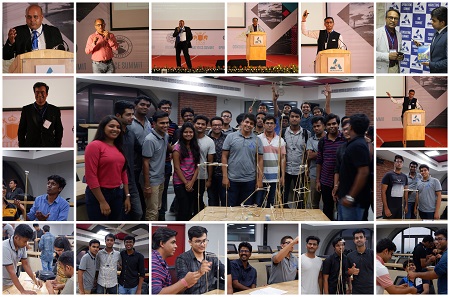
The club has organized intra-college events like Opstruct’19 and Ops-Huntin the AY 2019-20 and AY 2020-21 respectively to make students aware of the various basic terminologies in the field of Operations and Supply Chain Management. In Opstruct’19, students played Marshmallow Game which revolved around inventory management, analytical decision making, and lean concepts. The game tested how efficiently the participants utilized their resources while keeping inventory and lead time in mind. The Ops-Hunt event amalgamated the fun & excitement of treasure hunt with the domain knowledge of operations. The student teams were required to solve different picture perception clues, objective questions, and crosswords to reach the destination.
Operatius is an annual case study challenge organized as a part of Agnitraya, which is IIM Kashipur’s annual management festival. The event was well received and had witnessed participation from students across the top B-Schools in the country. Operacle is a PAN India case study competition. The club collaborated with different companies like Hesol Consulting to formulate the case study by striking the right balance between relevance & complexity and encouraging students to provide the most efficient & feasible ideas. Osmosis is a PAN India quiz competition organized every year by the club. It comprehends three rounds where participants are tested on different domains like Operations, Quality Management, Supply Chain Management, and their business applications. These inter-college events serve as a base for students to interact with each other and build long term connections. Hence, in a nutshell, the club functions as constant support to the IIM Kashipur student fraternity in pursuing their interests in Operations and Supply Chain Management and works in association with different internal & external stakeholders to maintain and uplift the academic rigor that the
The moment we hear IIM Kashipur we relish the scenic beauty of the majestic Himalayas lining up this exalted building of bricks. IIM in the North(as it’s fondly called) is bestowed not only with the stunning beauty of nature but also ensures wholesome experience to academic rigor. So, we have come up with 10 best highlights which makes IIM Kashipur the nostalgic addition to students’ memory lane.
This program is specially devised to provide a comprehensive learning platform for the students to make them industry prepared, to suffice the increasing demand for complex data analysis, and thereby helping organizations make better decisions. This aims to make students understand the necessary principles of different forms of analytics to facilitate decision-making in practical business settings. Moreover, this program enables students to acquire and use advanced analytical as well as managerial skills to evaluate uncertain and dynamic business environments and to make effective decisions.
Gender Diversity:
IIM Kashipur has achieved more than a 3X increase in female candidates in the AY 2020 -21 compared to the previous year. Moreover, IIM Kashipur encourages the enrollment of female candidates through points assigned in the diversity metric as a part of its academic policy and it also continued with its initiative of sanctioning 15 supernumerary seats for female students.
The institute comprises of 41 faculties from various domains of specialization with rich experience and showcasing higher research potential. Moreover, IIM Kashipur believes in imparting application-based knowledge to the student fraternity, and as a step to achieve the same, the institute has about 34 visiting faculties from other IIMs and top B schools. The curriculum of IIM Kashipur is structured in a way to instill practical knowledge to the student community through projects and assignments. In addition to this, regular classes are shaped with interactive discussion-based teaching and learning activities through simulations to deliver the inexplicable things in a more fathomable way.
Competitions:
As we know MBA is not a degree that can be acquired through books, IIM Kashipur promotes the participation of students in various corporate and B school competitions. This academic year, students have bagged 100+ achievements to the institute in competitions organised by fortune 500 companies like Xiaomi, One plus and ET, Tata group, Google, Flipkart, L’Oreal, Reliance, Edelweiss Tokio, etc., Students have also bagged prizes from IIMs, IITs and top B schools.
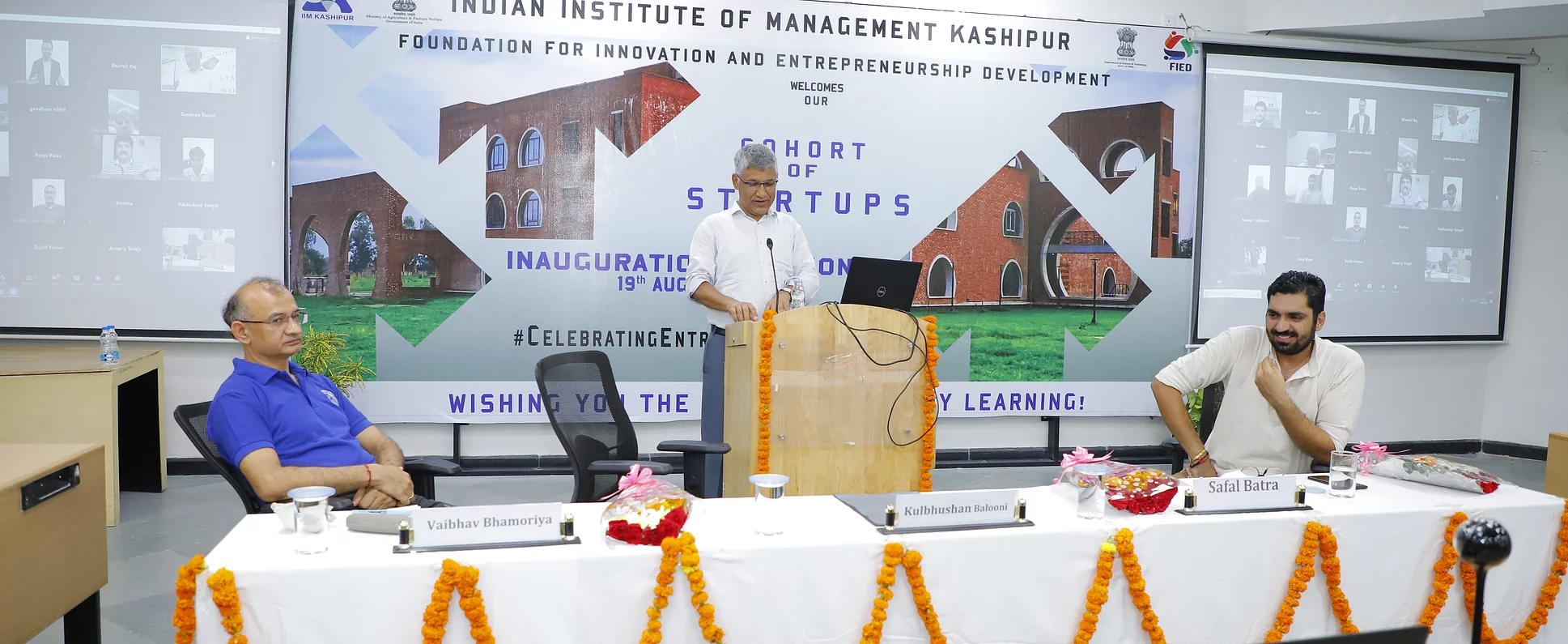
Foundation for Innovation & Entrepreneurship Development (FIED) is the incubation center of Indian Institute of Management Kashipur, which is an initiative to cultivate and improve India’s entrepreneurship ecosystem. With the assistance of the Ministry of Agriculture, the Department of Science and Technology, the Government of Uttarakhand, and other supporting partners, FIED is set to incubate India’s most promising start-ups in the areas of tourism and hospitality, agriculture, art and craft, and education. FIED concentrates on the major focus areas which include art and craft, agriculture, technology, tourism, Ayurveda, and education. These areas focus on preserving our rich heritage, spreading the knowledge about science and technology, working towards the betterment of agriculture, enhancing the knowledge level of inquisitive minds, and fostering the inner wanderlust within people. Moreover, FIED has successfully incubated 150+ ventures, has engaged 500+ entrepreneurs, raised more than 50 crore rupees of funding, and has established a network of 100+ investors setting a stage for the budding entrepreneurs to learn and establish their dreams.
IIM Kashipur has, over the years, developed strong ties with multiple universities and institutes from all around the world. IIM Kashipur students have the chance to visit top MBA institutes in France, Denmark, Greece, Israel, South Korea, Taiwan, UK, Thailand, and many more. In the year 2019-20, 11 students from IIM Kashipur visited 5 different institutes in different countries as part of the Student Exchange Program which lasted for about 3 months.
𝗦𝗵𝗼𝗿𝘁-𝗧𝗲𝗿𝗺 𝗘𝘅𝗰𝗵𝗮𝗻𝗴𝗲 𝗣𝗿𝗼𝗴𝗿𝗮𝗺 (𝗦𝗧𝗘𝗣):
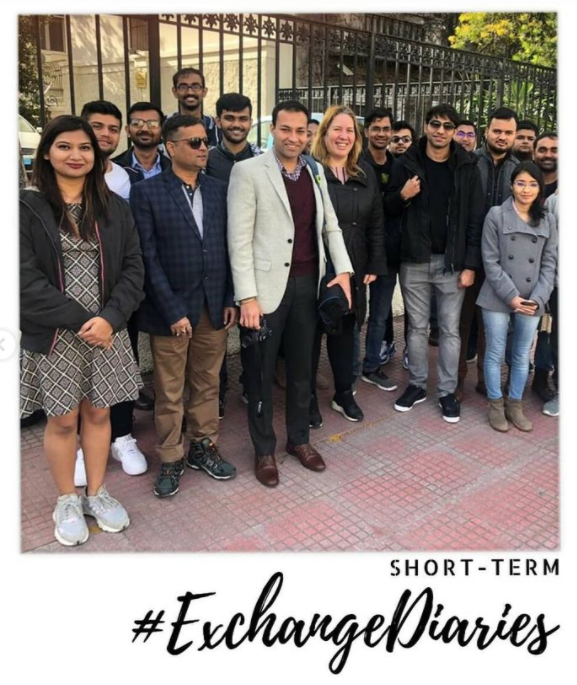
IIM Kashipur also offered its students the opportunity to visit some of these institutes as part of the Short-Term Exchange Program (STEP) which lasted for around 15 days in the academic year 2019-20. A total of 24 students took part in the STEP Program to visit ALBA Graduate Business School, Greece.
The program included 2 weeks of workshops, lectures, and immersion programs wherein the students get an opportunity to explore in and out of Europe giving them significant geographic and cultural exposure.
IIM Kashipur is a completely student-driven campus right from placements to day to day functioning of the campus. Being a part of the student bodies and event-specific teams, students mold themselves in various spheres of qualities which include time management, team building and management, situation handling, and maintaining cordial relations with the administration.
There are 𝟵 𝗖𝗼𝗺𝗺𝗶𝘁𝘁𝗲𝗲𝘀, responsible for the overall day-to-day functionality of the college concerning academics, alumni, corporates, cultural events, media, international Institutes relationship, and general well-being of students.
There are 𝟳 𝗔𝗰𝗮𝗱𝗲𝗺𝗶𝗰 𝗖𝗹𝘂𝗯𝘀, representing a specific domain and conducting activities for both internal and external audiences.
There are 𝟱 𝗖𝗲𝗹𝗹𝘀, which work in cooperation with external entities to help other student bodies, and vice versa.
There are 𝟭𝟮 𝗡𝗼𝗻-𝗔𝗰𝗮𝗱𝗲𝗺𝗶𝗰 𝗖𝗹𝘂𝗯𝘀, functioning internally and representing the interests of students.
There are 𝟰 𝗖𝗼𝗿𝗲 𝗧𝗲𝗮𝗺𝘀, comprising entirely of 2nd-year students, which are responsible for organizing flagship events for the institution like Agnitraya, Uttishtha and TEDx.
𝗡𝗲𝘁𝘄𝗼𝗿𝗸𝗶𝗻𝗴 𝗼𝗳 𝗜𝗜𝗠 𝗞𝗮𝘀𝗵𝗶𝗽𝘂𝗿:
𝗜𝗻𝗱𝘂𝘀𝘁𝗿𝘆 𝗖𝗼𝗻𝗻𝗲𝗰𝘁
This year IIM Kashipur conducted guest lectures in various domains like Finance, Marketing, Operations, and HR by inviting industry leaders from organizations like Bain Capital, Henkel Adhesives Technology, Myntra, Jabong, MRF, Karvy Group, Capgemini to name a few. The focus is also on providing live projects to the students of IIM Kashipur that gives them hands-on experience to get the required industry sensitization before actually going out in the corporate world. This year the college has floated numerous projects for students from leading companies like Swiggy, PUMA, Crisil, Dish TV, Ashok Leyland, Reliance Industries, Scale Labs, Faber Infinite to name a few.
Creating an engaged, supportive alumni network is crucial to an institution’s success. With mushrooming educational institutions around the world, one way for an institute to stand out from the domestic and international competition is by promoting its brand. And an institute’s alumni are its best bet. They act as flag bearers of the institute in the outside world and ensure the current batches are made aware of ongoing trends. IIM Kashipur believes in continuous engagement with its strong alumni network via biannual city meets, annual reunion at the institute, regular webinars, and guest lectures.
𝗜𝗻𝗳𝗿𝗮𝘀𝘁𝗿𝘂𝗰𝘁𝘂𝗿𝗲 𝗳𝗮𝗰𝗶𝗹𝗶𝘁𝗶𝗲𝘀 𝗮𝘁 𝗜𝗜𝗠 𝗞𝗮𝘀𝗵𝗶𝗽𝘂𝗿:
The new campus of IIM Kashipur is spread over an area of 200 acres, visually very striking and functionally very effective. The campus is equipped with modern technologies in classrooms to provide the best management education.
Gymnasium, Library, Amphitheatre, and Mini-Amphitheatre are the other facilities present on campus to ensure the holistic development of students.
IIM Kashipur hosts a variety of events across the year to foster all-round development and extend the values of our institute. Coalescence is our annual corporate summit, Uttishtha is an annual entrepreneurial event, TEDx IIM Kashipur, Agnitraya, is our annual flagship cultural, sports and management festival, Convocation, and many others.
In short, ‘Life is amazing, here, at IIM Kashipur.’
Analytics is a booming field right now and there is a heavy demand for analytics professionals. An MBA in Business Analytics will give you an overall understanding of how the analytics industry works as well as what role you would be required to perform. You may want to tap into this challenging and demanding field if you have an analytical mindset or an interest in statistics. The multidisciplinary MBA in Business Analytics covers technical, corporate, management, leadership, and communication training as well as business-analytical qualifications.
The MBA (Analytics) program at IIM Kashipur is a two-year full-time residential program which aims to prepare managers and future leaders who will shape the increasingly technology-oriented and data-driven world. It focuses on grooming its students to acquire knowledge, skills and attitudes for leadership profiles so that they can seamlessly navigate the ever-changing business landscape. The primary objective of the institute is to nurture the students through a balanced mix of academics, industry exposure and co-curricular activities. Here is an overview of why and what all parameters one must consider before giving a thought of pursuing MBA in Analytics.
What to Learn?
An MBA trains business leader, including managers, and your primary area of education in business and management. Your MBA program, including “hard” and “soft” business skills, gives you a strong understanding of business fundamentals. This is taught in a fixed sequence of necessary courses or “core courses.” Some of the classes you may encounter as part of your MBA core include:
· Accounting
· Finance
· Marketing
· Ethics
· Operations
· Macroeconomics
· International Business
· Microeconomics
· Human Resources
· Leadership
Your concentration on business analytics will delve into specific business analytics and data expertise and also teach you to understand business issues via a data-driven lens. The most advanced business analysis tools, case studies, and projects, including real-world data, allow you to practice practically. Some of the classes you may see offered as part of a business analytics MBA concentration include:
· Spreadsheet Modelling
· Accounting Analytics
· Marketing Analytics
· Financial Analytics
· Business Statistics
· Applied Regression
· Principles of Management Science
· Data Mining
· Forecasting and Modelling
· Business Computing
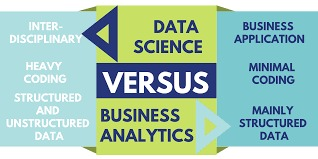
Data science vs Business Analytics are separate disciplines, which are quite often used interchangeably. A layman may not be so concerned with this interchangeability, but professionals have to use the words appropriately, since they have a broad and immediate effect on the company.
Is Business Analytics and Data Science the same?
A Business Analyst’s job includes researching and extracting useful information to clarify business performance (present and future) from data sources. The correct plan to develop the organization is often decided by a Business Analyst. Whereas, Data scientists gather, analyze, and interpret broad data sets and use their analytical, mathematical, and programming skills to decipher valuable insights for solving difficult business problems. The three major factors that differentiate business analysts from data scientists are overall responsibilities, skill sets, and user interaction.
Overall responsibilities: The functional requirements that inform IT system design is provided by business analysts. On the other hand data scientists derive significance from the data generated and processed by such systems. Data scientists may also simplify the activities of the company analyst and be able to provide some of the market insights. Taking monetary benefits into consideration business analysts are slightly paid more than data analysts.
Skill Sets: Business analysts need data science expertise as well as skills related to communication, critical thinking, negotiation, and management. Whereas, data analysts need similar skills with a more in-depth emphasis on technological data manipulation.
User interaction: Business analysts also have more direct contact with system users, clients, system developers, and others as project facilitators and managers than data analysts do. That’s because market analysts will also interview individuals and learn more about how to enhance technology to help business processes. During the course of a single project, they work collaboratively with others. While data analysts can initially collaborate to define important data sets with internal subject matter experts, the majority of their work is performed independently.
Considering business analytics and data science domain, the former attracts the target base more owing to its business coherence and state of the art application-related job role. Apart from these there are few more benefits of pursuing business analytics which are as follows:
More informed decision making: Business analytics can be a valuable resource when approaching a substantial strategic decision. For example, when the company needs to analyze its product line update, business analytics can be applied to determine whether the updated product has resulted in faster service, more precise recommendations for resolution, and higher scores of customer satisfaction are achieved.
Improved operational efficiency: Analytics, beyond financial benefits, can be used to fine-tune company processes. Business analytics can be used to forecast business operations and assist the company by more effectively timing maintenance, enabling it not only to save operating costs, but also to ensure that it maintains assets at optimum levels of performance.
Is Business analytics a good career option?
As digitization has become a buzz in recent times with technology and data being utilized from local grocery shops to well-sophisticated malls, the demand for business analysts also has increased significantly. Moreover, as per the statistics, for every hour, terabytes of data are generated by 6 billion connected devices. With this increasing demand, there is an insufficient supply of professionals.
From the above-mentioned courses offered by MBA institutes, one can get the knowledge of the following skills: Python, SQL databases, and R, Survey/query software, Business intelligence, and reporting software, Data visualization, Database design, Problem-solving skills, Effective Communication, Creative Thinking and Industry Knowledge. These help them to be the best fit for diversified job roles, which include data analyst, supply chain analyst, big data analyst, business analyst, marketing analyst, finance analyst, HR analyst, etc. The increasing demand for MBAs with analytical skills has made Business Analytics a relatively new and popular specialization in the management domain.
What is a Business Analytics MBA Job Market?
There is a shortfall of 1.5 million analysts, according to a report by the McKinsey World Institute. With an MBA in Business Analytics, you are eligible for a large range of careers, including popular C-suite jobs. This is because MBA graduates are qualified to hold leadership positions in a number of business environments. In all types of businesses, health industry marketing, supply chain management, data-driven decision-making is increasingly in demand. Based on their domain knowledge, skills and work experience, companies typically offer these job roles to candidates. The high demand for professionals with an MBA in Business Analytics is generated by MNCs, retail and manufacturing companies, IT companies, e-commerce companies, consultancies, telecommunications companies and business analytics and intelligence companies. MBAs are hired not only by MNCs but even by startups. As an MBA is primarily a business degree in Business Analytics, you will not be looking at data science work. You’ll be eligible for data-driven positioning instead. You will also have the advantage of competing with a background in analytics for more general positions in business management.
To conclude, the MBA in Business Analytics is an upcoming field of expertise in all sectors of the industry that is gaining increasing traction. The specialization demonstrates a positive and promising outlook, and you can go ahead and begin your MBA journey in Business Analytics for those of you who have long been skeptical about choosing this career path!
IIM Kashipur started its first batch of MBA Analytics in 2020 to keep pace with the blooming prominence of Analytics in the modern world. The course aims to groom the budding managers with the competencies of analyzing the data – knowing the ins and outs of ever-increasing information and filtering it to carve out the best possible decisions for a business. This domain holds immense possibilities for a future manager and IIM Kashipur facilitates unlocking this discipline of management with an explicitly designed course mentored by one of the best faculties in the field. In this two-year residential programme, we aim to give a 360-degree exposure to the students in terms of building a foundation in the Analytics field and equipping them with an exploring mindset.
IIM Kashipur is a student-run campus and students are entrusted with the responsibility to realize the mission and vision of the institute. With this culture, the students paint the canvas of institutional reputation with the hues of excellence in various academic and extracurricular activities. There are domain-specific clubs to foster specialized attention towards a domain. To cultivate and nurture the interest in the field of analytics, we have Titan – the IT and Analytics club of IIM Kashipur.
Titan’s primary objective is to assist the students in developing an understanding of IT and Analytics. The club aims to motivate students to pursue a career in analytics by introducing them to this domain’s opportunities and scope. It exposes the students to the possibilities in the field and guides them towards choosing the specific roles. Titan conducts various activities and knowledge sharing sessions throughout the academic year to stimulate the interest and promote learning in this sphere. The club conducts events and activities in various formats to allocate equal opportunity to every student to showcase their skills and talent to ace the IT and Analytics domain. Some of the colourful pages from Titan’s book are shared below:
Competitions-BrainDare: TITAN organizes BrainDare, an intra-college competition intended to bring acquaintance of analytical tools like MS Excel, Visualizations tools, etc. as well as to give a flavour of dynamics of analytics in terms of statistics and its applications in the real world. BrainDare facilitates students to brainstorm to solve real-time data-based problems and derive inference and further insights. This event is conducted every year to bring the best out of people, making them apply their basic understanding of analytics and awareness of it. Annually the competition witnesses participation of around 40-60 teams and the top 3 three teams are awarded prizes on overall cumulative performance throughout the event.
Guest Lectures: TITAN organizes guest lectures by inviting industry stalwarts in the IT & Analytics domain to deliver lectures on themes delving deep into various concepts and trends prevailing in this context. The sessions are mainly aimed at bridging the gap between academician and practitioner approaches. The club has maintained the excellence via hosting professionals from reputed organizations like Flipkart, ZS Associates, STAR India, FabHotels etc. to serve the best interest of students.
Regular engagement through social media: TITAN fosters analytics culture in MBA and makes students aware of the analytics concepts, latest tech news, and brand stories using analytics in their business processes. Team TITAN shares short articles regularly and tech news on their social media handles- Instagram, LinkedIn, and Facebook. Lesser known facts regarding brands leveraging analytics are also shared. Short quizzes are held on Instagram stories for a quick and engaging learning experience. All these social media handles are used for official communication with IIM Kashipur fraternity and analytics enthusiasts regarding the events organized by TITAN and informative content related to IT and analytics.
Certifications courses: TITAN organizes certification courses with the help of industry experts to share knowledge encompassing different tools and languages which will be useful in the academics and the career ahead. CPBA- Certified Python Business Analyst program was conducted, and Annual Advance Excel Workshop along with Microsoft Office Specialist Certification was organized last year where 30 students got certified through this course.
Peer Learning Session: TITAN organizes peer learning sessions on softwares like Python and R to make the students well-versed. Considering the rising need for Analytics and Big Data, Titan also conducted peer learning sessions on SQL this year. The session provided a basic overview of SQL, How Managers can leverage SQL’s power, Hands-on experience using MySQL Workbench, and prospective interview questions on the same. Along with this, the club also conducts sessions on various tools for visualization, machine learning.
Flagship events: TITAN organizes two PAN INDIA case study competition to foster the interest in analytics and improve the institute’s visibility across the country. They are:
Datasights – It is one of the most anticipated events of the year. Organized around February, the event plays a significant role in providing the real pinch of analytics where participants across various B-Schools participate enthusiastically
Coherence– TITAN organizes its flagship event “Coherence”- a PAN India case study competition in association with various training centres like Excel Prodigy and Havish M Consulting every year as a part of “Agnitraya”, the annual cultural fest of IIM Kashipur. The event provides an excellent opportunity to flaunt one’s analytical skills. The event anticipates huge participation from top B-schools across the country with 700+ participants as of 2019.
In a nutshell, club Titan offers students a plethora of opportunities to explore the length and breadth of IT and Analytics as a domain. They strive to serve the students with the best resources and provide constant support to enhance their understanding of the domain.
Mr. Shikar Gautam, Alumnus of IIM Kashipur who has completed his PGP in the year 2017 is currently holding the position of Senior officer at GAIL (India) Limited. The Alumni Relations Committee of IIM Kashipur has served as a bridge to beget valuable insights about the Natural Gas Industry from our erudite alumnus. This article covers the holistic perspectives on various questions dealing with the Natural Gas Industry through the lens of GAIL (India) Limited.
Q. Why is there so much accentuation around a gas-based economy?
The government released Natural Gas Marketing Reforms in October 2020 to work in that direction, how will it boost natural gas marketing and increase domestic production, while ensuring a fair competitive market.
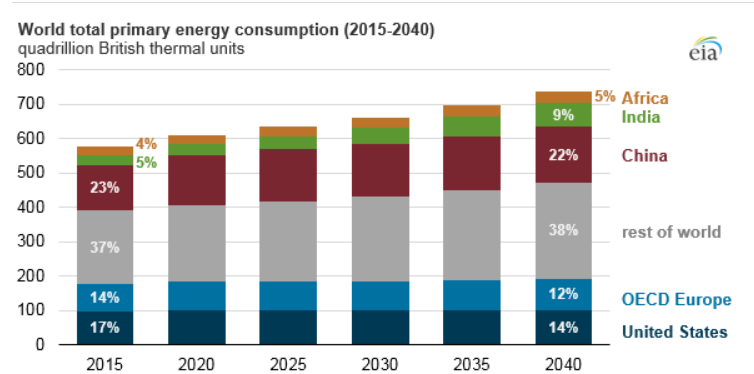
India comprises 17.7 % of the world population but only consumes about 5.8% of the total energy. As per the World Bank, the world average per capita energy consumption is 3 times over India’s energy consumption. Countries like the United States, China with 10X per capita energy consumption as compared to India are still adding energy capacities to their existing portfolio and are shifting towards cleaner energy alternatives.
India’s energy consumption has doubled since 2000 yet around 240 million people remain without electricity. To cater to and satisfy the energy requirements of the country, India’s power system needs to quadruple in size by 2040 and focus on the choice of fuel it uses. To fulfill the rising demand and restrict the use of polluting fuels like coal and oil, India needs to plan and strategize the right energy mix which can sustain the changing environment. In 2018, global wind power capacity grew 9.6% and solar power accounted for about 2% of global power requirements.
India’s endeavor towards a Gas Based Economy and natural gas has been identified as a sustainable option to create a balanced Indian energy basket. Hydro and nuclear plants are usually operated at 100 % capacity therefore it is not feasible and recommended to operate them under capacity or to shut them on/off frequently. Due to the unrivaled capacity of gas-fired power plants to ramp up and down quickly, gas-fired power generators are much more adept at adjusting output based on residual demand resulting from wind and solar power than other hydrocarbons such as coal. Accordingly, natural gas electricity generation is increasingly employed to support wind power as the latter continues to grow. As the market share of wind power increases, the amount of fuel needed to provide backup to wind will also increase. This means that natural gas power, wind, and solar power are likely to be tightly linked in the short-to-medium term.
By 2040, Electric Vehicles which are thought to be competing against Natural Gas Vehicles would comprise 55% of new car sales and 33% of the global car fleet. Electrified buses and cars would displace a combined 7.3 million barrels per day of transportation by 2040. In order to shift to a cleaner energy system and cater to such a volume of electricity requirement, it can be deduced that the EV charging stations would require electricity from cleaner sources keeping in mind the emissions from the use of coal in electricity generation. With the natural gas infrastructure in place, the future electricity requirements can be fulfilled by Natural Gas through large power plants as well as small captive plants at commercial parks/ residential complexes where natural gas can be directly used at the point of electricity consumption. A pilot plant of 10 MW capacity is already operational and supplies electricity to DLF’s Cyber City, a major commercial centre housing multinational corporations and leading business house.
Natural Gas Marketing Reforms in October 2020:
Government now also allows pricing freedom for new and upcoming fields to domestic producers as the existing domestic pricing formula is making natural gas production economically unviable. The system was based on the crude price indices of the US, Europe, Canada, and Russia. This system was becoming irrelevant day by day and needed to be scrapped.
The objective of the policy is to prescribe the standard procedure to discover the market price of gas to be sold in the market by gas producers, through a transparent and competitive process, permit Affiliates to participate in the bidding process for the sale of gas, and allow marketing freedom to certain Field Development Plans (FDPs) where Production Sharing Contracts already provide pricing freedom.
Oil Secretary recently revealed that govt. is planning some more reforms in the upstream sector to make it attractive for investors
Q. Can you please shed some light on the recent GAIL project of the Kochi-Mangalorewhich was virtually inaugurated by PM Narendra Modi?
The 444-km long natural gas pipeline was launched in 2009 at an estimated cost of Rs 2,915 crore and was to be commissioned in 2014. But opposition on safety and commercial grounds wherein the land price was the main hurdle, both from political parties and the public, ensuring that the project lingered on. This led to the project cost nearly doubling to over Rs 5,750 crore.
Situations like these are common in projects which involve dependency on external agencies for their completion.
Some common problems include:
Difficulty in route planning because of the growing population
Farmers demanding higher land compensation, route diversion, etc.
Records of ownership and land possession certificates are not easily available
Inadequate Mobilization of construction equipment, Specialized equipment
Like in this case: Resistances of farmers, Farmer bodies – instances of associations, PIL, litigations, etc.
GAIL was ready to complete the project this August, but a 540-meter stretch across the Chandragiri River became a nightmare. The project crosses as many as 96 waterbodies south of the Chandragiri River. So as a way out, GAIL reduced the diameter of the pipe to a fourth — from 24 inches to just 6 inches now. But this is only a temporary arrangement and the work to lay the 24-inch pipe will resume soon
Today the pipeline supplies 3.8 million cubic metres of gas every day to industrial and residential customers in Kochi and is set to cross 4 million cubic metres soon in the city itself, while Mangalore has a potential of 2.5 million cubic metres per day
With the commissioning of the pipeline, gas demand in the state will touch 80-90 million cubic metres per annum from 60 million cubic metres now.
The pipeline is also a big boost to the struggling Kochi LNT Terminal of Petronet which has a capacity of 5 million tonne annually but 90 percent of capacity has been idling due to the delay in completing the Kochi-Mangalore pipeline and with the commissioning the capacity utilization of the LNG terminal will go up to 25-30 percent.
Apart from huge environmental gains, the state can also gain monetarily as it can get up to Rs 1,000 crore by way of taxes alone. Supplying to the Kochi region alone helps the state earn over Rs 340 crore annually in tax revenue.
Q. GAIL won the Leader Award at Frost & Sullivan and TERI’s Sustainability 4.0 Awards 2020. Where does sustainability stand for GAIL, especially in an industry where resources can be easily exploited.
Talking about sustainability from GAIL’s point of view. GAIL has engraved the word “Environmental Responsibility” in the company’s vision statement.
GAIL has a dedicated Sustainability department working towards a Sustainable Future.
The company has been disclosing environmental, economic, and social performance since 2011 through annual sustainability reports. Through sustainability reporting, the company analyses its strategy, set goals and targets, measure and advance performance, and ultimately develop a sustainable business model that adds value to the society
Along with Frost & Sullivan and TERI’s Sustainability 4.0 Award, GAIL also received FTSE4. Good Index series certificate in June 2020.FTSE4Good is a global sustainable investment index series, designed to identify companies that demonstrate strong Environmental, Social, and Governance (ESG) practices measured against international standards.
Apart from this, some Initiatives of GAIL towards sustainability:
Hawa Badlo (Change the Air) is a one-of-a-kind initiative by GAIL. It is a campaign to drive behavioral changes in making our cities air pollution-free. The campaign has digitally touched more than 100 million lives, enabling people to make a direct link between their energy consumption patterns and the impact on their health and the environment. The goal is to motivate people to voluntarily switch to more economic and environmentally friendly ‘natural gas’.
SATAT’ (Sustainable Alternative Towards Affordable Transportation) is a scheme launched by the Ministry of Petroleum and Natural Gas to promote Compressed BioGas(CBG) as an alternative, green transport fuel and is being implemented by GAIL
THE estimated CBG Potential from waste/biomass in India is 62 MMTPA. Under SATAT, it is planned to target 25% of this potential ~ 15 MMTPA by 2024 through 5000 CBG plants (~ 8 TPD ~ 10000 SCMD). CBG shall be produced by Entrepreneurs and OMCs, GAIL along with it’s Associates and Joint Ventures will provide marketing tie-up to CBG Entrepreneurs
Other environmentally conscious decisions include –
Having more than 40% of GAIL landholdings covered by green belts and water bodies across all the locations
GAIL has carried out multiple studies to assess the potential for the installation of solar power plants at its sites pan India. Implementation of solar power is in progress at shortlisted sites.
GAIL has also embarked upon the journey of adoption of the GreenCo Rating. This rating helps in making products, services, and operations greener.
GAIL revised its Sustainability Policy considering the new national and international developments such as UN Sustainable Development Goals, India’s Nationally Determined Commitments among others.
When we talk about renewable energy GAIL has a portfolio of-
130 MW – Renewable energy portfolio (118 MW– Wind and 12.26 MW – Solar)
120 Sustainability projects – Investment of INR 80 crore
Renewable energy generation– 1,76,200 MWh (Moving towards renewable energy)
The onslaught of online teaching-learning practices that entailed the COVID19 outbreak in recent times has outvied the traditional pedagogy of a physical classroom experience both from temporal and spatial contexts. The usual classroom environment has been replaced by a digital space where many of the teaching-learning assumptions are being questioned every day. It has brought new issues, challenges, and opportunities to the omphalos of educational praxis. At best, it has enthroned the learner at the centre and compelled the teacher to negotiate the curriculum through digital intermediaries and applications that were hitherto unknown to both. While the virtual reality has become new normal and opened up avenues for action research, it has once again startled many to the core. Being an abettor of open and distance education since the 1990s, for me, it was a long battle won at last. A battle that we lost innumerable times when our colleagues and fellow educationists vacillated the reliability and validity of teaching, learning and degrees earned through ‘distance mode’. Even after the establishment of an open university almost in every state, the government used to give public notices announcing that degrees obtained through distance education are equally ‘valid’. COVID19 has pushed all those egotisms to the periphery and firmly entrenched the online education system that is going to be the new paradigm for years to come, perhaps much after this pandemic.
While the traditional classroom is seen as a powerful space where the physical presence of the faculty is set as the apotheosis of knowledge, the online classroom has made the field more democratic. I am now au courant of the fact that unless and until I make the content attractive, relevant, and rich, the audience might just occlude me from his/her reality and I would be facing more blank screens (when students’ cameras are off). I can no longer afford to unleash the drudgery of monologues on the students and as such I have to deliver the content from with a design thinking approach where graphics, narratives, and the platform (e.g. Zoom) are all in sync with the theme of my session. The art and the aesthetics of audio-visual contents that were long considered the tinge of the media and journalism experts have now become the existential survival skill for the online faculty. The jury is out and the potential outcome of my delivering classes online over the last few months will perhaps reiterate an apophthegm that I heard from one of my senior colleagues — ‘to teach or not to teach, do whatever you like in class but never bore your students’. That fulmination looms much larger today for any teacher when both the dramaturgy and the stage have gone virtual and if something goes wrong it might even go ‘viral’.
As a researcher, while my field teams are cooling their heels at home, online classes have opened up an enormous space for conducting digital ethnography or Netnographic study from the comforts of our homes. That is an added advantage that would have perhaps remained in the penumbra, had we not been forced into this homebound exile by the pandemic. The Socratic classroom has taken a backseat for now and the flip-class has taken a lead in enriching students’ engagement and active learning at different levels. We are now more conscious of the difficulties, digital divides, affordability, and access issues in connectivity and the differentiated learning preferences of our disciples. That is a new nirvana for me to suspire for.
–
Dr K M Baharul Islam
Dean (Academics) and Professor (Communications)
Chair, Center of Excellence in Public Policy and Government
Aenean feugiat purus vitae sollicitudin laoreet. Duis fringilla ligula vel velit lacinia, in mattis felis consectetur. Sed at pretium orci. Ut tempus libero odio, sit amet consequat neque pretium ut. Integer hendrerit mauris nec odio auctor suscipit. Proin porttitor turpis vitae ligula dictum, a sollicitudin purus congue. Nulla viverra nisi ex, ut ornare tellus cursus quis. Nulla posuere tincidunt leo at condimentum. Sed egestas tortor a nisi fringilla, id cursus odio rhoncus.























 The IIM Kashipur Blog