Journey in IIM Kashipur

“Leadership and learning are indispensable to each other.John F. Kennedy 

I came across this quote by Kennedy as a part of a case study in our management curriculum. At that point in time, this quote did not mean as much as it does now, as I retrospect on what has been the most crucial learning curve in my life. 

Readers of this article would associate with terms like ‘rigor‘, ‘job opportunities‘, and ‘return on investment‘ with an MBA degree. While all these terms are equally important, there is so much more propagated here in the Red-brick campus of IIM Kashipur that leave an everlasting impact in honing your skills and abilities, all the while accelerating your growth as a manager worthy of the title of an MBA.

Speaking from experience, the culture here at IIM Kashipur is structured in a manner to promote hands-on learning through the functioning of various student bodies, which has helped many students like me to improve our soft skills, learn how to delegate and prioritize pending work, how to respect deadlines and most importantly, how to push the boundaries of what is considered impossible through sheer hard work, resilience, and dedication. 

Yes, at times things can get difficult, but here at IIM Kashipur, we believe that it is our network that defines our net worth. It is this thought process that has enabled me to meet different kinds of people, learn their ways of handling difficulties associated with different problem statements, and ultimately pull through, no matter the novelty of the challenge.  

My greatest learning at IIM Kashipur has been to not get overawed by what all needs to be done in a short period, that too at a breakneck speed. Yes, it involves a mountain of work with hurdles aplenty, but when you surmount the peak, the view is beautiful from atop. 

These invaluable additions to my skillset lead me to believe that my two years worth investment at IIM Kashipur will remain etched in my mind as a bunch of happy memories, replete with learnings, challenges, and victories galore. 

About the Author:
Sahil Sondhi is currently pursuing MBA from IIM Kashipur, with majors in Marketing and Analytics. He is a part of various student bodies like the OYM-The Marketing Club and Team Insite-Admissions Support Body. He is fond of playing the guitar, going for long drives and reading novels in his spare time. You can connect with him on LinkedIn

Probable impact of US Elections on global supply chain post-Covid

As the entire world went into the first-ever lockdown of the century, all except the medical staff were confined to their homes. This ensured that everyone stays safe, but every sector of business went into a state of despicableness.

Reason? SUPPLY CHAIN DISRUPTION!

Such is the power of supply chain network especially in this era of Globalization! Any wrong decision can lead to a world full of chaos and violence.

Fortunately for us, the world leaders ensured there was enough supply of essentials required for survival. And now that Covid-19 vaccine shots are being administered, the hopes of Supply chain normalcy seem to be cropping up.

However, one major event that took place towards the fag end of 2020 that could potentially change the way International trade and supply chain worked until now was the U.S. Elections.

As I write this article, Joe Biden is the president-elect and what could it mean to the Supply chain?

During the Presidential debate, Joe Biden emphasized negotiating with the Pacific nations to restructure the international trading rules in order to reduce dependence on China. This would help other Asian & Arabian Countries to improve their economy as they would have the liberty to export more with limited competition from China.

Joe Biden is particularly wanting to support the United States-Mexico-Canada Agreement (USMCA) so that the United Nations’ powers in terms of framing laws for international Supply Chain & International Trade are strengthened. The manufacturing sector in this region will see a boost as North American Countries are given incentives for Automobile manufacturing, especially that of Trucks & cars. With strong agricultural laws, the farmers will get access to the markets in all three countries.

Manufacturers in the US who offshore production and sell the products or services back in the US, have to pay a heart wrenching cumulative tax of 30.8%, to solve this issue. Biden’s policy focuses on local manufacturing, he promised to direct $400 billion in federal procurement towards manufacturing and emphasized on Made in America label.

The federal department many times in the past has claimed that manufacturing certain products is not feasible in America and that has given a huge market to other countries. Biden, while addressing this point, stressed using IT Technology to publish it on a specific website built for the same purpose. Once such requirements are posted on this website, tenders can try their hands on producing such products thus getting eligible for the 10% advance tax credit policy.

During almost all his campaign rallies, Biden mentioned the need to directly support small manufacturers, especially those headed by women, this would ensure the creation of jobs and keep the national per capita income increasing. Biden said he would direct $300 billion towards R&D of electric vehicle technology, 5G, Artificial Intelligence – this ensures procurement of parts required for the same and to ensure smooth supply chain, he promised to amend Custom laws and make it easier to buy.

He said & I quote “While medical supplies and equipment are our most pressing and urgent needs, US supply chain risks are not limited to these items. The US needs to close supply chain vulnerabilities across a range of critical products on which the US is dangerously dependent on foreign suppliers.” This prepares the U.S to be ready for a probable 2nd wave of Covid-19 & any kind of crisis in the future.

Biden spoke about how supply chains laws and the federal Government’s purchasing power can ensure smooth manufacturing of critical parts used in the United States’ defence systems. In this way, not just the end product but also the supply chain of manufacturers receives a boost. Biden mentioned the need to be environment friendly and has pledged to utilize the $500 Billion federal government spends on Zero Emission & 100% clean energy vehicles. This would again create more manufacturing & thus more jobs & thus a bigger growth in the US economy. He also mentioned he would bring in stricter laws that would govern the readiness of environment-friendly technologies in all infrastructure projects, thus, giving opportunities for renewable energy innovation & thus impacting supply chain networks.

All in all, most of Biden’s policies focus on reducing the dependence on China for products & supply chain services. This would only help America as they are moving towards becoming leaders in Mass production, Supply Chain services.

We’ll have to wait & watch how the American labour class reacts to this, since the labour costs are higher in America and the Chinese workforce is almost 5 times larger than in the U.S, the next 4 years is expected to witness intense geopolitical tensions. All the countries that are in Joe Biden’s good books might receive some goodies. In the Post Covid-19 era, America might overpower China on these lines & India must continue to maintain cordial relations with them by being diplomatic on issues & at the same time strive hard to increase in-house production of goods & services through schemes like Atmanirbhar Bharat.

Sumanth S (MBA Batch 2020–22)

Demystifying Stock Market and Economics

Few lingering questions which every common investor has in his mind are how can the stock markets and the economy growth move in the opposite direction? Will the market crash due to poor economic growth anytime?

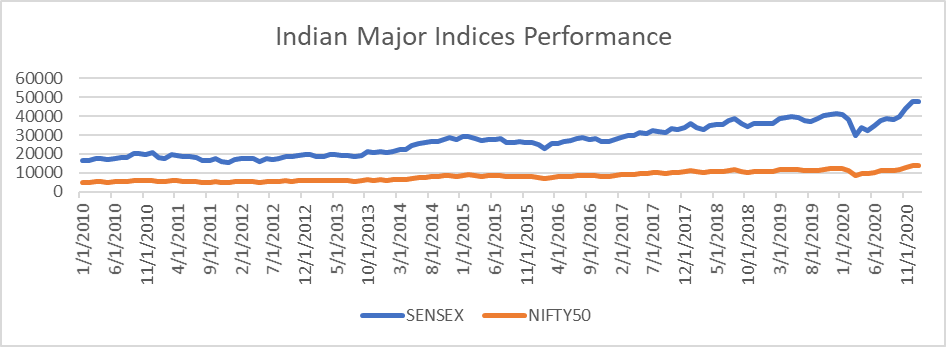
While the Covid-19 pandemic forced all economic activities to a total halt, pushing major economies into a recession, the markets around the world on the other hand had a mixed response showing a steep fall during the initial pandemic breakout and steadily recovering over time to race all-time highs in Indian and US exchanges.

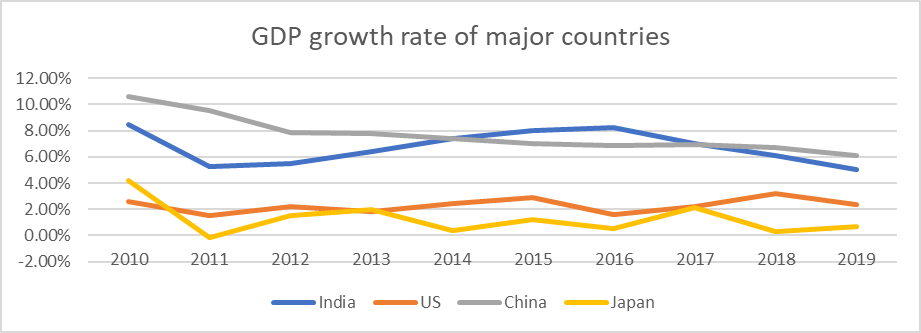
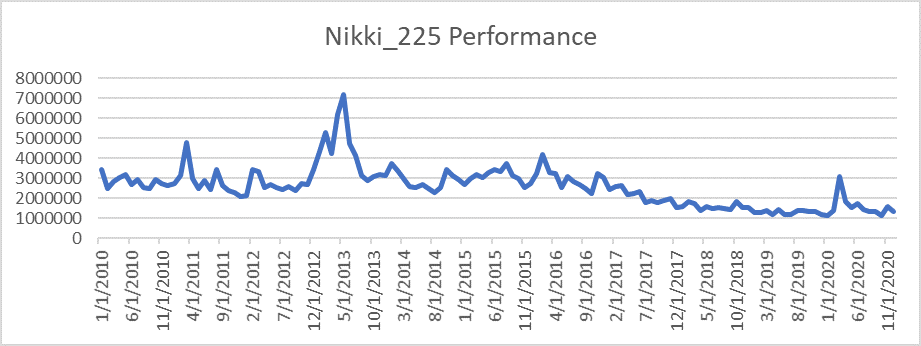
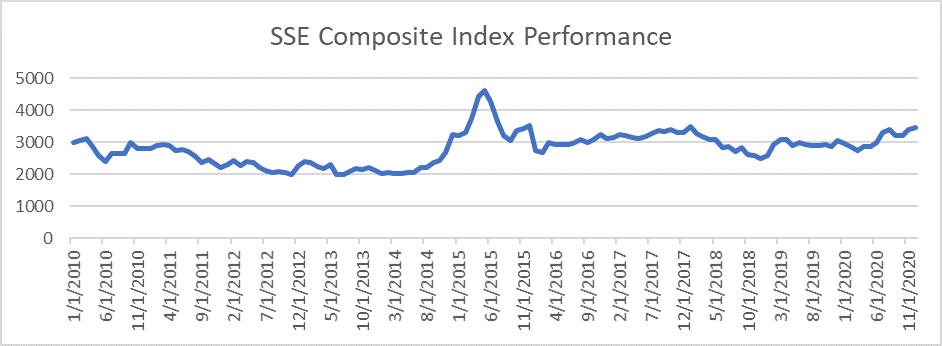
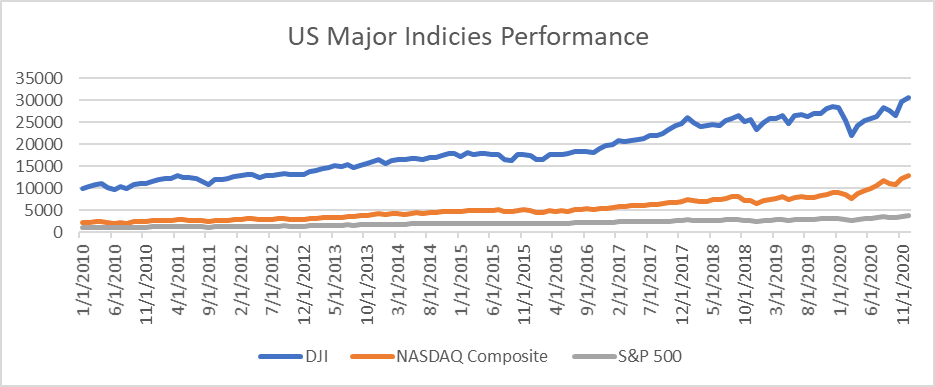
The empirical analysis of the annual GDP growth rate and the historical market performance of leading stock exchange indices of major countries such as USA, Japan, China, and India respectively over the decade show little correlation between the growth of countries’ GDP and performance of stock markets.

Japan faced one of the worst decades of economic growth battling recession and unemployment having a maximum GDP growth rate of a mere 2% in the last decade. While Nikki_225, the benchmark index of the Tokyo Stock Exchange had lost more than 60% of its value over the decade, sharp falls in the index during this period was the result of external events such as Fukushima’s nuclear crisis and the European Sovereign Debt crisis in 2011. The rally in 2013 which surged more than 70% due to the weakening of Yen and expansive economic policy was short-lived as the market plunged by ~60% at the end of 2013 due to the weak GDP growth of China and quantitative easing of US Federal Reserve during the same period.

Though China’s economic growth declined gradually from 10% to 6% over the decade, it was still having the highest growth rate among the developing countries. The Shanghai composite index grew a mere 16% over the decade despite the country having the highest GDP growth among the major economies. The Chinese exchange majorly influenced by the domestic investors who were largely inexperienced and traded using borrowed capital persuaded by the Chinese state-owned media during the period of 2015, saw a bubble in the market with the index soaring more than 150% over the previous year despite the country having poor manufacturing and economic growth. However, the bubble was short-lived and consequently busted as it lost 40% of the value in the month of June and continue to fall subsequently due to the devaluation of Yen.

The turbulence of Chinese stock markets combined with slowing growth of China’s GDP, falling oil prices, and weakening of the Japanese Yen against the US dollar and Brexit event resulted in a global sell-out during the period of 2015–16 which impacted all major stock markets around the world including US and India. 

Despite having low GDP growth of around 2% over the decade, US markets have continued to grow over where the leading indices such as Dow Jones Industrial average, S&P 500 and NASDAQ Composite have yielded returns of over 200% primarily driven by innovation and technology. FAANG companies due to the power of the platform model, network effects have had a compounded annual return of more than 20% individually over the decade. Markets also saw an emergence of new business models and sunshine sectors such as electric vehicles, e-commerce, AI & Cloud computing, alternative energy, OTT etc which continue to have positive investor sentiments.

Globalisation and foreign trade are also important factors to consider why the performance of the Indian stock markets has little correlation with economic growth as the manufacturing sector contributes only ~15% of total GDP compared to China and Japan which has ~ 30% and ~20% respectively. The major sectors such as IT, Pharma, Breweries and Distilleries, Precious Metals, Automobiles are export-oriented which relies on the US and the global economy. Sectors such as Refinery, Paint, Aviation are highly dependent on the price of crude oil as India is one of the major importers.

FII also has a significant factor to play in controlling the direction of the stock markets. Indian equities saw a record inflow of $23 Bn (Rs. 1.6 Lakh Crore) in 2020 as the global investors were optimistic about the strong economic recovery, vaccine progress and low mortality of Covid-19 in India compared to western countries. This liquidity provided by FII continues to drive the market sentiments forward leading the prices to soar all-time high across multiple sectors.

The performance of the stock markets does not rely only on the economic growth of the country. Other factors such as the nature of its constituents, the impact of FII, technology & innovation and global events can also impact the markets. Markets can be both forward-looking and reactive to economic events and will correct themselves in the event of any bubble during times of weak economic growth.

Arjun R. (MBA Batch 2020–22)

A 2400-year-old HR Theory that Builds Empires

When we talk about the origins of modern management theory, we often start the curve from F.W. Taylor’s Principles of Scientific Management, authored about a century ago in 1909.

The evolution of the practice of managing people since then has gone through various stages, from Labour Welfare to a more organized form called Personnel Management, then to Human Resource Management, and now, to ever-complex, empathetic, and most-strategic People Management.

Managing human resources or people is mainly based on the edifice of motivation, the stimulus you provide to a person for doing a particular job, and staying loyal to you.

This simple-to-use yet hard-to-master concept of Motivation is utilized in all organizations today, by taking inspiration from various motivation theories, Maslow’s Need Hierarchy Theory (1943) being the most popular of them all.

Now, what if I tell you that there’s a centuries-old management theory that not just discusses the concept of Employee Motivation but also structures a complete HR cycle. This theory was authored about 2400 years ago (yes you read that right!). It holds its relevance even today – and will probably continue to do so forever. The theory is given by India’s pride Chanakya, one of the most advanced and brightest minds known to have ever existed. The theory is:

Sama – Dana – Danda – Bheda

Most of us might have heard this string of words plenty of times before but never really knew what it meant.

It means, 

Collaboration – Reward – Punishment – Separation: The entire HR cycle summed up in 4 words

Here is a short description of each of these four “Upayas”: –

Sama ~ Collaboration: It implies finding the right person for the right job and then ensuring a mutual win-win situation by aligning his or her individual goals with the organizational goals. The employer must make sure that every person in the organization feels like an integral part of the larger team. An efficacious collaboration requires attentive listening. If a person feels that he is understood by the people around him, his problems have ears, and his struggles have supporters, then he will be there for you when you would need him the most. This is the foundation stone of every relationship and any cracks left unfilled during this process can vandalize the whole ecosystem in the future.

Dana ~ Reward: At the end of the day, all conversations boil down to this – the monetary and non-monetary compensations one receives in return for loyal services to an organization. Salary, bonus, increment, promotion, wellness benefits, medical insurance, housing facilities, vehicle, stock options, personal assistant, etc – everything forms a part of Rewards and Benefits. It goes without saying that an underpaid employee would never work to his full potential. Interestingly, studies suggest that even an overpaid employee is a complacent liability for the company. So, it becomes crucial for HR to strike a healthy balance when it comes to Rewards & Benefits of the workforce.

Danda ~ Punishment: Now this serves as a discipline wand, a motivator but of negative nature. While the high-performing employee enjoys the reward, the low-performing faces the brunt of the management in terms of verbal backlash, pay-cuts, demotions, or even expulsion. In every organization, performance appraisals reveal a bell curve of employees’ distribution, where 70% of them are found to be average performers. Fear of Danda ensures that these employees do not deviate towards the category of Non-Performers and continue to match the outcomes with expectations.

Bheda ~ Separation: This involves parting with an employee in the form of voluntary or involuntary retirement, resignation, or expulsion. It is rightly said that change is the only constant. The people, whether you like, love or hate it, cannot work for you forever. They will leave you when a better personal or professional opportunity comes across their way. For HR, it is important to take this pragmatically and ensure that the HR cycle keeps on running smoothly by not shying away to collaborate with new people and focusing a great deal on their training and development.

_____________

These words of wisdom that continue to guide people-managers are the doctrines that helped Chandragupta Maurya build his enormous empire in 300BC. Even today, with the right essence and execution, these can empower each one of us in building our own!

– Savinay Goel (MBA Batch 2020–22)

Future of data visualization tools in business analytics

– Team MPRC, IIM Kashipur – 

We are in the age of data science. The ever-growing complexities of data science welcome a whole new scope to unlock the power of data. With big data rising at an exponential rate, it is becoming essential to organise, filter, analyse, and visualise data to gain a competitive edge in the business. Data visualization is gaining traction. According to Gartner, by 2025, data storytelling will emerge as an industry trend, with 75 percent of the stories automatically generated using augmented analytics techniques.These techniques are at the center of revolutionising the sense of looking at data differently and thereby enhance the experience of analysing data.

Prof. Vivek Anand talks to the Media and Public Relations Committee (MPRC), about the scope of data visualization for the managers of tomorrow, and more.  

Prof. Vivek Anand is currently associated with Wilson Consulting Private Limited as an operations director. He is a data visualization consultant with 17 years of experience and has done MBA from Monash University Melbourne Vic. with an area of specialization including Marketing & Econometrics. He has a background in Sales & Marketing with leading Indian hospitality brands across the country. His inclination to analytics made him switch roles 8 years ago to become a full-time consultant in analytics and spearhead corporate training for Wilson Consulting in India and the US. He is a qualified trainer of some leading tools in the industry such as Tableau & Power BI and has a passion for teaching. He is also an adjunct or visiting faculty at Great Lakes Institute of Management, Great learnings, SP Jain, IIT Madras, IIM Kashipur, IIM Calcutta, IIM Trichy, IIM Ranchi, IIM Kashipur.

[MPRC]– What is data visualization? How important is it today?   

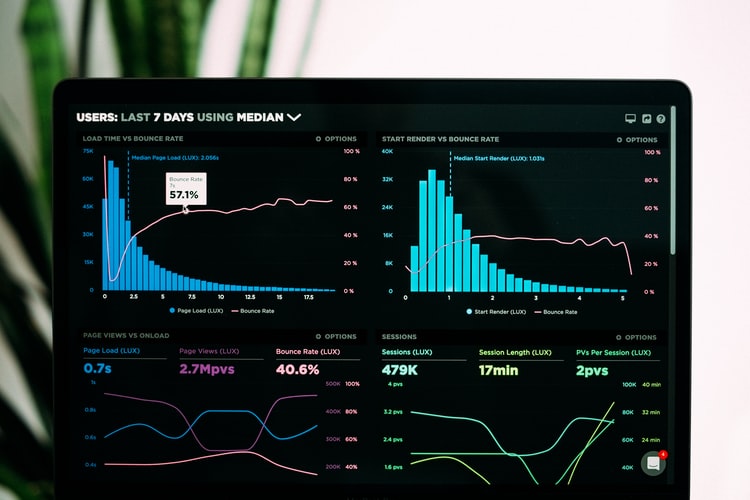
[VA].- So to give it to you in a nutshell, Data Visualisation is trying to look at data or trying to see or perceive patterns in the most effective manner. That’s what it is. It’s not a tool if I may say, I would rather call it science and I think it forms a vital part when it comes to business operations because we are moving into a phase where data is becoming the key. One of the biggest challenges that organizations face is how to best organize data, how to best seek patterns and once you find a pattern, the next task is how to best present it as a story or a dashboard or something. So I would say it is extremely crucial when you want to kind of make any sense of the data.

[MPRC]– How is this science helping the managers to perceive a pattern?

[VA]–  When you are trying to perceive a pattern, the intent is to try and get the answers. The interpretation must happen as quickly as a reflex action. Say, for example, you are made to touch a 500 degrees Celsius hot iron ball, your spontaneous reaction would be to take a hand off the ball. Now, you need to have a similar kind of reaction when you see data. Without even thinking for a second, you must be able to get the answers as quickly as you can without having too much hand-holding or too much help. That’s when you know that you have actually got it right. And also the thing is no one has the time or bandwidth to really sit and ponder old things to see what it was all about. So if we don’t get things right, we won’t get that kind of reaction from your audience.

[MPRC]– From a managerial point of view, prior to 2010, there were not many tools for data visualization. As we remember when we were in school, we were still using PowerPoint and it was just the beginning. But right now a lot of software has come up. So which software is used in the market right now?

[VA]. – Okay so, I’ll give you an answer for a software. There are so many tools like Tableau to lead with today. There is Power Bi for rich visualization and multiple other tools like Qlikview etc. A lot of tools are there. There are tools which are user-friendly, like drag and drop feature. Some of them require a bit of coding. But, I would say that learning software is not going to give you science. Just to tell you something, whatever that can be done with all these cutting-edge tools, can also be done with Microsoft Excel. It is just that it needs a little extra bit of time and effort.

The tool is not again a bit of a challenge because a tool which is learnt at the drop of a hat today might completely transform tomorrow. So tools should never be a constraint for learning and that is something that I keep telling everyone, organizations and students especially. To students, I advise that don’t worry about the tool at all but rather learn science. Transfer science to whatever tool you have. If an organization has an XYZ tool and you do not have any other choice, you still have to make do with what you have. So that’s something that I always believe in.

[MPRC]–Has there been any instances where this data visualization science has helped you or your clients in figuring out problems that might not have been possible with traditional approaches to data handling?

[VA] – Actually yes. Quite some time back. In fact when I was working for one of the hotel chains. I had joined the company recently and I was looking at its past years’ data performances and all that. We realized that the hotel was dipping very largely in terms of occupancies. Now, there were a lot of reasons as to why the occupancies were dipping…so on and so forth. Oh! I still remember the charts very vividly in my mind. We had access to a lot of reports from hotel agents, something called a spy report and a lot of other reports, basically numbers. We realized that when we actually did a very effective visual technique, we were able to see how the market is trending. We saw that the market was still growing at a very rapid rate. Everybody was growing except for the company that I worked for. So that was where the problem came about and we realized that it was not the market that was not growing but we were the one not growing. So the next move was to find who is actually the one who has kind of taken away from us and who is doing better. There were multiple lines. We saw that the year that we started having dips in occupancy levels, a couple of chains were actually gaining momentum and there was a very inverse proportion. As ours was dipping down, we saw that they were growing better and better. So that was a very fantastic and early indicator that I saw, the way things are actually coming up pretty well. Another example that I can share is one of the companies that I had worked for. They worked in a manufacturing setup; safety is of utmost importance. It was a US-based company so all the more reason they were very paranoid about safety than a lot of other folks because of a fear of lawsuits or claims. We were able to foresee how accidents were likely to occur. So the kind of visual that we created came with an effective technique which captured a lot of factors indicating a potential accident. We had to take a lot of corrective actions. So that kind of really averted a potential crisis. I mean nothing happened in the end of it but there were a lot of indicators based on things. So that’s another fantastic example that I can think of. There are so many examples we stumble upon every day but these are two diverse examples where I can think of applications.

[MPRC]– What would you suggest for the managers who are interested in data science and visualization and how they can develop this knowledge?

[VA]– See again, there are two kinds of audiences that one can talk about: a person who creates an actual report and the other who consumes the report. So a report consumer needs to have a different set of skill sets and the one who is going to create the report must have slightly different skill sets. I am assuming if a person is a manager and he may have someone working for him or maybe he is a director or VP of a good company, I don’t expect him or her to learn technology. For example, suppose you got a platform which requires complex coding. All you need to do is know that you have to understand how to read the results and absorb it. That’s the kind of learning that I would recommend a manager to get himself or herself acquainted with. If you are a marching soldier and you are the one who is going to create the reports, then you need to have a couple of tools. First of all, you need to have the technological input. You need to also have the science of visualization. While you have the science, you also need to make sure that you do things right. You must be one step ahead of the manager. Therefore, the one who is developing should be twice as smart as a manager. That’s the irony but then that’s how things work.

So in terms of decision-making, you want to support the manager with the right quality of output so that they are able to absorb. And of course, with their experience in the business, they will make the right decisions.

[MPRC]– So in your opinion at this moment, what is happening in the industry? Do you think that the data visualization is not being given the importance as it should have been?

[VA] – The thing is…it’s the mindset of a lot of people. To give you a little insight into it, the particular clients that I have been dealing with, they had a very stereotypical mindset. They are the ones who have not been able to think beyond what they have been doing. So for them, it is a concept selling that you still have to do.  I think they are happy in their own space. They are happy with what they are doing and they don’t really wish to evolve into the next level. So there is nothing that you or I can do. But having said that there is also another whole bunch of cohorts where things are very different, where people are actually now adapting to this entire concept. They are embracing this whole idea. They want to really see how to make it fit into the reader or the business operations. They are getting very data-driven. But everyone does not have the skill set. Because that’s a different piece altogether that one has to know. But this is starting to grab people’s attention and the trend is changing. I can see it’s slowly changing.

[MPRC]–  When did you realize that you should pursue a career in data visualisation?

[VA] –  So I must admit I am not the brainchild behind this particular thing at least as far as I am concerned. I must owe this to my brother who is taking a leap more than I did to take it back to where we started. To give you a background, he used to work for a utilities firm back in the US. I think he was more on the supply chain side. Back then all that they were doing in his team was simply reporting. They were just getting reports and putting them in different forms. Nobody was really taking any sort of action with the data. So I think what he actually did from there in the early 2000s is to start to take some actions on data. It was a very rudimentary technique to really get going with how to generate some meaningful insights from the data. Back then I think they would not do it anywhere. There was not a lot of content. there was not a lot of technology also to support something in this space. Simultaneously, while my brother was working in the US. I had gone to do Master’s in Australia and I also picked up a sense for Analytics. So to be very honest that’s when I kept hearing things on a very similar note. We also had a lot of exchange students from the US. We interacted with some folks and we understood that there was a buzz. There is going to be some sort of explosive technologies. We could pre-empt. People are talking about it that this is going to be big. There was a lot of hype getting built in its own capacity. So that’s when I started to think about this as a thing. I said, maybe this could be a potential career path, but I guess for me what happened was I was basically inclined into analytics and I found that this was a very useful feature or a very useful skillset to have if you are going to get into the analytics profession. So as a career path, yes, that’s when the whole thing I can take it back.

[MPRC]–  So you have been in the industry for almost the past 10 years. Based on that, what is your opinion about the industry trends or the career option which anyone can have in this field?

[VA]. – A career path just on data visualization alone is something where I would not put all my eggs in one basket. This has to be in combination with all your other learnings.  So today, If you want to make a career path in this alone, it’s a very slim chance. Because right now, as a student if you try to set a career for the first time, you need to be a jack-of-all-trades, you can’t just be a master of none. It happens over a point in time, once you have your expertise. So right now, my recommendation is to learn everything. You don’t know when what will come in handy. Because you need to have your skill set in analytics, data mining, business analytics, forecasting etc. Put all your regressions, your modelling techniques and you should be able to combine visualization as a part of your data model as well. If that works well, I think it is a fantastic career path.

(Prof. Vivek Anand teaches data visualization at IIM Kashipur). 

TFC-The Finance Club|IIM Kashipur

The Finance Club is one of the pioneer academic clubs initiated towards enhancing knowledge in the field of finance through innovative activities such as events, hands-on workshops, knowledge sharing sessions, and guest lectures from industry experts.

The club organizes innovative events throughout the year to enhance the knowledge of finance among the student community in various concepts such as trading, risk management, and investment strategies. BullsEye, a virtual simulation game that was conducted online recently saw overwhelming participation where students had an experience closer to real-time trading. Accrual Madness, Trade Wiz, Aestimatus, Open Outcry, The Simulation Challenge, High Stakes were some of the events conducted over the past year where students from various top business schools actively participated and gained exposure to various financial concepts such as risk management, portfolio management, fund allocation, etc.

TFC believes in practical application of financial knowledge and hence, Pragati, IIM Kashipur’s student-run investment fund was set up during October 2019 to foster investment knowledge among the student community. The fund was set up with the objective to provide investors with an opportunity for long-term capital appreciation by investing in a diversified portfolio comprising large and MidCap Securities. Students and alumni of the institution have actively participated in the fund by investing through multiple fund-raising windows and gained knowledge of its working. The fund is managed by the members of the club under the guidance of Prof. Dilip Kumar and has consistently outperformed its benchmark index Nifty 50 since its launch. Members of the club are actively involved in carrying out market research, portfolio tracking, and publishing monthly factsheets on the fund’s performance. The setup of the fund helped in real-time tracking of the securities market for the club members and other student’s investors during the challenging times of the pandemic which helped in formulating and analyzing various investment strategies to effectively monitor the risk volatility and performance of the portfolio.

The club published articles and newsletters regularly on current financial events through Vit Pratiti and The Financial Gazette. The club has started to post a new series of articles and content related to the working of various financial instruments and analysis of individual companies and conglomerates on social media in order to collaborate and share knowledge with the external community

Recently, the Club has partnered with StockGro, a mobile application for virtual trading and investing where students from leading b-schools get real-time experience in trading and portfolio management. Over 200+ students actively registered and participated in daily contests which helped them to stay updated with the current trends in the stock markets

The Finance Club conducts a number of knowledge-sharing sessions throughout the academic year. A variety of topics such as personal finance, investment, and trading strategies are discussed over a series of sessions which enhances the knowledge of working of stock markets and trading. Special sessions were also held on the discussion on Annual Budget 2019 and its special features which saw participation from more than 100 students.

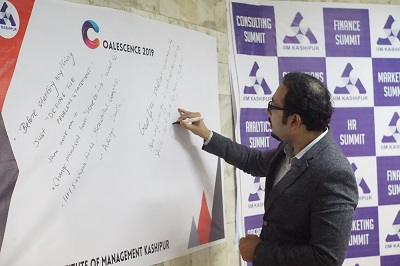
The club hosted Coalescence – The Finance Summit in association with the academic forum to bridge the industry-university gap. Rakesh Singhania, CFO of Wells Fargo Bank, India, participated as a keynote speaker and shared his experience on how industries navigated adversity in the new era of the post-pandemic. The lecture was attended by over 100 student participants who had an opportunity to interact and gain insights on challenges faced by the financial markets. The club also hosted Money Matters, a guest lecture session in the presence of Prof. Dilip Kumar on discussing various investment-related topics concerning Pragati. The club also aided the students in preparing for competitive examinations by participating in FLIP National Challenge and CFA Research Challenge.

In this way, the club ensures that students get the essence of finance as a domain of management. It helps the students to learn about the scope in this domain and select the best course of action for their future choices. In nutshell, The Finance club fosters a culture for finance within the realms of IIM Kashipur.

10 things that make IIM Kashipur special!

The moment we hear IIM Kashipur we relish the scenic beauty of the majestic Himalayas lining up this exalted building of bricks. IIM in the North(as it’s fondly called) is bestowed not only with the stunning beauty of nature but also ensures wholesome experience to academic rigor.  So, we have come up with 10 best highlights which makes IIM Kashipur the nostalgic addition to students’ memory lane.

MBA Analytics:

This program is specially devised to provide a comprehensive learning platform for the students to make them industry prepared, to suffice the increasing demand for complex data analysis, and thereby helping organizations make better decisions. This aims to make students understand the necessary principles of different forms of analytics to facilitate decision-making in practical business settings. Moreover, this program enables students to acquire and use advanced analytical as well as managerial skills to evaluate uncertain and dynamic business environments and to make effective decisions.

Gender Diversity:

IIM Kashipur has achieved more than a 3X increase in female candidates in the AY 2020 -21 compared to the previous year. Moreover, IIM Kashipur encourages the enrollment of female candidates through points assigned in the diversity metric as a part of its academic policy and it also continued with its initiative of sanctioning 15 supernumerary seats for female students.

Experiential Learning:

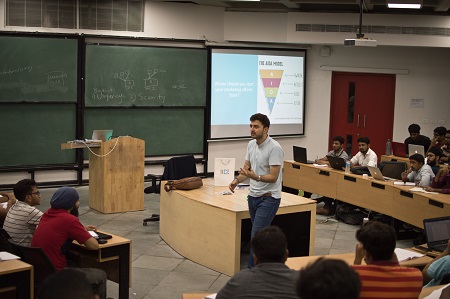
The institute comprises of 41 faculties from various domains of specialization with rich experience and showcasing higher research potential. Moreover, IIM Kashipur believes in imparting application-based knowledge to the student fraternity, and as a step to achieve the same, the institute has about  34 visiting faculties from other IIMs and top B schools. The curriculum of IIM Kashipur is structured in a way to instill practical knowledge to the student community through projects and assignments. In addition to this, regular classes are shaped with interactive discussion-based teaching and learning activities through simulations to deliver the inexplicable things in a more fathomable way.

Competitions:

As we know MBA is not a degree that can be acquired through books, IIM Kashipur promotes the participation of students in various corporate and B school competitions. This academic year, students have bagged 100+ achievements to the institute in competitions organised by fortune 500 companies like Xiaomi, One plus and ET, Tata group, Google, Flipkart, L’Oreal, Reliance, Edelweiss Tokio, etc., Students have also bagged prizes from IIMs, IITs and top B schools.

F.I.E.D:

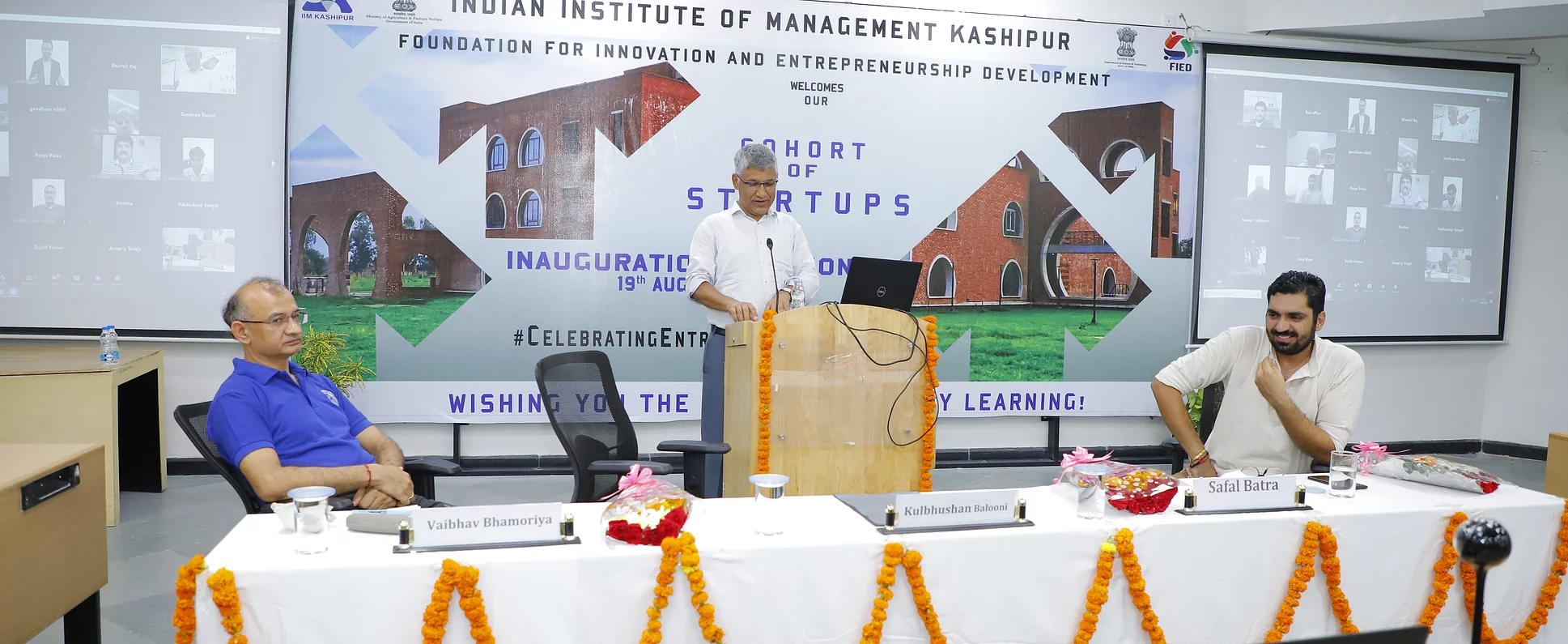
Foundation for Innovation & Entrepreneurship Development (FIED) is the incubation center of  Indian Institute of Management Kashipur, which is an initiative to cultivate and improve India’s entrepreneurship ecosystem. With the assistance of the Ministry of Agriculture, the Department of Science and Technology, the Government of Uttarakhand, and other supporting partners, FIED is set to incubate India’s most promising start-ups in the areas of tourism and hospitality, agriculture, art and craft, and education. FIED concentrates on the major focus areas which include art and craft, agriculture, technology, tourism, Ayurveda, and education. These areas focus on preserving our rich heritage, spreading the knowledge about science and technology, working towards the betterment of agriculture, enhancing the knowledge level of inquisitive minds, and fostering the inner wanderlust within people. Moreover, FIED has successfully incubated 150+ ventures, has engaged 500+ entrepreneurs, raised more than 50 crore rupees of funding, and has established a network of 100+ investors setting a stage for the budding entrepreneurs to learn and establish their dreams.

𝐄𝐱𝐜𝐡𝐚𝐧𝐠𝐞 𝐏𝐫𝐨𝐠𝐫𝐚𝐦 𝐚𝐭 𝐈𝐈𝐌 𝐊𝐚𝐬𝐡𝐢𝐩𝐮𝐫:

𝗦𝘁𝘂𝗱𝗲𝗻𝘁 𝗘𝘅𝗰𝗵𝗮𝗻𝗴𝗲 𝗣𝗿𝗼𝗴𝗿𝗮𝗺:

IIM Kashipur has, over the years, developed strong ties with multiple universities and institutes from all around the world. IIM Kashipur students have the chance to visit top MBA institutes in France, Denmark, Greece, Israel, South Korea, Taiwan, UK, Thailand, and many more. In the year 2019-20, 11 students from IIM Kashipur visited 5 different institutes in different countries as part of the Student Exchange Program which lasted for about 3 months.

𝗦𝗵𝗼𝗿𝘁-𝗧𝗲𝗿𝗺 𝗘𝘅𝗰𝗵𝗮𝗻𝗴𝗲 𝗣𝗿𝗼𝗴𝗿𝗮𝗺 (𝗦𝗧𝗘𝗣):

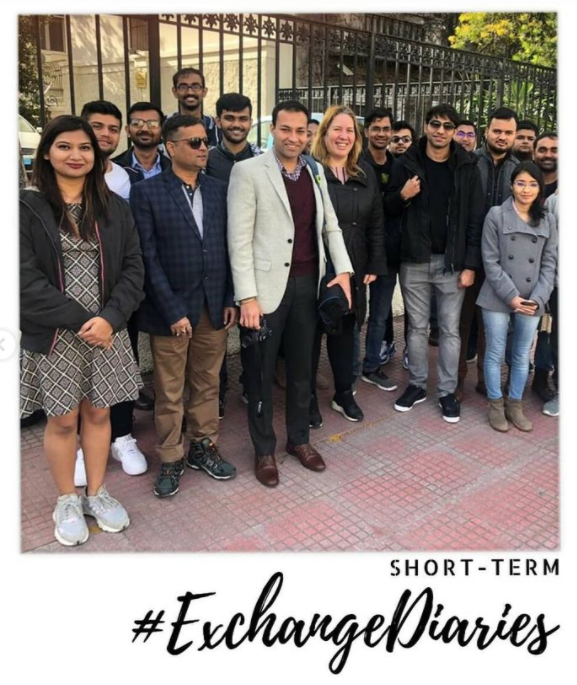
IIM Kashipur also offered its students the opportunity to visit some of these institutes as part of the Short-Term Exchange Program (STEP) which lasted for around 15 days in the academic year 2019-20. A total of 24 students took part in the STEP Program to visit ALBA Graduate Business School, Greece.

The program included 2 weeks of workshops, lectures, and immersion programs wherein the students get an opportunity to explore in and out of Europe giving them significant geographic and cultural exposure.


𝗦𝘁𝘂𝗱𝗲𝗻𝘁 𝗕𝗼𝗱𝗶𝗲𝘀 𝗮𝗻𝗱 𝗔𝗰𝘁𝗶𝘃𝗶𝘁𝗶𝗲𝘀 𝗮𝘁 𝗜𝗜𝗠 𝗞𝗮𝘀𝗵𝗶𝗽𝘂𝗿

IIM Kashipur is a completely student-driven campus right from placements to day to day functioning of the campus. Being a part of the student bodies and event-specific teams, students mold themselves in various spheres of qualities which include time management, team building and management, situation handling, and maintaining cordial relations with the administration.

𝗡𝗲𝘁𝘄𝗼𝗿𝗸𝗶𝗻𝗴 𝗼𝗳 𝗜𝗜𝗠 𝗞𝗮𝘀𝗵𝗶𝗽𝘂𝗿:

𝗜𝗻𝗱𝘂𝘀𝘁𝗿𝘆 𝗖𝗼𝗻𝗻𝗲𝗰𝘁

This year IIM Kashipur conducted guest lectures in various domains like Finance, Marketing, Operations, and HR by inviting industry leaders from organizations like Bain Capital, Henkel Adhesives Technology, Myntra, Jabong, MRF, Karvy Group, Capgemini to name a few. The focus is also on providing live projects to the students of IIM Kashipur that gives them hands-on experience to get the required industry sensitization before actually going out in the corporate world. This year the college has floated numerous projects for students from leading companies like Swiggy, PUMA, Crisil, Dish TV, Ashok Leyland, Reliance Industries, Scale Labs, Faber Infinite to name a few.

𝗔𝗹𝘂𝗺𝗻𝗶 𝗖𝗼𝗻𝗻𝗲𝗰𝘁:

Creating an engaged, supportive alumni network is crucial to an institution’s success. With mushrooming educational institutions around the world, one way for an institute to stand out from the domestic and international competition is by promoting its brand. And an institute’s alumni are its best bet. They act as flag bearers of the institute in the outside world and ensure the current batches are made aware of ongoing trends. IIM Kashipur believes in continuous engagement with its strong alumni network via biannual city meets, annual reunion at the institute, regular webinars, and guest lectures.

𝗜𝗻𝗳𝗿𝗮𝘀𝘁𝗿𝘂𝗰𝘁𝘂𝗿𝗲 𝗳𝗮𝗰𝗶𝗹𝗶𝘁𝗶𝗲𝘀 𝗮𝘁 𝗜𝗜𝗠 𝗞𝗮𝘀𝗵𝗶𝗽𝘂𝗿:

  • The new campus of IIM Kashipur is spread over an area of 200 acres, visually very striking and functionally very effective. The campus is equipped with modern technologies in classrooms to provide the best management education.
  • Gymnasium, Library, Amphitheatre, and Mini-Amphitheatre are the other facilities present on campus to ensure the holistic development of students.
  • Sports facilities include TT Table, Lawn Tennis Court, Basketball Court, Badminton court, Futsal Court, Volleyball Court, Frisbee ground, and Cricket Ground.

IIM Kashipur hosts a variety of events across the year to foster all-round development and extend the values of our institute. Coalescence is our annual corporate summit, Uttishtha is an annual entrepreneurial event, TEDx IIM Kashipur, Agnitraya, is our annual flagship cultural, sports and management festival, Convocation, and many others.

In short, ‘Life is amazing, here, at IIM Kashipur.’

By

Deshmaa RT and Sakshi Poddar

MBA (Analytics) 2020–22

Indian Institute of Management Kashipur

​​


OnYourMark- The Marketing Club| IIM Kashipur

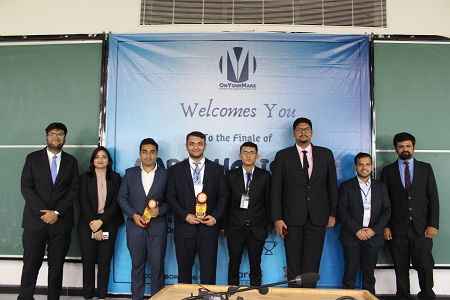
OnYourMark (OYM), the Marketing Club of IIM Kashipur, was established on 16th January 2014 by the students to promote and nurture the knowledge of marketing in the IIM Kashipur community. The raison d’être for OYM is to create an amenable ethos towards marketing. OYM strives to create enthusiasm among the students for the domain of marketing and guide them to explore their careers in this field. As it has rightly been said in the business world, “Marketing is not anyone’s job… It’s everyone’s job!”. The club seeks to make the student community well-versed with the recent happenings in the field of marketing to aid their industry knowledge and recruitment preparation.

OYM oversees several initiatives to achieve the club’s:

Vision: To improve the marketing acumen of IIM Kashipur & build a culture of Marketing studies.

Mission: Organizing student-centric events to involve maximum participation and benefits for all.

With the growing use of the online medium, the club adapted to new modes of learning and incorporated new initiatives to emanate marketing knowledge through channels like social media and video conferencing. The following are some key activities undertaken by the club to foster accentuated learning:

  • Forevision Workshops: OYM facilitated Marketing Workshops from Forevision in Digital Marketing and Advanced FMCG sales techniques training which had successful participation of 100+ students. These help them gain practical exposure to the current trends and tools through real-life case studies, exercises, and live demos which are increasingly used in businesses nowadays and enable them to think out of the box, just like a marketer is supposed to. 
  • CutPaste Article series: Carefully curated articles are handpicked by OYM and extracts illustrating the concepts are shared with the batch in an email blast to familiarize and update them with the latest, modern terminologies in a short period. This allows them to quickly grasp these concepts and also gives them an option to read the full article provided to enhance their understanding.
  • Open house discussions: Discussions on current events as well as concepts that students learn in classrooms are further deliberated to gain deeper insights into the subject matter. 
  • Guidance in case-studies: Conducting in-depth discussions on the cases in the curriculum to better equip the students with the principles used in a light-hearted environment. This gives the students confidence to contribute in class and further their knowledge.
  • Encouraging a culture of corporate competitions: Corporate competitions give students a chance to apply curriculum learnings and search for viable solutions to real-world business problems. OYM identifies marketing based opportunities from a plethora of competitions and encourages student participation.
  • Marketing Weekly – OYM collaborated with Marketing Weekly to help the students navigate the overwhelming sea of marketing content. A breakdown of marketing concepts as well as the latest news are illustrated in these weekly articles keeps everybody up to date with the current industry trends and expectations. 
  • Social Media Campaigns: From concepts, trends, and everything marketing, campaigns are run on OYM social media handles to create an enthusiasm for marketing. These posts provide interesting reads with a visual aid to engage the reader. 

OYM also conducts events year-round to engage students with practical exposure to marketing concepts so that they learn the application of the same.  

  • Guerrilla MarFair: A Guerrilla marketing event enabling participants to create displays and advertise any brand. The event boasts average participation of 125+ students every year.
  • Markaholic: The flagship case study competition of OYM is an event conducted during Agnitraya. It received the highest registration of 1079+ in the previous year with participants coming from many top B-schools like IIM Lucknow, IIM K, IIFT, etc. 
  • Online Week of Social Media Marketing: Participants create a video Advertisement based on the theme selected and strive to go viral on social media. This tests and hones the participant’s social media strategy and technique which is a quickly growing and required marketing skill.
  • MarQuiz: An intra-college marketing quiz competition aimed at inculcating a competitive spirit and encouraging teamwork. It focuses on expanding the students’ knowledge in the domain.

The club also conducts entertaining events to further pique the interest of students in the field of marketing by incorporating elements like brand-knowledge, wit, and the ability to pitch your ideas such as:

  • Ambush Marketing: The participants use their creativity to implement the tactic of Ambush marketing to ambush their rival teams during the Kashipur Premier League. 
  • Pitch Please: A test of persuasion and zeal is presented as a challenge to the participant in this event. They need to pitch a product, an idea, or a sellable item, and winners are crowned based on the votes they receive from the audience.
  • DumbCharADs: A fun-filled brand guessing game that tests students on their brand awareness as well as acting acumen.

In this way, the club presents a spectrum of potential possibilities in the field of marketing for a student to pursue. It keeps a buzz around marketing domain and fuels the enthusiasm of the students at its best.

Scope of MBA in Business Analytics – IIM Kashipur

Analytics is a booming field right now and there is a heavy demand for analytics professionals. An MBA in Business Analytics will give you an overall understanding of how the analytics industry works as well as what role you would be required to perform. You may want to tap into this challenging and demanding field if you have an analytical mindset or an interest in statistics. The multidisciplinary MBA in Business Analytics covers technical, corporate, management, leadership, and communication training as well as business-analytical qualifications.

The MBA (Analytics) program at IIM Kashipur is a two-year full-time residential program which aims to prepare managers and future leaders who will shape the increasingly technology-oriented and data-driven world. It focuses on grooming its students to acquire knowledge, skills and attitudes for leadership profiles so that they can seamlessly navigate the ever-changing business landscape. The primary objective of the institute is to nurture the students through a balanced mix of academics, industry exposure and co-curricular activities. Here is an overview of why and what all parameters one must consider before giving a thought of pursuing MBA in Analytics.

What to Learn?

An MBA trains business leader, including managers, and your primary area of education in business and management. Your MBA program, including “hard” and “soft” business skills, gives you a strong understanding of business fundamentals. This is taught in a fixed sequence of necessary courses or “core courses.” Some of the classes you may encounter as part of your MBA core include:

· Accounting

· Finance

· Marketing

· Ethics

· Operations

· Macroeconomics

· International Business

· Microeconomics

· Human Resources

· Leadership

Your concentration on business analytics will delve into specific business analytics and data expertise and also teach you to understand business issues via a data-driven lens. The most advanced business analysis tools, case studies, and projects, including real-world data, allow you to practice practically. Some of the classes you may see offered as part of a business analytics MBA concentration include:

· Spreadsheet Modelling

· Accounting Analytics

· Marketing Analytics

· Financial Analytics

· Business Statistics

· Applied Regression

· Principles of Management Science

· Data Mining

· Forecasting and Modelling

· Business Computing

Data science vs Business Analytics are separate disciplines, which are quite often  used interchangeably. A layman may not be so concerned with this interchangeability, but professionals have to use the words appropriately, since they have a broad and immediate effect on the company.

Is Business Analytics and Data Science the same?

A Business Analyst’s job includes researching and extracting useful information to clarify business performance (present and future) from data sources. The correct plan to develop the organization is often decided by a Business Analyst. Whereas, Data scientists gather, analyze, and interpret broad data sets and use their analytical, mathematical, and programming skills to decipher valuable insights for solving difficult business problems. The three major factors that differentiate business analysts from data scientists are overall responsibilities, skill sets, and user interaction.

  • Overall responsibilities: The functional requirements that inform IT system design is provided by business analysts. On the other hand data scientists derive significance from the data generated and processed by such systems. Data scientists may also simplify the activities of the company analyst and be able to provide some of the market insights. Taking monetary benefits into consideration business analysts are slightly paid more than data analysts.
  • Skill Sets: Business analysts need data science expertise as well as skills related to communication, critical thinking, negotiation, and management. Whereas, data analysts need similar skills with a more in-depth emphasis on technological data manipulation.
  • User interaction: Business analysts also have more direct contact with system users, clients, system developers, and others as project facilitators and managers than data analysts do. That’s because market analysts will also interview individuals and learn more about how to enhance technology to help business processes. During the course of a single project, they work collaboratively with others. While data analysts can initially collaborate to define important data sets with internal subject matter experts, the majority of their work is performed independently.

Considering business analytics and data science domain, the former attracts the target base more owing to its business coherence and state of the art application-related job role. Apart from these there are few more benefits of pursuing business analytics which are as follows:

  • More informed decision making: Business analytics can be a valuable resource when approaching a substantial strategic decision. For example, when the company needs to analyze its product line update, business analytics can be applied to determine whether the updated product has resulted in faster service, more precise recommendations for resolution, and higher scores of customer satisfaction are achieved.
  • Improved operational efficiency: Analytics, beyond financial benefits, can be used to fine-tune company processes. Business analytics can be used to forecast business operations and assist the company by more effectively timing maintenance, enabling it not only to save operating costs, but also to ensure that it maintains assets at optimum levels of performance.

Is Business analytics a good career option?   

As digitization has become a buzz in recent times with technology and data being utilized from local grocery shops to well-sophisticated malls, the demand for business analysts also has increased significantly. Moreover, as per the statistics, for every hour, terabytes of data are generated by 6 billion connected devices. With this increasing demand, there is an insufficient supply of professionals.

From the above-mentioned courses offered by MBA institutes, one can get the knowledge of the following skills: Python, SQL databases, and R, Survey/query software, Business intelligence, and reporting software, Data visualization, Database design, Problem-solving skills, Effective Communication, Creative Thinking and Industry Knowledge. These help them to be the best fit for diversified job roles, which include data analyst, supply chain analyst, big data analyst, business analyst, marketing analyst, finance analyst, HR analyst, etc. The increasing demand for MBAs with analytical skills has made Business Analytics a relatively new and popular specialization in the management domain.

What is a Business Analytics MBA Job Market?

There is a shortfall of 1.5 million analysts, according to a report by the McKinsey World Institute. With an MBA in Business Analytics, you are eligible for a large range of careers, including popular C-suite jobs. This is because MBA graduates are qualified to hold leadership positions in a number of business environments. In all types of businesses, health industry marketing, supply chain management, data-driven decision-making is increasingly in demand. Based on their domain knowledge, skills and work experience, companies typically offer these job roles to candidates. The high demand for professionals with an MBA in Business Analytics is generated by MNCs, retail and manufacturing companies, IT companies, e-commerce companies, consultancies, telecommunications companies and business analytics and intelligence companies. MBAs are hired not only by MNCs but even by startups. As an MBA is primarily a business degree in Business Analytics, you will not be looking at data science work. You’ll be eligible for data-driven positioning instead. You will also have the advantage of competing with a background in analytics for more general positions in business management.

To conclude, the MBA in Business Analytics is an upcoming field of expertise in all sectors of the industry that is gaining increasing traction. The specialization demonstrates a positive and promising outlook, and you can go ahead and begin your MBA journey in Business Analytics for those of you who have long been skeptical about choosing this career path!

Deshmaa RT and Sakshi Poddar

MBA (Analytics) 2020-22

Indian Institute of Management Kashipur

HRhythm - The HR Club | IIM Kashipur

Human Resources is one of the most sought-after domains for students who enrol every year to pursue an MBA. HRhythm-The HR club of IIM Kashipur comprises aspiring HR professionals, focused on providing HR-related content and making students abreast of the current industry practices. Hence, they leave no stones unturned to make the students aware of the opportunities and competition present in the domain in terms of B-school and corporate competitions.

HRhythm conducts a plethora of activities to cater to the interest in the Human Resources domain. The club has adapted to changes in the learning behaviour. It continues to implement them to efficiently impart knowledge and develop the interest of people in the field of Human Resources.

HRhythm conducts events encompassing various HR themes to accomplish the objective of amassing the HR enthusiasts nationwide by providing them with a platform for showcasing their HR skills. Apart from discovering and honouring the country’s talents, these events also provide a conducive environment to sharpen the ‘HR skills’. Some of the famous events by the club include – 

No alternative text description for this image
  1. Scribble Dribble

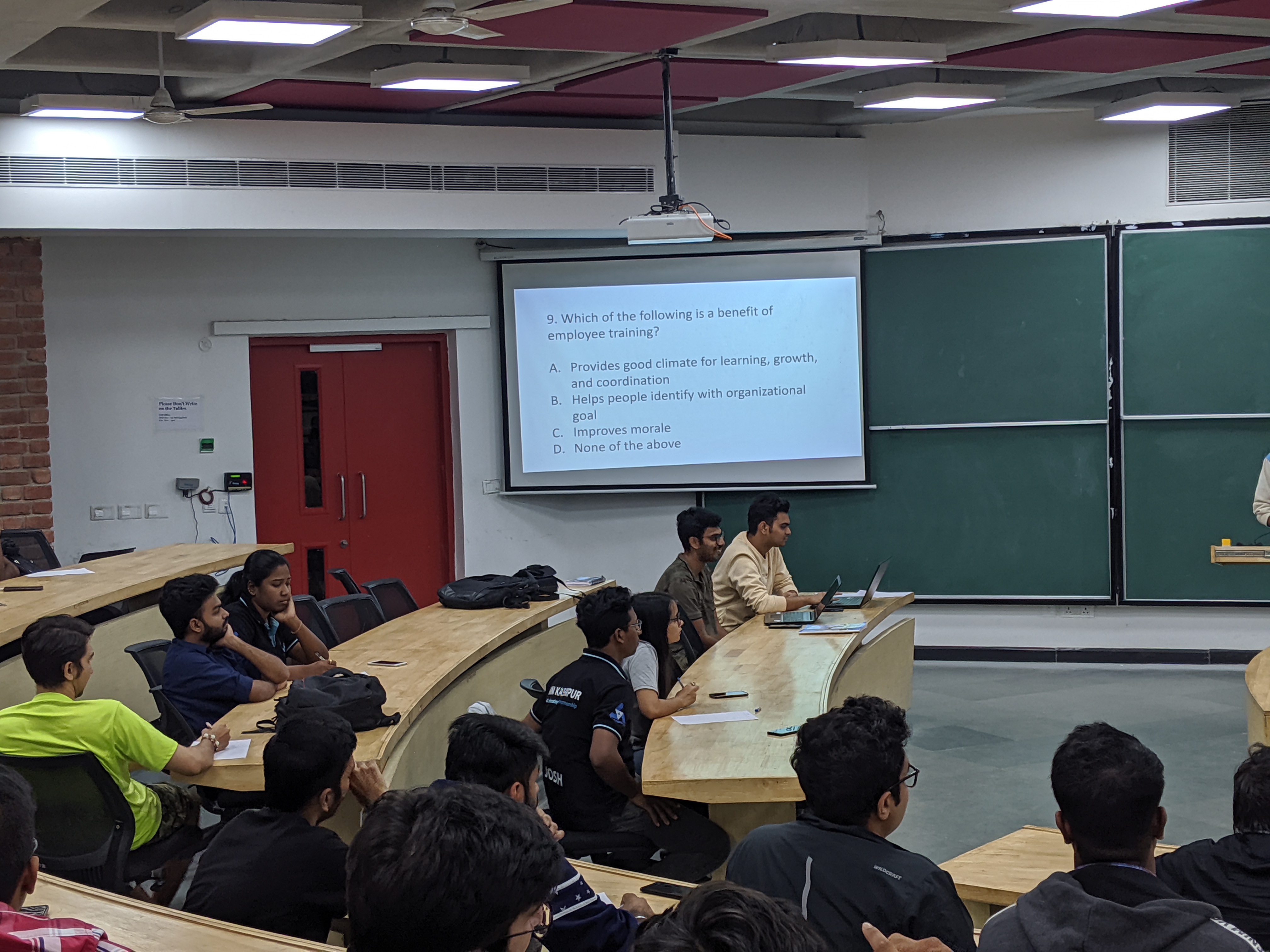
Scribble Dribble is a Pan India article writing competition which encourages the bright minds of Indian B-Schools to draft an innovative article pertaining to the domain of Human Resources. It is conducted every year with an additional attribute that makes the event more stimulating than before. Both undergraduate and MBA students, across the country participate in huge numbers with great enthusiasm to demonstrate their writing skills and HR acumen. This year, a quiz-round was added to the existing competition structure, before the article-writing round to test the basic understanding of the HR concepts in a participant.

2. Pragyan

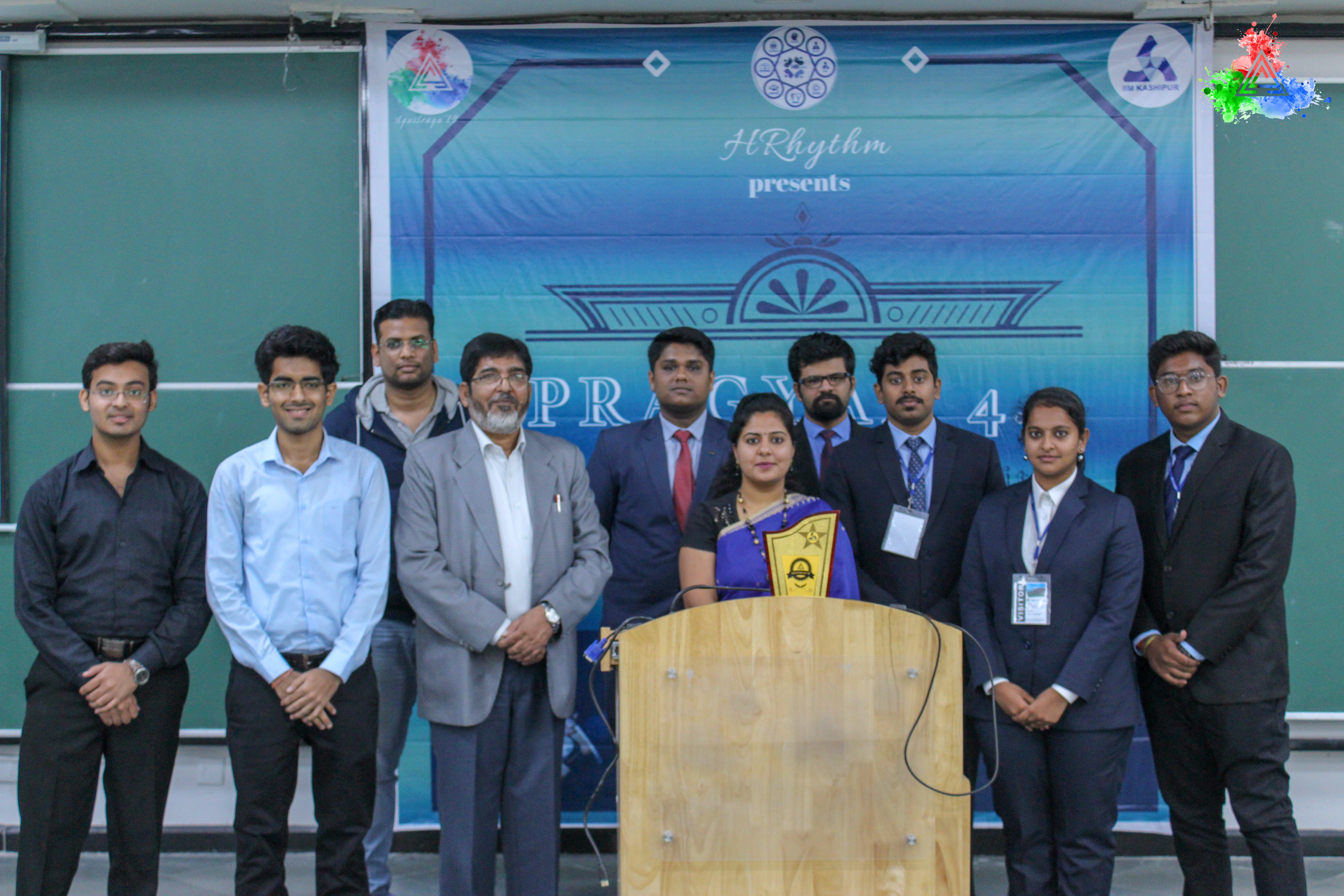
This is the annual flagship Case Study Competition hosted by the club. The participants are given a set of real-world scenarios that reflect the current problems faced in the corporate world, specifically in the HR domain. The motive is to let the participants take a peek into the state of affairs in most organizations and to make them savour the essence of solving simulated real-life corporate problems.

3. HResilience

In HResilience, the participants wear the hat of Labour Union Leaders and Employee Relation Manager, to showcase their bargaining expertise, problem-solving skills, and empathy for solving the persisting employee problems via reaching an amicable solution at the end. This event is also conducted to provide students with the industry conflicts that emerge in real case scenarios and apply HR concepts to come up with the optimum solution.

4. Negotiator 

This event encourages students to display or showcase their negotiation skills when confronted with a real-life business case. ‘Negotiator’ allows participants to be in the shoes of the CHRO and provides them with a platform to present their solution for the problems prevailing in the organization. It challenges their critical thinking, decision-making ability, analytical skills, and emotional intelligence to come up with the best possible solution in the given scenario.

The club utilizes its social media handles as a platform to impart knowledge about the HR world, with an additional essence to the content to make them cater to an average individual with even little to no interest in Human Resources. The club has consistently posted articles, and other relevant content on social media handles to promote students’ interests and keep them updated with the relevant information. Following is a walk-through of the HRhythm’s efforts:

  • Interactive content in the form of small videos and slides facilitates human resource learning lucidly. Audio-visual content aims at learning, brushing, implementing HR concepts.
  • A regular series of content uploads in the form of infotainment. Articles based on an amalgamation of HR concepts with mainstream Pop-Culture to generate interest in the student community.
  • Personality development and interview tips which help students to survive, sustain, and flourish in today’s competitive environment.
  • To complement classroom learning with corporate implementation, HRhythm is currently working towards organizing a series of interviews with industry experts. A summary of the same would be shared with the students in the form of a write-up or video. Inputs from industry experts will help students in gaining insights into the real-life HR world.

These efforts have not only increased the club’s social media presence but most importantly, it has been able to spark the desire inside many people towards the HR domain and it continues to do so.

Also, the team invites leaders from the corporate world to share their understanding of the domain and talk about the experiences that shaped their career as a young HR aspirant. They believe students should always perceive the reality and not illusions, which reflects in the engagement activities carried out by the club. Knowledge sharing sessions by Executive Members have been conducted to make students aware of recent happenings in the field of Human Resource Management, which will help them in acing selection processes for HR roles.

HRhythm also undertakes the responsibility of representing IIM Kashipur in the Human Resources domain and this involves maintaining relations with HR Clubs of other premier B-Schools across the country. This, in turn helps the students at IIM Kashipur to seamlessly participate in HR events of these institutes and thus creating synergy. Such relations would provide mutual benefits as students can participate, learn and win competitions. With this, the club has been able to establish the flag of IIM Kashipur in the sphere of human resources.