Being a civil engineer who pursued an MBA in Operations Management, followed by enrollment as an FPM student in the Operations Management area, I had always classified myself as a person who was more (or only) inclined towards quantitative research. I always recognized and was fascinated by the power of numbers.
Then, in January 2018, We, a group of 15 research students, entered the qualitative research methods class. Some of us were excited about the qualitative aspect of research, and some were absolutely disinterested; I am ashamed to admit that I, then, belonged to the second category. I later realized that I had been keeping a blind eye towards the ‘dark’ aspect of numbers. I, in no way, wish to belittle the quantitative – orientation of research, but qualitative research is beautiful in its own way. The qualitative research articles, if well written, provide a vivid image of the phenomenon that leads the audience to discover deep meanings of human experiences.
I now understand that a good researcher should learn about both paradigms. The qualitative and quantitative approaches have distinct and complementary strengths. Both come with a different set of challenges and require different skills to overcome those challenges. For example, as a qualitative researcher, I can always adopt a grounded perspective where I do not need to identify the dependent and independent, nor do I necessarily need to propose hypotheses. My primary responsibility as a qualitative researcher is to capture individuals’ hidden meanings and explore the phenomena’ possibilities, but it is easier said than done. The experience is like deep-sea diving; we know we are looking for something, but we do not actually know what we are looking for.
During this journey, I came to realize the beauty and power of text. Sometimes I can feel the ‘dryness’ associated with the numbers in quantitative articles because numbers in no way explain the human feelings that should have been captured. I now recognize and appreciate the mental and emotional strength of qualitative researchers because I believe that risks and concerns are more significant in qualitative research, mainly because of the researcher’s level of involvement with the research process and the participants.
If I am asked to clarify my stand regarding which type of researcher I would classify myself, I will find myself in a great dilemma. I would instead argue that one should appreciate the different values which are drawn out of the two different paradigms. A researcher who has familiarized himself with both the frameworks may develop a more profound intellectual capability. Reflecting on my learnings over the past years, I can conclude that I have developed more patience, and my inclination towards sheer objectivity has reduced. I have indeed developed slight but noticeable acceptance towards subjectivity and abstraction. I have grown to realize that there will always be things that can never be measured or analyzed quantitatively.
Today, almost three years later, my qualitative exposure surely helps me reflect on the quantitative work better. About the author:
Taab Ahmad Samad is currently a Ph.D. Student (Operations Management) from IIM Kashipur. He is currently working in the field of crowdsourced logistics. You can connect with him on LinkedIn.
“Reach high, for stars lie hidden in you. Dream deep, for every dream precedes the goal.” – Rabindranath Tagore
Let’s start with the journey of a student who gets admission in a prestigious institute like an IIM after persistent preparation and trading off career opportunities. With dreams of flying higher and higher, this student has a feeling of great achievement and an equivalent responsibility to do justice with this success. He sees a glorifying career ahead in the upcoming two years and is highly enthusiastic about making the most of his MBA life. But how does he paint the canvas of these two years? Which hues does he select? This entirely depends on his strong will and determination towards learning clubbed with the opportunities and motivation offered by his institute.
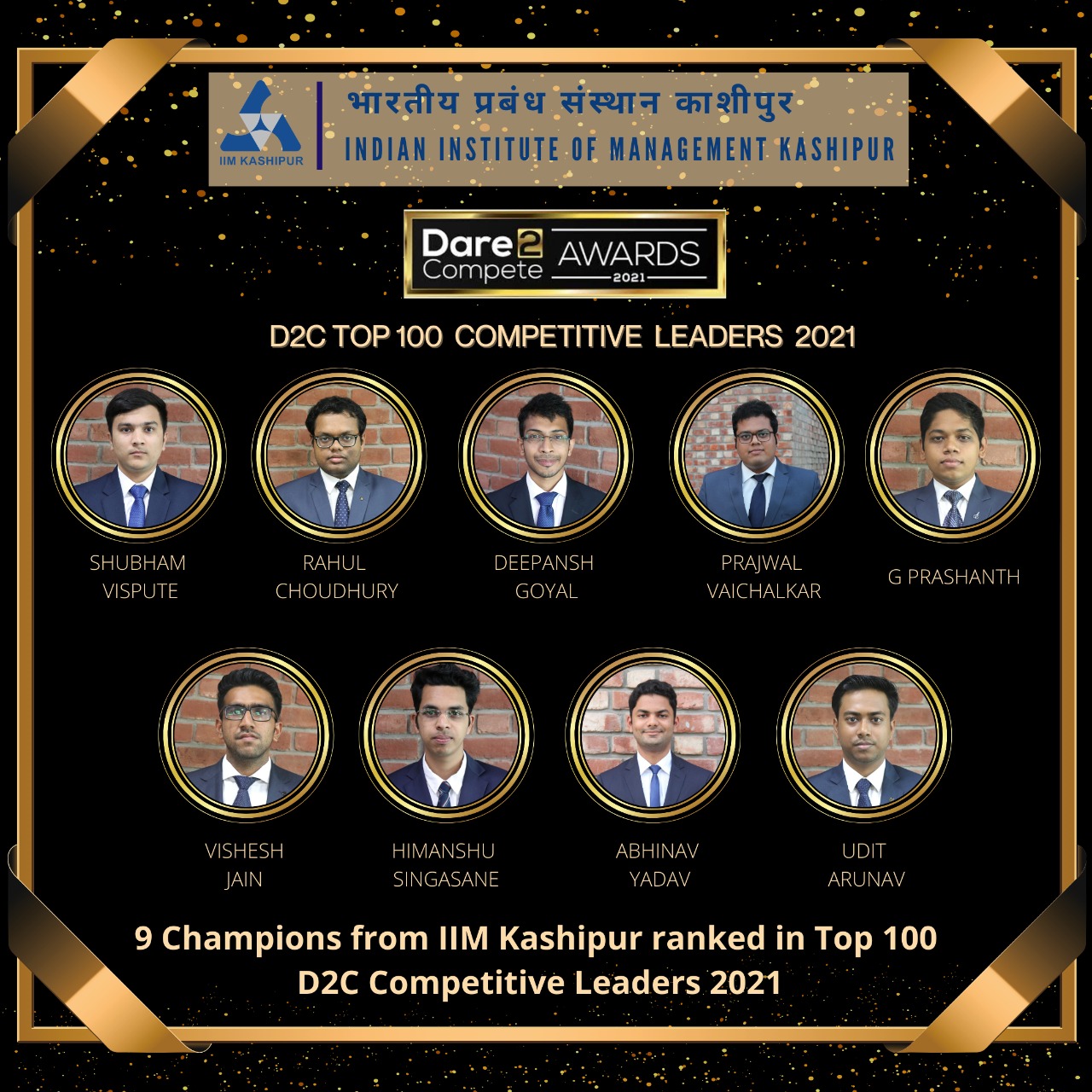
IIM Kashipur takes pride in playing a phenomenal role in the life of this student who enters the institute with the thirst for knowledge and the zeal to realise his dreams. During two years of post graduation, the institute instils in the students the feeling of “never settling down”. One of the integral parts of the culture is motivating the students to participate in case study competitions. IIM Kashipur faculties, the Placement Committee and Team Corpus leave no stones unturned to cultivate this culture of corporate and B-school competitions in the current and upcoming batches. They dedicatedly work round the year in this direction to bring the institute to unfathomable heights.
Achieving this milestone, IIM Kashipur has joined the league of other older prestigious institutions like IIFT, IIM Ahmedabad, IIM Bangalore and IIM Kozhikode that appeared in the top 5 ranks. Not only this, IIM Kashipur has become the only 2nd generation IIM to have made its place in the top 10 ranks.
This remarkable success is a reward for the diligence and determination of the students. Each and every honest participation and winning has contributed to the achievement. Throughout the year, students of both the years have meticulously planned for the competition season burning the midnight oil in the quest for their holistic development. Team Corpus created Corpus Community – a student group that dedicatedly works together to discuss and ace in the case study competitions. This community boosts collaboration among the students and with the resources as well as mentorship provided by them, it helps in optimising the hard work of all the participants. This creates a competitive environment and acts as a continuous source of motivation for the students. Also, viewing it from the other lens, Dare2Compete provides an excellent platform to the students to hone their skills in various domains by giving them a chance to participate in real-life case study competitions floated by eminent institutes and reputed companies. Hence, there is an air of unstoppable learning and fuelling the competitive spirit surrounding the student community.
The enthusiasm of the students can be reflected in the level of participation in a large number of competitions ranging from B-school to corporate. With these sincere initiatives, IIM Kashipur has got 8 National Winners, 5 National Runners up, 4 National 2nd Runners up, 24 National Finalists and 12 Semi-Finalists throughout the competition season who have bagged positions in reputed competitions like L’Oréal Sustainability Challenge, Xiaomi Mi Summit 2.0, Virtusa Business Cipher Challenge, CarEasy Spark, TVS Credit Analytics challenge, and many more. These competitions encompass different domains of management and thereby help the students to develop various skills like problem-solving, teamwork, creative thinking, fact-finding, and mental agility, especially relevant for employability.
IIM Kashipur is soon going to complete its 10 glorious years of establishment. This achievement has added to the magnificence of the celebration and has entrusted bigger responsibilities upon the fraternity.
This recognition is just the beginning of an extraordinary journey that will go on and on adding colourful feathers to the hat of laurels!
What we are going to read about will be sort of a story (Fairy Tale! Nothing short of that!) of ‘The Spring in the North’! – The Spring rejoiced by young entrepreneurs, startup owners, industry experts, faculties, college and school children from across the country. Yes, we are talking about Uttishtha – The Annual Entrepreneurship Summit of IIM Kashipur – The Spring of Entrepreneurship!
Here is the story by Team E-Cell about how they managed to pull off the event amidst difficulties posed by the pandemic!
Uttishtha is the much-awaited Entrepreneurship Summit which has an objective of revolutionizing how people view entrepreneurship and create an indelible impact in the entire startup ecosystem of the country and beyond!
The restrictions imposed on us due to COVID-19 and taking into consideration the safety of all the stakeholders of the event, we were forced to organize an event of such high magnitude on a virtual platform, which in turn meant restructuring of the entire Summit.
We, the entire E-Cell Team, decided to break the entire summit into small tasks and decided to go about the event in a phased manner. Subsequently we divided the entire summit into 3 phases, namely, the planning stage, the preparation stage and the summit!
So, we divided the team according to the preferences and expertise of the members and set off on our Voyage of “Making Entrepreneurship Bloom”!
The Planning Stage:
We all knew that Uttishtha’21 was going to be a completely new experience for all the stakeholders and we precisely knew that to create maximum value for everyone we had to restructure the entire summit upside down and planning or ‘Out of the Box’ sessions, we used to call them, were going to be the most important element of the entire summit!
In Uttishtha’21, as we were revamping almost everything, we decided to go beyond the mainstream in everything we were doing! While deciding the theme of the event, our thought process was to keep a theme that portrayed new beginnings, asked people to get rid of their winter blues (COVID blues!) and focus on embarking on the journey of 5R, namely, Rejuvenation, Regrowth, Resurrection, Renewal and Regrowth! So, with a decision to keep the whole Summit light and bright, we decided to keep the Theme – “Spring”, or the “Spring of Entrepreneurship”, more holistically!
We believe, the first major challenge that came towards our way in the planning stage was in the form of event crafting and flow mapping! We knew, that events of last year needed a major revamp, if we were to create the Summit engaging and create value for the people involved! Last year Uttishtha, had events like Startup Exhibitions, Entrepreneurship Bootcamp and Expo, which could not be conducted online given the nature of the events. So, we needed to come up with events which could fill the space of these events and so we started brainstorming on the needs and wants of all the stakeholders and subsequently came up with new events such as Not Clubhouse – focused panel discussion sessions, firechat conversation – a dialogue between experts from completely different areas, co-founder dating – a virtual internship fair for students across the country, among others! The molding of events according to the theme of the summit and requirements of the stakeholder involved, was a fun-filled experience!
We believe, ‘Uttishtha’ is an epitome of collaborative effort and it sees contribution and cooperation from each and every member of the IIM Kashipur community. After the planning of events and identifying the work areas, it was very important for us to gather support from the community and form an enthusiastic team comprising people who were motivated enough to work on the event diligently. Given the lack of physical interaction with the people involved, in a virtual setting, it was a bit difficult to find the real potential of the applicants. But after due process, we were lucky enough to have found a team, where members were on their toes to make the best out of the opportunity provided. Given the virtual nature of the event, the division of the functional teams had to be revamped where traditional functional teams such as arrangement teams, People management team and promotions team among others had to be dropped off the chart and made way for new teams such as virtual platform team, Audience engagement team and social media team among others.
The Preparation Stage:
Uttishtha’21 being virtual posed a lot of challenges in the execution of ideas, but along with the challenges involved, it also provided us with a lot of opportunities with respect to the extended reach of the event.
The main challenge that the team had to endure while executing the plans was the possibility of miscommunication at times due to lack of physical interaction leading to redundancy of work. Also, too much follow up on the tasks slowed down the process of execution of plans. Although these were challenges which were natural to come in a virtual setting, the dedicated and mindful work of different functional teams ensured smooth operations throughout.
The teams working on onboarding industry experts, dignitaries, speakers, startup founders, school administrators and students had a large pool of people to target given that there was no need to look after travel and lodging arrangements of the guests and with the click of a button experts could join the sessions. This not only allowed us to reach out to people beyond boundaries, but also opened wide range of opportunities for the teams to reach out to people of high stature. One approach that stand out during the whole process was the use of quirky tweet threads on twitter to reach out to people. The choice of this unconventional way led to us having onboarded a lot of good speakers and industry experts.
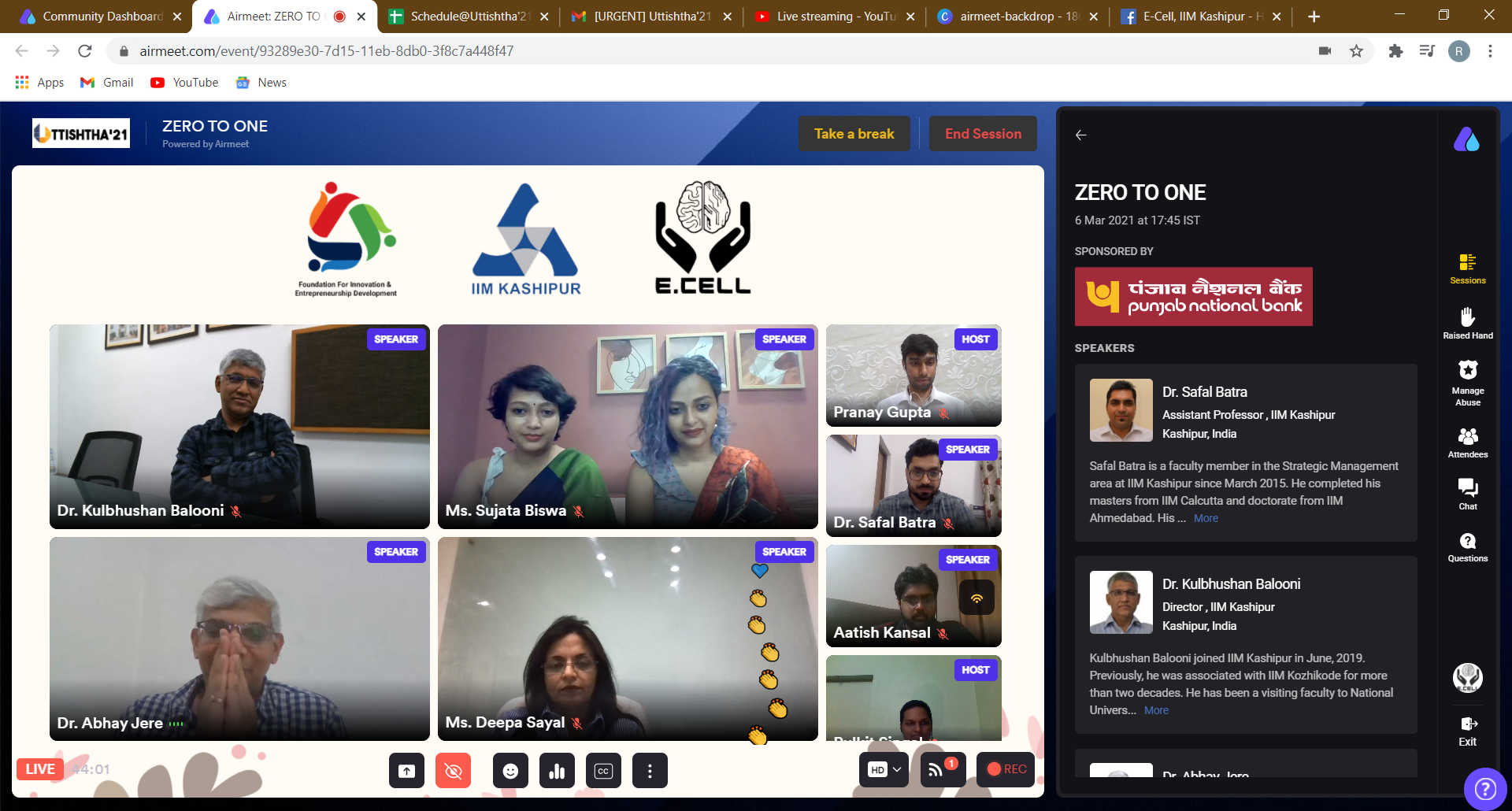
One of the tasks, that took substantial amount of our time was choosing an ideal virtual platform for the Summit. It proved to be an exhaustive process, given we had certain criteria such as neat user interface (UI), easy accessibility and usability, and comprehensiveness with respect to functions among others in our mind. We tried out nearly 12 virtual event platforms before narrowing down on “Airmeet” for conducting the Summit, which we believe served our purpose well.
The digital media team had a humongous task in hand, given they were responsible for creating all the buzz around the event and getting the word across boundaries. They came up with innovative ideas to promote the event to the best of their abilities. With the support from Media and Public Relations Committee (MPRC), the team was able to forge meaningful partnerships with various media partners such as Amar Ujala, Campus Beat among others which helped the team in multi-channel promotions of the event. The digital marketing team came up with numerous creatives and took advantage of all social media opportunities (paid as well as unpaid) to promote the Summit.
The Summit (5th March – 7th March):
Team Uttishtha Meet! Date (4 March, 2021), Time: 10:00 PM! Each and every member from the entire team was there. We all had our cameras switched on! We all were from different functional teams, we all had completely different tasks assigned, but one thing common in all of us was the satisfaction we had with the level of preparedness for the summit that was going to commence next day morning. We all were pumped up and were fully motivated to make the summit a memorable one for everyone and enjoy the three-day summit to the best of our abilities.
Finally, the Spring of Entrepreneurship was here! The first day started off as a warm breeze with esteemed speakers showering their wisdom on the attendees. The first day saw the presence of dignitaries like Mr. Arun Pandey (Chairman and MD, Rhiti Sports), Subhadeep Sanyal (managing partner, Omnivore) among others. We expected that getting the speakers and attendees accustomed to a fairly new platform like ‘Airmeet’ and ensuring the smooth internet connectivity throughout the sessions were something which might play spoilsport during the events, but we are proud of our Techno-savvy team which kept technical issues at bay throughout the Summit.
The Second and third day were going to be crucial days of the event given we had events lined up in those two days which overlapped too, the risk we had to take because of the limited time we had and plethora of events planned out! We had Clear Harvey workshop for school students, Udaan – a national level B-Plan competition, speaker sessions, panel discussions with school administrators planned out, which led to many of them overlapping. But unconsciously, the bond in the entire team and the culture passed on by our seniors helped us sail through roadblocks smoothly and conduct the events in a synchronous manner. It was great to see people taking ownership for their responsibilities and coming forward to take additional responsibilities! Last minute cancellations of few of the experts was something we always had in our mind, and we are happy that we had backups and plans to deal with those situations!
Overall, we can say that Uttishtha’21 was a roller coaster ride for each and every member of the team. Each turn had some challenge for us and we are proud and happy that we had our experienced seniors (our partners, supporters and mentors), who were not only there to show us the path but were there to handhold us through the trouble times. The support from the entire IIM Kashipur community helped us in making the event a national success!
Uttishtha’21 is indeed an epitome of collaborative effort!
As the entire world went into the first-ever lockdown of the century, all except the medical staff were confined to their homes. This ensured that everyone stays safe, but every sector of business went into a state of despicableness.
Reason? SUPPLY CHAIN DISRUPTION!
Such is the power of supply chain network especially in this era of Globalization! Any wrong decision can lead to a world full of chaos and violence.
Fortunately for us, the world leaders ensured there was enough supply of essentials required for survival. And now that Covid-19 vaccine shots are being administered, the hopes of Supply chain normalcy seem to be cropping up.
However, one major event that took place towards the fag end of 2020 that could potentially change the way International trade and supply chain worked until now was the U.S. Elections.
As I write this article, Joe Biden is the president-elect and what could it mean to the Supply chain?
During the Presidential debate, Joe Biden emphasized negotiating with the Pacific nations to restructure the international trading rules in order to reduce dependence on China. This would help other Asian & Arabian Countries to improve their economy as they would have the liberty to export more with limited competition from China.
Joe Biden is particularly wanting to support the United States-Mexico-Canada Agreement (USMCA) so that the United Nations’ powers in terms of framing laws for international Supply Chain & International Trade are strengthened. The manufacturing sector in this region will see a boost as North American Countries are given incentives for Automobile manufacturing, especially that of Trucks & cars. With strong agricultural laws, the farmers will get access to the markets in all three countries.
Manufacturers in the US who offshore production and sell the products or services back in the US, have to pay a heart wrenching cumulative tax of 30.8%, to solve this issue. Biden’s policy focuses on local manufacturing, he promised to direct $400 billion in federal procurement towards manufacturing and emphasized on Made in America label.
The federal department many times in the past has claimed that manufacturing certain products is not feasible in America and that has given a huge market to other countries. Biden, while addressing this point, stressed using IT Technology to publish it on a specific website built for the same purpose. Once such requirements are posted on this website, tenders can try their hands on producing such products thus getting eligible for the 10% advance tax credit policy.
During almost all his campaign rallies, Biden mentioned the need to directly support small manufacturers, especially those headed by women, this would ensure the creation of jobs and keep the national per capita income increasing. Biden said he would direct $300 billion towards R&D of electric vehicle technology, 5G, Artificial Intelligence – this ensures procurement of parts required for the same and to ensure smooth supply chain, he promised to amend Custom laws and make it easier to buy.
He said & I quote “While medical supplies and equipment are our most pressing and urgent needs, US supply chain risks are not limited to these items. The US needs to close supply chain vulnerabilities across a range of critical products on which the US is dangerously dependent on foreign suppliers.” This prepares the U.S to be ready for a probable 2nd wave of Covid-19 & any kind of crisis in the future.
Biden spoke about how supply chains laws and the federal Government’s purchasing power can ensure smooth manufacturing of critical parts used in the United States’ defence systems. In this way, not just the end product but also the supply chain of manufacturers receives a boost. Biden mentioned the need to be environment friendly and has pledged to utilize the $500 Billion federal government spends on Zero Emission & 100% clean energy vehicles. This would again create more manufacturing & thus more jobs & thus a bigger growth in the US economy. He also mentioned he would bring in stricter laws that would govern the readiness of environment-friendly technologies in all infrastructure projects, thus, giving opportunities for renewable energy innovation & thus impacting supply chain networks.
All in all, most of Biden’s policies focus on reducing the dependence on China for products & supply chain services. This would only help America as they are moving towards becoming leaders in Mass production, Supply Chain services.
We’ll have to wait & watch how the American labour class reacts to this, since the labour costs are higher in America and the Chinese workforce is almost 5 times larger than in the U.S, the next 4 years is expected to witness intense geopolitical tensions. All the countries that are in Joe Biden’s good books might receive some goodies. In the Post Covid-19 era, America might overpower China on these lines & India must continue to maintain cordial relations with them by being diplomatic on issues & at the same time strive hard to increase in-house production of goods & services through schemes like Atmanirbhar Bharat.
A career in MBA Finance is one of the lucrative and sought-after opportunities in the business world. But the irony in India is that when we go back into a student’s education journey, commerce subject which deals with all the basic nuances of finance & accounting is still not preferred as the desired subject as compared with science stream.
We often tend to confuse Finance with just accounting and calculations. But, the application of real finance is not just about numbers and calculations. It’s much more beyond that. It requires you to have:
Strong calculative abilities of Commerce
Analytical thinking process of Science
And behavioral understanding of Humanities
This third aspect of finance which is been ignored for decades but recently is becoming one of the hot topics for researchers. Due to the complexity and irrationality of human behaviour, it becomes difficult to take this factor into consideration for organized analysis. But this factor builds up the basis of most of the previous innovations in finance. Behavioural finance is like salvation to mathematical finance just like Friction is to Newton’s forces. For example, the birth of one of the major financial instruments in history is Insurance which is a result of irrational human behaviour explained by Kahneman and Tversky in terms of Prospect Theory.
When the fear of loss and uncertainties prevail, insurances emerged as a strong instrument for risk management. Thus, encouraging people to take risks and invest, leading to an increase in the liquidity of markets. It clearly explains human behaviour in cases of profits and losses.
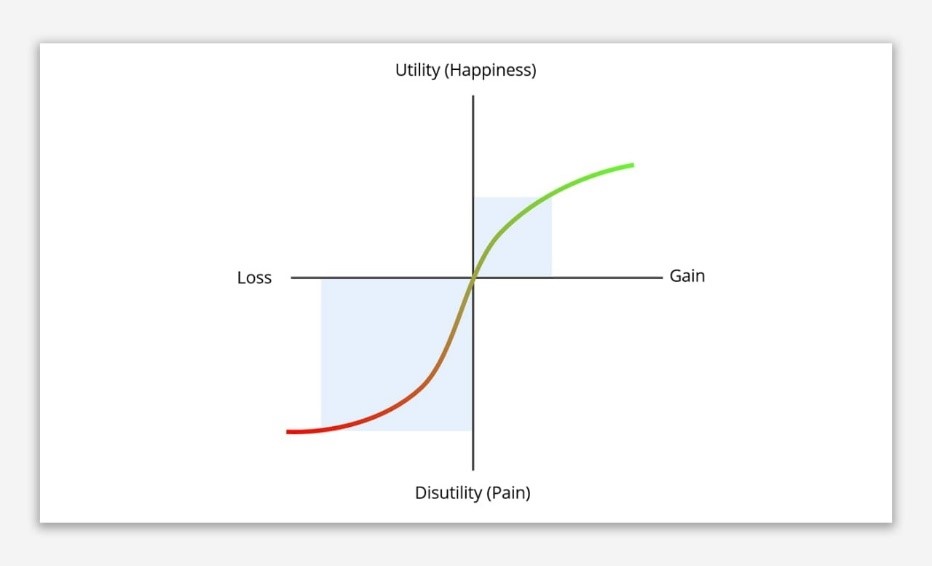
Prospect Theory of Finances
The Prospect Theory graph clearly depicts that when we lose Rs. 100, our pain would be much more in comparison to the happiness in gaining Rs. 100. Thus, the magnitude of happiness and pain doesn’t vary linearly with the amount of money.
On the basis of this human behaviour, insurance policies proved to be very successful in monetizing the irrationality of human behaviour. There are various other such phenomena in human behaviour like social contagion, cognitive dissonance, anchoring, overconfidence, etc. which answer the events like the randomness of the stock market, people’s decisions and other such cases of the finance world.
Out of the 74% literacy rate in India, only 24% have finance literacy which is one of the major factors responsible for the economy of any nation. When people lack the ability to manage their own personal finances, how can we expect a nation to have a strong economy? Many people are still unaware of the power of compounding, time value of money, credit opportunities, etc. to make use of it for their improvement of financial status. Thus, it becomes very necessary for financial managers, strategists, and policymakers to discover innovative ways to bridge this gap. It is high time that we move away from the narrow approaches of finance and introduce new frameworks in the correlation between accounting and behavioural finance which will include markets, people and their behaviour.
There lies a lot of opportunities in the domain of financial risk management using behavioural finance. Though the implication of this concept has various challenges due to randomness and complexity yet it can be accomplished when the researchers and corporate leaders will work together in the right direction. We are heading towards a more complex world where simple answers are not suitable anymore. We will have to develop an ecosystem to sustain and grow in future.
One can refer to works of researchers like Professor Robert Shiller, Daniel Crosby, Kahneman and Tversky, etc for more understanding on the subject and topic of behavioural finance. This is a potential field waiting to get explored to its core. A lot of new developments can be seen in this direction in the upcoming time.
Few lingering questions which every common investor has in his mind are how can the stock markets and the economy growth move in the opposite direction? Will the market crash due to poor economic growth anytime?
While the Covid-19 pandemic forced all economic activities to a total halt, pushing major economies into a recession, the markets around the world on the other hand had a mixed response showing a steep fall during the initial pandemic breakout and steadily recovering over time to race all-time highs in Indian and US exchanges.
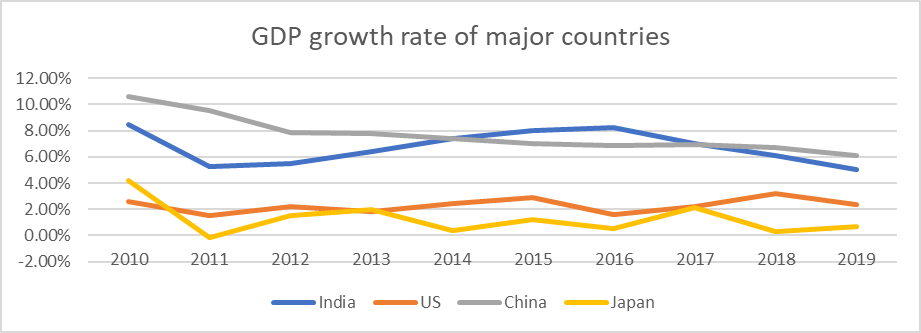
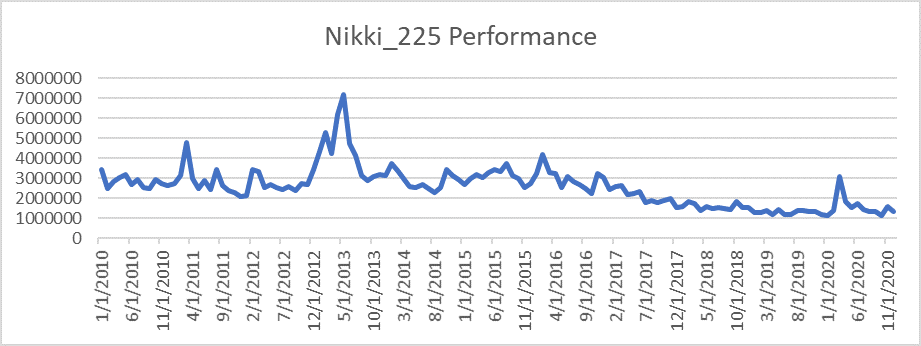
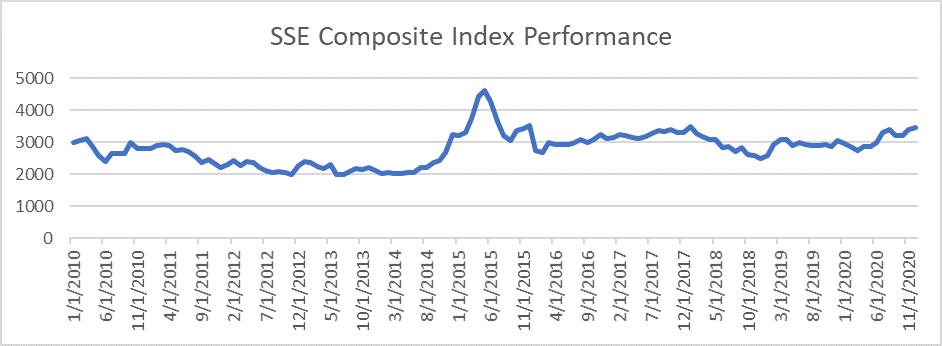
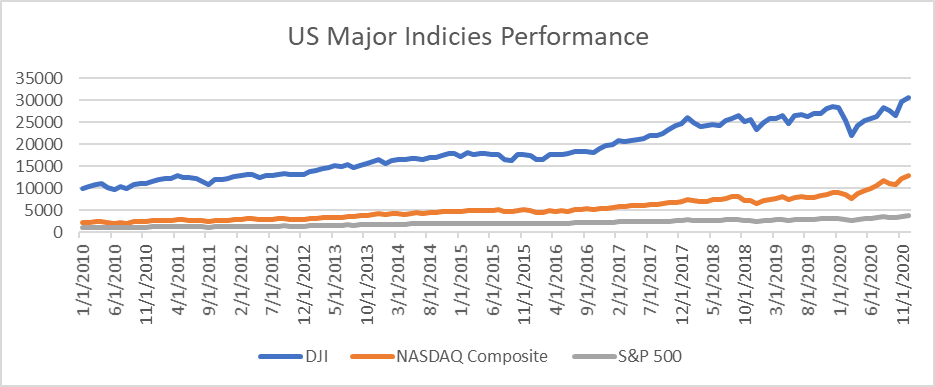
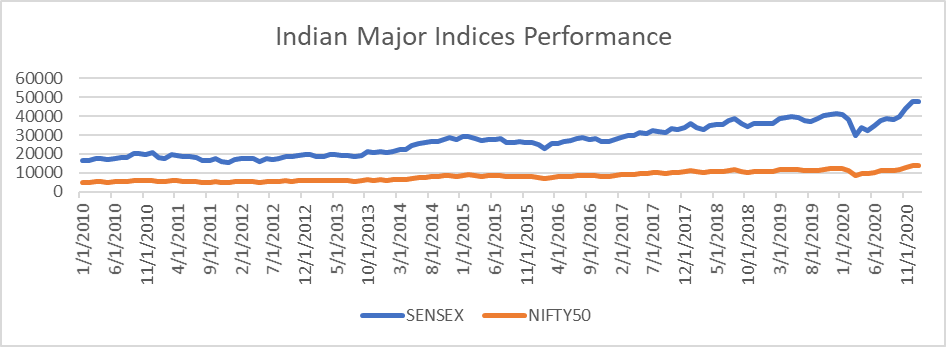
The empirical analysis of the annual GDP growth rate and the historical market performance of leading stock exchange indices of major countries such as USA, Japan, China, and India respectively over the decade show little correlation between the growth of countries’ GDP and performance of stock markets.
Japan faced one of the worst decades of economic growth battling recession and unemployment having a maximum GDP growth rate of a mere 2% in the last decade. While Nikki_225, the benchmark index of the Tokyo Stock Exchange had lost more than 60% of its value over the decade, sharp falls in the index during this period was the result of external events such as Fukushima’s nuclear crisis and the European Sovereign Debt crisis in 2011. The rally in 2013 which surged more than 70% due to the weakening of Yen and expansive economic policy was short-lived as the market plunged by ~60% at the end of 2013 due to the weak GDP growth of China and quantitative easing of US Federal Reserve during the same period.
Though China’s economic growth declined gradually from 10% to 6% over the decade, it was still having the highest growth rate among the developing countries. The Shanghai composite index grew a mere 16% over the decade despite the country having the highest GDP growth among the major economies. The Chinese exchange majorly influenced by the domestic investors who were largely inexperienced and traded using borrowed capital persuaded by the Chinese state-owned media during the period of 2015, saw a bubble in the market with the index soaring more than 150% over the previous year despite the country having poor manufacturing and economic growth. However, the bubble was short-lived and consequently busted as it lost 40% of the value in the month of June and continue to fall subsequently due to the devaluation of Yen.
The turbulence of Chinese stock markets combined with slowing growth of China’s GDP, falling oil prices, and weakening of the Japanese Yen against the US dollar and Brexit event resulted in a global sell-out during the period of 2015–16 which impacted all major stock markets around the world including US and India.
Despite having low GDP growth of around 2% over the decade, US markets have continued to grow over where the leading indices such as Dow Jones Industrial average, S&P 500 and NASDAQ Composite have yielded returns of over 200% primarily driven by innovation and technology. FAANG companies due to the power of the platform model, network effects have had a compounded annual return of more than 20% individually over the decade. Markets also saw an emergence of new business models and sunshine sectors such as electric vehicles, e-commerce, AI & Cloud computing, alternative energy, OTT etc which continue to have positive investor sentiments.
Globalisation and foreign trade are also important factors to consider why the performance of the Indian stock markets has little correlation with economic growth as the manufacturing sector contributes only ~15% of total GDP compared to China and Japan which has ~ 30% and ~20% respectively. The major sectors such as IT, Pharma, Breweries and Distilleries, Precious Metals, Automobiles are export-oriented which relies on the US and the global economy. Sectors such as Refinery, Paint, Aviation are highly dependent on the price of crude oil as India is one of the major importers.
FII also has a significant factor to play in controlling the direction of the stock markets. Indian equities saw a record inflow of $23 Bn (Rs. 1.6 Lakh Crore) in 2020 as the global investors were optimistic about the strong economic recovery, vaccine progress and low mortality of Covid-19 in India compared to western countries. This liquidity provided by FII continues to drive the market sentiments forward leading the prices to soar all-time high across multiple sectors.
The performance of the stock markets does not rely only on the economic growth of the country. Other factors such as the nature of its constituents, the impact of FII, technology & innovation and global events can also impact the markets. Markets can be both forward-looking and reactive to economic events and will correct themselves in the event of any bubble during times of weak economic growth.
When we talk about the origins of modern management theory, we often start the curve from F.W. Taylor’s Principles of Scientific Management, authored about a century ago in 1909.
The evolution of the practice of managing people since then has gone through various stages, from Labour Welfare to a more organized form called Personnel Management, then to Human Resource Management, and now, to ever-complex, empathetic, and most-strategic People Management.
Managing human resources or people is mainly based on the edifice of motivation, the stimulus you provide to a person for doing a particular job, and staying loyal to you.
This simple-to-use yet hard-to-master concept of Motivation is utilized in all organizations today, by taking inspiration from various motivation theories, Maslow’s Need Hierarchy Theory (1943) being the most popular of them all.
Now, what if I tell you that there’s a centuries-old management theory that not just discusses the concept of Employee Motivation but also structures a complete HR cycle. This theory was authored about 2400 years ago (yes you read that right!). It holds its relevance even today – and will probably continue to do so forever. The theory is given by India’s pride Chanakya, one of the most advanced and brightest minds known to have ever existed. The theory is:
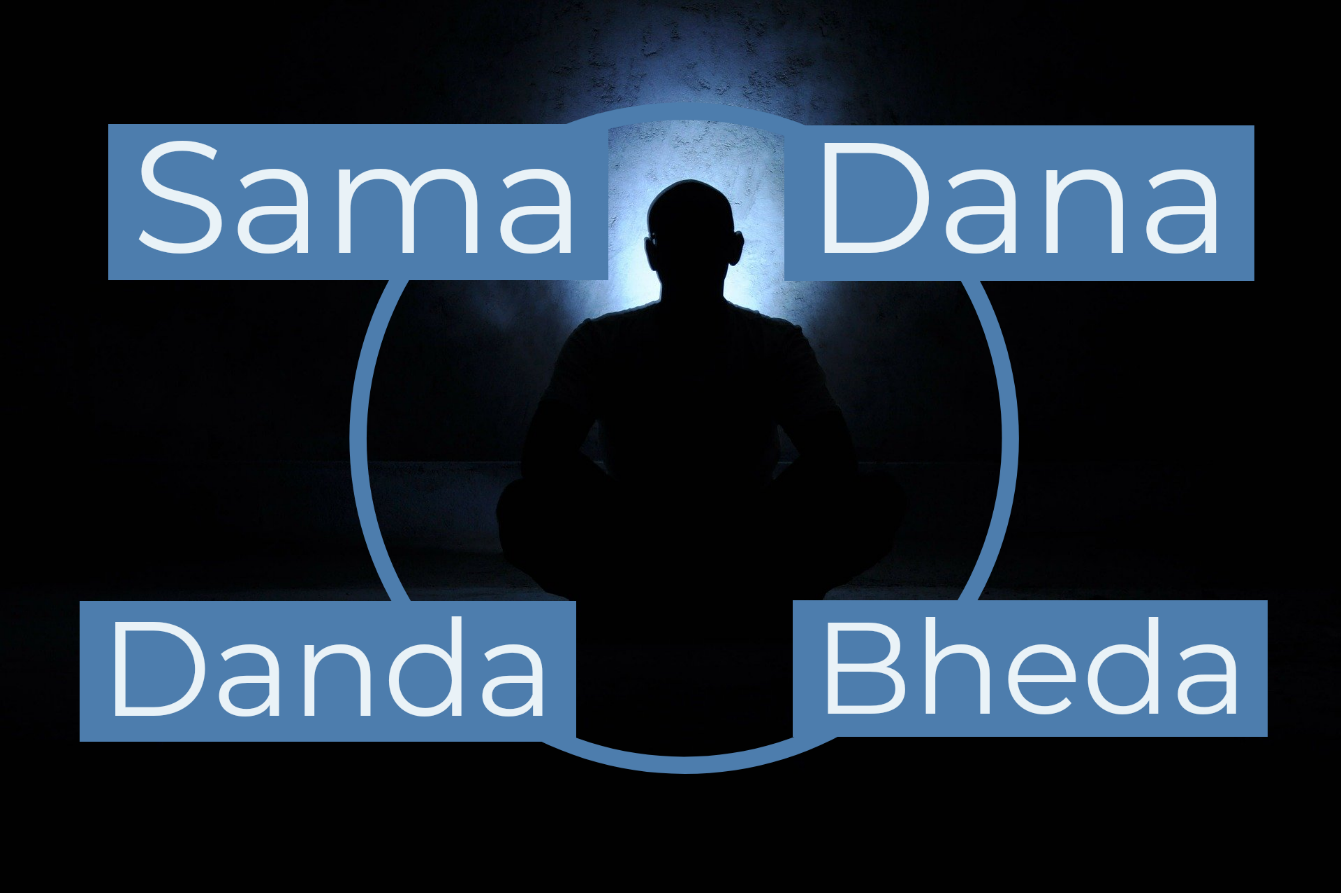
Sama – Dana – Danda – Bheda
Most of us might have heard this string of words plenty of times before but never really knew what it meant.
It means,
Collaboration – Reward – Punishment – Separation: The entire HR cycle summed up in 4 words
Here is a short description of each of these four “Upayas”: –
Sama ~ Collaboration: It implies finding the right person for the right job and then ensuring a mutual win-win situation by aligning his or her individual goals with the organizational goals. The employer must make sure that every person in the organization feels like an integral part of the larger team. An efficacious collaboration requires attentive listening. If a person feels that he is understood by the people around him, his problems have ears, and his struggles have supporters, then he will be there for you when you would need him the most. This is the foundation stone of every relationship and any cracks left unfilled during this process can vandalize the whole ecosystem in the future.
Dana ~ Reward: At the end of the day, all conversations boil down to this – the monetary and non-monetary compensations one receives in return for loyal services to an organization. Salary, bonus, increment, promotion, wellness benefits, medical insurance, housing facilities, vehicle, stock options, personal assistant, etc – everything forms a part of Rewards and Benefits. It goes without saying that an underpaid employee would never work to his full potential. Interestingly, studies suggest that even an overpaid employee is a complacent liability for the company. So, it becomes crucial for HR to strike a healthy balance when it comes to Rewards & Benefits of the workforce.
Danda ~ Punishment: Now this serves as a discipline wand, a motivator but of negative nature. While the high-performing employee enjoys the reward, the low-performing faces the brunt of the management in terms of verbal backlash, pay-cuts, demotions, or even expulsion. In every organization, performance appraisals reveal a bell curve of employees’ distribution, where 70% of them are found to be average performers. Fear of Danda ensures that these employees do not deviate towards the category of Non-Performers and continue to match the outcomes with expectations.
Bheda ~ Separation: This involves parting with an employee in the form of voluntary or involuntary retirement, resignation, or expulsion. It is rightly said that change is the only constant. The people, whether you like, love or hate it, cannot work for you forever. They will leave you when a better personal or professional opportunity comes across their way. For HR, it is important to take this pragmatically and ensure that the HR cycle keeps on running smoothly by not shying away to collaborate with new people and focusing a great deal on their training and development.
_____________
These words of wisdom that continue to guide people-managers are the doctrines that helped Chandragupta Maurya build his enormous empire in 300BC. Even today, with the right essence and execution, these can empower each one of us in building our own!
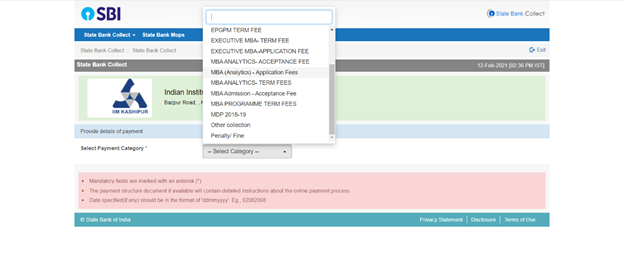
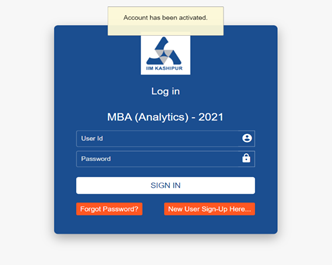
Click on the ‘New User Sign-up Here’ option. It will direct you to the following page
Fill in your name, valid email ID, Mobile Number, and set a password. Click on REGISTER NOW.
Following this, you will receive an activation link on your registered email ID.
The next step is to click on the activation link which will direct you to the following page
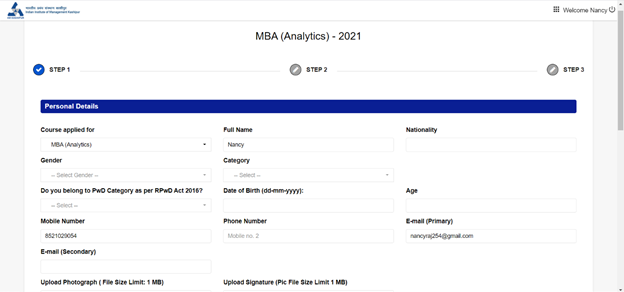
Following this, you will get a message that your account is activated. Login with your credentials and move ahead with the registration. After logging in, the form asking for your personal details will open.
Step 4:
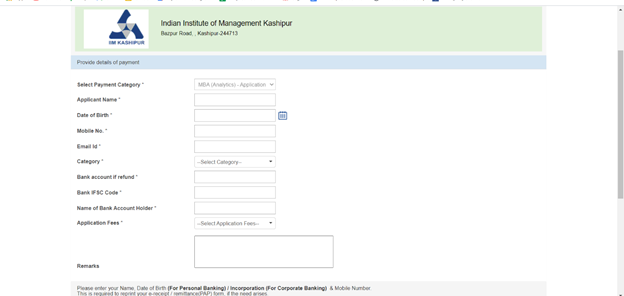
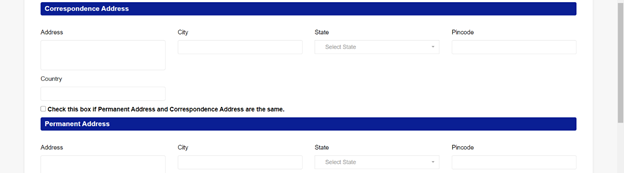
Fill in all the details in the next step. Ensure the desired file size limit when you upload your photograph and signature. Fill in your temporary and permanent address details.
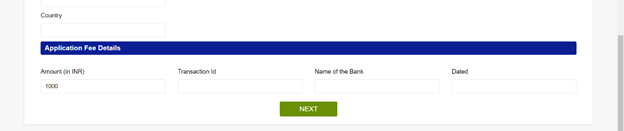
Finally, fill in your transaction details, name of the bank along with other details, and click on NEXT.
Step 5:
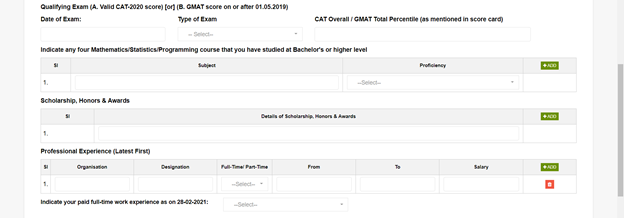
In this step, you have to fill in your educational background and related details. Make sure you fill in the exact figures as mentioned in your original documents. Further, you need to fill in the details of your qualifying exam (CAT or GMAT)
Also, fill in your scholarships and professional work-experience details. Click on NEXT
Step 6:
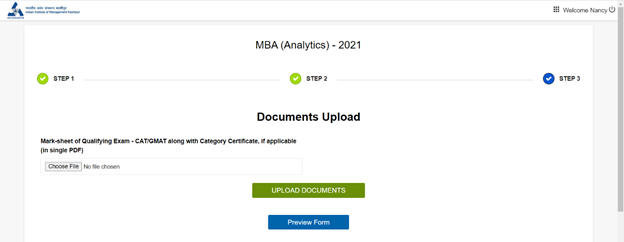
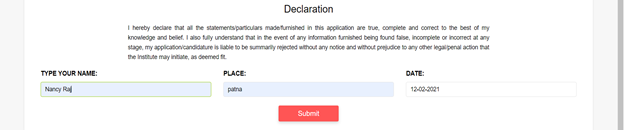
The next step is to upload the mark sheet of your qualifying exam. Post that, you can preview the entire form and check for any errors. Sign the declaration and submit the form.
The Operations and Supply chain Management (OSM) club at Indian Institute of Management Kashipur incessantly works in operations, production & manufacturing, supply chain management, operations strategy, operations research, and project management. The club acts as a perfect medium completely dedicated towards the students. It helps them enhance their domain knowledge and explore new horizons by assisting them in pursuing their interests related to the field. Being established in the initial years of the Institute, the OSM club is one of the oldest academic clubs in IIM Kashipur. By successfully carrying out several inter-college events and interactive sessions, the club has marked its supreme presence amongst the corporates & fellow institutes and has been a front runner in demonstrating excellence & commitment in educating as well as in spreading the domain advancements.
To bring out the best from the Institute’s students, the club organizes different activities throughout the year. This ranges from quizzes, case study competitions, knowledge sharing sessions to guest lectures and industrial visits. The club believes in the philosophy that sharing knowledge is not just a single-day activity and thus operates open platforms in various social media handles for continuous debates & discussions on different topics, sharing recent trends, and molding the students for case study competitions related to the domain. The club, which had already been connected to a vast network over mediums like LinkedIn and Facebook, has chartered its Instagram presence in the AY 2020-21 and regularly posts different articles and updates through these social media handles.
Certifications
The club perfectly aligns with the Institute’s philosophy of ‘Learning by Doing’ and provides a medium for students to understand the practical applications of the theories they learn. Working on these lines, the club leaves no stones unturned on gauging the batch’s interest and facilitating relevant certification courses that can help in imbibing the culture of continuous learning & improvement. This also allows the students to learn new concepts and apply them in real-life business scenarios and case studies. In the AY 2019-20, the Club organized the Six Sigma Green Belt Certification by KPMG where around 40 students had participated and successfully completed their certification. Through the CII certification opportunity facilitated by the Club, 9 students were able to gain valuable inputs on notions such as supply chain analytics and warehouse management. The Club had also been successful in connecting with ISCEA (International Supply Chain Education Alliance). It was able to gain benefits through access to practical implementations, certification courses, and easily connect to the Industries in Operations. The Club had also thrown up a CDDP certification program for the IIM Kashipur student fraternity in the AY 2019-20.
Industrial Interactions / Guest Lectures
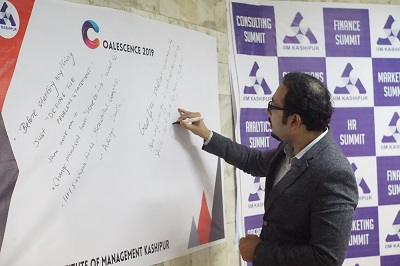
The club also bridges the gap between academia and industry by organizing interactions and lectures with industry stalwarts where the elite industrial professionals share their experiences and guide students to make them acquainted with the relevant skills required to excel in the industry. The club conducted the operations summit of Coalescence on 14th Sept.’19 and erudite speakers from leading organizations like McKinsey, Emami Ltd, Patanjali Ayurved Pvt.Ltd, Globelink India Pvt.Ltd, and IVY Technology India enlightened students on the topic of Process Re-Engineering.
Knowledge Sharing Sessions
The club also emphasizes conducting knowledge-sharing sessions and their effectiveness in helping students, especially those who don’t have any pre-requisite knowledge about different Operations and Supply Chain domain courses. Through this, a platform is being offered to the students to improve their public speaking skills and be on the other side of the table. The club also seeks guidance from the esteemed faculties and helps students embrace the academic culture & rigor of IIM Kashipur.
Industrial Visits
To bring clarity and exposure to students in a practical working environment, the club organizes industrial visits at different manufacturing facilities. It leverages the most densely industrialized regions in the country with over 180 industrial plants in and around the area. This also serves as a platform for budding managers to understand the manufacturing facilities with a practical lens and learn about best practices opted by different companies. The club has organized industrial visits to companies like Ashok Leyland, Mahindra & Mahindra, and IOCL Bottling plant.
Events
The club believes that the knowledge without application is like a book that is never read and challenges students to work on their toes and organize different intra-college and inter-college competitions throughout the year. The events include treasure hunts, marshmallow games, quizzes, case study competitions, etc. which allow students to put on their thinking caps and understand the constraints from different cross-functional aspects.
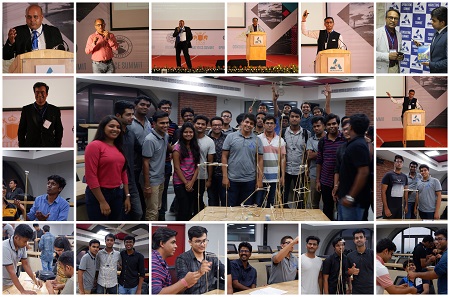
The club has organized intra-college events like Opstruct’19 and Ops-Huntin the AY 2019-20 and AY 2020-21 respectively to make students aware of the various basic terminologies in the field of Operations and Supply Chain Management. In Opstruct’19, students played Marshmallow Game which revolved around inventory management, analytical decision making, and lean concepts. The game tested how efficiently the participants utilized their resources while keeping inventory and lead time in mind. The Ops-Hunt event amalgamated the fun & excitement of treasure hunt with the domain knowledge of operations. The student teams were required to solve different picture perception clues, objective questions, and crosswords to reach the destination.
Operatius is an annual case study challenge organized as a part of Agnitraya, which is IIM Kashipur’s annual management festival. The event was well received and had witnessed participation from students across the top B-Schools in the country. Operacle is a PAN India case study competition. The club collaborated with different companies like Hesol Consulting to formulate the case study by striking the right balance between relevance & complexity and encouraging students to provide the most efficient & feasible ideas. Osmosis is a PAN India quiz competition organized every year by the club. It comprehends three rounds where participants are tested on different domains like Operations, Quality Management, Supply Chain Management, and their business applications. These inter-college events serve as a base for students to interact with each other and build long term connections. Hence, in a nutshell, the club functions as constant support to the IIM Kashipur student fraternity in pursuing their interests in Operations and Supply Chain Management and works in association with different internal & external stakeholders to maintain and uplift the academic rigor that the
The Finance Club is one of the pioneer academic clubs initiated towards enhancing knowledge in the field of finance through innovative activities such as events, hands-on workshops, knowledge sharing sessions, and guest lectures from industry experts.
The club organizes innovative events throughout the year to enhance the knowledge of finance among the student community in various concepts such as trading, risk management, and investment strategies. BullsEye, a virtual simulation game that was conducted online recently saw overwhelming participation where students had an experience closer to real-time trading. Accrual Madness, Trade Wiz, Aestimatus, Open Outcry, The Simulation Challenge, High Stakes were some of the events conducted over the past year where students from various top business schools actively participated and gained exposure to various financial concepts such as risk management, portfolio management, fund allocation, etc.
TFC believes in practical application of financial knowledge and hence, Pragati, IIM Kashipur’s student-run investment fund was set up during October 2019 to foster investment knowledge among the student community. The fund was set up with the objective to provide investors with an opportunity for long-term capital appreciation by investing in a diversified portfolio comprising large and MidCap Securities. Students and alumni of the institution have actively participated in the fund by investing through multiple fund-raising windows and gained knowledge of its working. The fund is managed by the members of the club under the guidance of Prof. Dilip Kumar and has consistently outperformed its benchmark index Nifty 50 since its launch. Members of the club are actively involved in carrying out market research, portfolio tracking, and publishing monthly factsheets on the fund’s performance. The setup of the fund helped in real-time tracking of the securities market for the club members and other student’s investors during the challenging times of the pandemic which helped in formulating and analyzing various investment strategies to effectively monitor the risk volatility and performance of the portfolio.
The club published articles and newsletters regularly on current financial events through Vit Pratiti and The Financial Gazette. The club has started to post a new series of articles and content related to the working of various financial instruments and analysis of individual companies and conglomerates on social media in order to collaborate and share knowledge with the external community
Recently, the Club has partnered with StockGro, a mobile application for virtual trading and investing where students from leading b-schools get real-time experience in trading and portfolio management. Over 200+ students actively registered and participated in daily contests which helped them to stay updated with the current trends in the stock markets
The Finance Club conducts a number of knowledge-sharing sessions throughout the academic year. A variety of topics such as personal finance, investment, and trading strategies are discussed over a series of sessions which enhances the knowledge of working of stock markets and trading. Special sessions were also held on the discussion on Annual Budget 2019 and its special features which saw participation from more than 100 students.
The club hosted Coalescence – The Finance Summit in association with the academic forum to bridge the industry-university gap. Rakesh Singhania, CFO of Wells Fargo Bank, India, participated as a keynote speaker and shared his experience on how industries navigated adversity in the new era of the post-pandemic. The lecture was attended by over 100 student participants who had an opportunity to interact and gain insights on challenges faced by the financial markets. The club also hosted Money Matters, a guest lecture session in the presence of Prof. Dilip Kumar on discussing various investment-related topics concerning Pragati. The club also aided the students in preparing for competitive examinations by participating in FLIP National Challenge and CFA Research Challenge.
In this way, the club ensures that students get the essence of finance as a domain of management. It helps the students to learn about the scope in this domain and select the best course of action for their future choices. In nutshell, The Finance club fosters a culture for finance within the realms of IIM Kashipur.












 The IIM Kashipur Blog