Case Study Competitions – How to make the best of opportunities!

Hear out Shubham who is an Industrial Engineer by qualification. He has completed his MBA from IIM Kashipur (Batch 2019-21) and has been recognized as the Top Competitive Leader from the Institute featuring him in Forbes India.

“The price of victory is high but so are the rewards.”

Corporate competitions have been an integral and consistent part of my MBA journey. Especially in the 2nd year, when the entire classroom program was shifted to online mode, there was hardly any day when I wasn’t involved in brainstorming ideas for any competition. Hearing about being the Top D2C Champion from IIM Kashipur and my Institute being ranked 4th, particularly when I was finishing my MBA journey, was the best way I could have summed up the significance of all my efforts.

Participating and investing time in multiple corporate competitions is indeed a difficult decision, especially amidst the conventions of a B-School, where a student has various academic commitments, projects, case studies with sacrosanct deadlines. There have been times when we had overlapping deadlines-prioritizing became the key factor there. There have been times where my team had to discuss and devise strategies working remotely, or work on competitions during the end term examinations as well. However, the extent to which these competitions enhanced my managerial learning by providing a parallel exposure to real-time industry-wide business problems, and a platform to evaluate my approach to these problems, made me keep the spirit alive and kept me going at every point.

During this time, I explored various domains, ranging from proposing a new product line in Market research for Thoucentric Bottoms-Up to preparing a Business Development Plan for CarEasy Spark. While proposing Supply Chain strategy for Tier-2 cities in the Flipkart Wired helped me gain perspective of the logistics industry, building a healthcare ecosystem in Infosys Ingenious and Optum Stratethon provided the insights of the technological advancements of this sector. Participating in 3M-CII helped us build a tech enabled product with a social impact. AGS Horizon navigated us through the emerging domain of hyperlocal fintech. In addition to this, I also participated in multiple B-School level competitions and managed to win a few. With this, I ended up with 2 National Winners, 1 Runners Up, 3 National Finalist, and 5 National Semi-Finalists in my tally.

Some key aspects that MBA aspirants should keep in mind, though these are not exhaustive:

  1. In the initial year, experiment with building your team for the first few competitions until you get the right dynamics. Try to build a core team that will have zilch or constructive friction and no free-riders. Find members who have expertise, say it be market research, designing or technical domain knowledge. Motivate them. Teach them. Learn from them. And improve each other.
  2. Making the most of your network, connecting with industry professionals to gain relevant key insights is of paramount importance.
  3. The execution should be kept in mind so the idea should be minimalistic. Be thorough with your ground research and workflow. Try incorporating frameworks/models learnt in class.
  4. During the presentations you need to ensure that you cover all the important content in the stipulated time frame. Try to make it as crisp and concise as possible. Ideally you can follow the approach – Problem Statement, Research, Insights, Ideas, Feasibility, Financials and Timeline.

Consistency and meaningful participation in competitions can increase your MBA learning to a great extent. Instead of taking it as only participating, take these as learning curves. If you want to make the most of your MBA journey, competitions undoubtedly provide a platform for you to learn and unlearn. My suggestion to juniors will be to participate in maximum number of competitions, keep yourself updated about recent developments and innovations, and always keep the hunger alive.

About the Author:
Shubham is an Industrial Engineer by qualification. He has completed his MBA from IIM Kashipur (Batch 2019-21) and has been recognized as the Top Competitive Leader from the Institute featuring him in Forbes India. He is an IT professional with 2 years of experience in ZS Associates. In his past time, he likes sketching & playing video games. You can connect with him on LinkedIn.
Prominent platform for Entrepreneurship at IIM Kashipur

 “All our dreams can come true if we have the courage to pursue them.” – Walt Disney

As per the above saying, anyone can become an entrepreneur who understands that entrepreneurship is a very long and arduous ordeal. MBA is also considered a gateway for achieving the entrepreneur dream. Every year, thousands of students take the CAT exam in the hopes of getting into a prestigious business school and taking the most sought-after course, the MBA. These students strive hard to gain admission to a prestigious institute such as IIM, with the hope of a better future and the drive to excel. Out of thousands of applicants, only a few hundred are admitted into an IIM. Some students hope to obtain a high-paying job after enrolling in an IIM, while others seek managerial training and an environment that will allow them to pursue their dream of becoming an entrepreneur. For those who want to start their own business and embark on an entrepreneurial adventure, IIM Kashipur is the place to be.

Among all the newer IIMs, IIM Kashipur is emerging as a hub for entrepreneurial growth. The most important aspect for becoming an entrepreneur is the requirement of a unique and novel idea that demands the necessity for innovative thinking. Understanding this requirement IIM Kashipur serves as a spoke in the DIC (Design Innovation Center) community which is involved in building the thought of entrepreneurship in the young inquisitive minds. Help-Himalayan education learning program, Hum- Himalayan upliftment movement, Hill- Himalayan innovation of land to the laboratory are the innovative outreach programs introduced to enhance the culture of innovation, design thinking, and creative problem solving among the community by disseminating the knowledge in every sphere of the society.

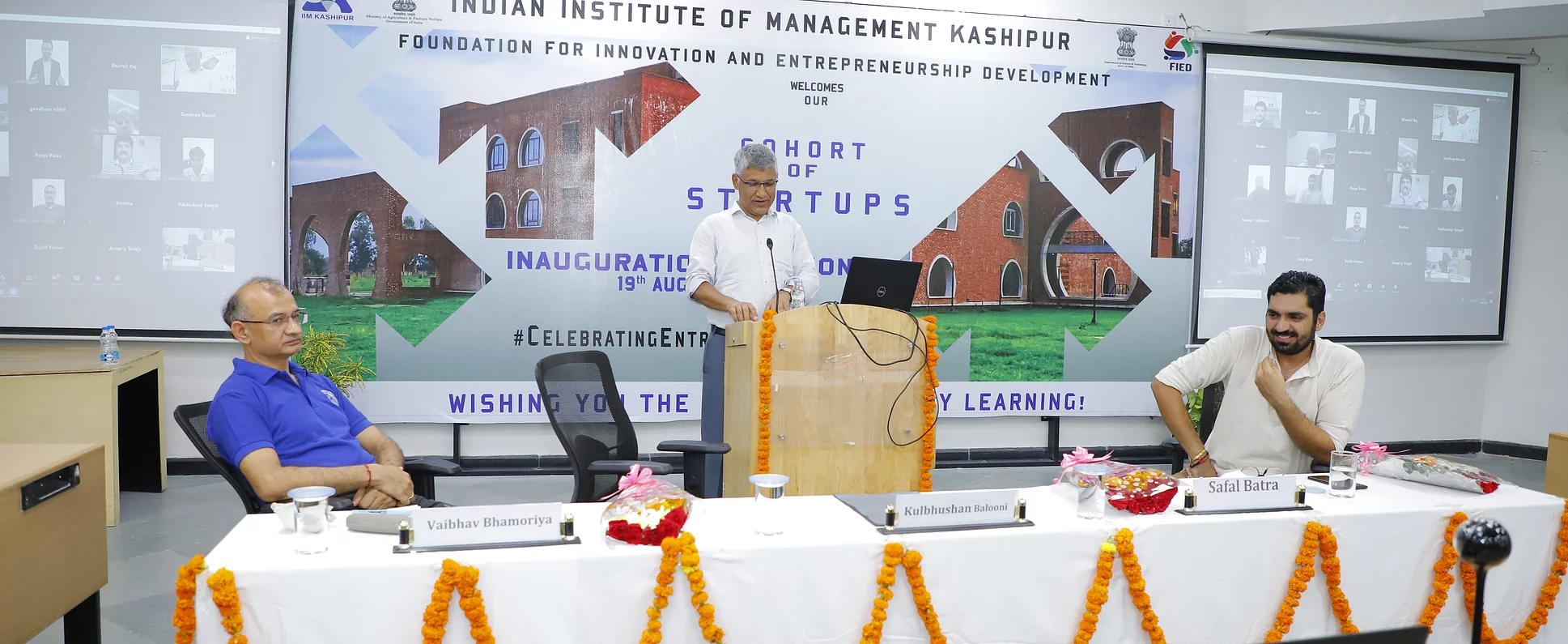
Further, IIM Kashipur is assisting future entrepreneurs by adopting an academic program to assist future start-ups, as well as launching projects such FIED by the Entrepreneurial cell of IIM Kashipur. The Foundation for Innovation and Entrepreneurship Development (FIED) is a project aimed at developing and improving India’s entrepreneurial ecosystem. FIED is expected to incubate India’s most promising start-ups in the areas of tourism and hospitality, agriculture, art and craft, and education with the help of the Ministry of Agriculture, the Department of Science and Technology, the Government of Uttarakhand, and other supporting partners. FIED operates with the intention of being the leading incubator by 2025, with the goal of establishing India as a hotspot for entrepreneurship research, growth, and training, as well as assisting start-ups with funding and comprehensive mentoring.

FIED has successfully incubated 150+ ventures, has engaged 500+ entrepreneurs, raised 50 crores of funding, and has established a network of 100+ investors setting a stage for the budding entrepreneurs to learn and establish their dreams. It has also started two new ventures RKVY – RAFTAAR, and Drishti to promote the start-up culture in the young minds of the student fraternity. With the immense success of the very first program it undertook, RKVY RAFTAAR, FIED had a very successful start-up year. More than 350 applicants from across the country applied for the program, of which only 37 start-ups were chosen at the IIM Kashipur Campus for the two-month training program. Ultimately, 22 start-ups, up to 25 lakhs, obtained final funding from the Ministry of Agriculture. 

  • RKVY – RAFTAAR: RKVY Raftaar – There are two programs offered to start-ups under RKVY Raftaar – Sahas and Saksham, which provide an opportunity to receive funding, mentoring & help for the launch and support of commercial products. 
  • SAHAS: Sahas is mainly an Agripreneurship orientation program for startups at the pre-seed stage. The start-ups which are in the ideation stage and have their focus areas concentrated in increasing the efficiency of agriculture can apply to this program. The start-ups have the opportunity to receive 5 lakhs grant-in-aid after the successful completion of this program. The trainees who are selected for this program receive a stipend of Rs 10,000 for a period of two months. The focus areas of this program include – Sustainable inputs, Animal husbandry, Innovative food technology, Supply chain technology, Smart agriculture, Agri Fintech, Agri Biotech, Soil, water & weather technology, Farm mechanization, post-harvest technology, Fisheries, Farm fresh retail, Urban/vertical farming, ICT/IOT in agriculture. 
  • SAKSHAM: Saksham is mainly an Agripreneurship incubation program for start-ups at the seed stage. The start-ups with at least a minimum viable product/ prototype based on innovative solutions in Agri and allied sectors. The start-ups have the opportunity to receive grant-in-aid up to Rs 25 lakh after the successful completion of the program. The start-ups would also receive additional help and mentoring for the successful commercial launch of the program. The program offerings and focus areas of the program are the same as that of Sahas initiative. 
  • DRISHTI: Drishti is a start-up and incubator program by FIED for start-ups working in Edutech, Foodtech, e-commerce, and food safety. The initiative is mainly to mentor and supports the start-ups in the successful launch of the commercial products. The start-ups would also get an opportunity to connect with various investors and partners where they would be guided by industry experts on various growth strategies. The start-ups can avail of seed funding as well as an IIM certificate after successful completion of the program. 

FIED of IIM Kashipur not only imparts the zest to achieve and follow up their dreams of becoming an entrepreneur in the minds of students but also helps the entire community to nurture and foster the start-up culture. With the DIC and FIED, IIM Kashipur never fails to astound us with its steps and ventures in sculpting an entrepreneur to serve the future community.

About the author:

Deshmaa R T who is a Biotechnology engineer by qualification is currently pursuing MBA (Analytics) from IIM Kashipur. She is a part of various student bodies like Media and Public relations committee, Quest – The Quiz club and Team Insite – Admissions Support Body. You can connect with her on LinkedIn.

MBA: From a fresher’s viewpoint

Much bigger than merely a two-year course: MBA is an amalgamation of a plethora of domains, integrated so astutely that each one of them finds a core point of strength that others can gain from. This is exactly what it means when It is said that MBA caters for an overall holistic development of the students. However, the popular opinion states that the journey is slightly more rugged for the freshers. They are the lot without any prior exposure to a corporate world. Unaware of the adversities and the pre-requisites for the same, they step into this course in reticence. Self- consciousness, shyness and insecurity are some of the feelings that gush through their veins at the beginning, but not for long.

The first step in their holistic growth comes from the diverse pool of peers. During the first few weeks of their MBA journey, they meet a lot of people; some sharing the common apprehension while others who have already paced their journey beyond that. Through healthy and continuous interactions, this is where they learn the know-hows of a corporate life and how it changes and molds one’s personality. 

After a brief glimpse into the kind of life awaiting them, the next step of development comes in the classroom itself. Through experiential learning and case-based approaches that follow, students, irrespective of their academic backgrounds and experiences are invited to speak and encouraged to bring forth their ideas on to the table. None of the opinions are refuted in the classroom. The freshers are said to bring in much more creative ideas as compared to others, reason being their ability to not restrict their thinking in a particular domain. They allow themselves to fly freely. They are the optimistic lot and play the role of risk takers in group tasks and convince their team regarding the feasibility of the strategies undertaken.

The final step, which brings everybody on board and at par with each other on this journey, regardless of their prior corporate exposure, is their commitment to various student bodies. Student bodies are an integral part of an MBA curriculum. They give a glimpse into various aspects of work life that lies ahead. Adhering to the timelines, working in a team, taking leads frequently, dealing with conflicts etc. are the lessons drawn from it. It knows not to see someone from prejudiced eyes. This is the point where all the inhibitions of a fresher shatter and he/she finally starts to believe in being worthy of the course and standing tall with their peers, if not above then at least at par. 

So, it does not matter if you have years of work experience, or you are fresh out of college. An MBA curriculum needs you as much as you need it.

About the Author:
Nancy Raj, a BA honors in Statistics by qualification, is currently pursuing an MBA from IIM Kashipur. She is a part of various student bodies like the cultural committee and Admissions support body. She is fond of reading, writing and travelling. You can connect with her on LinkedIn

Explore the inevitable

Do you think MBA in an IIM is all about securing good grades and a 6 figure placement offer? Obviously, but not exhaustively

There are a plethora of opportunities and the exposure that a student gets here is quite enormous. What if I say, you are the ones pulling up sleeves and drafting up opportunities in terms of Bschool Competitions, Webinars with Corporate giants, Tedx Workshops, Start-up Fests, not a normal scenario in your high school and undergraduate education, but in a student-run campus like IIM Kashipur, you are the frontline strategist planning and executing the initiatives from alpha to omega. 

Name your interest, and we have a club for it. Well, most of us have this one thing that seems to be sweaty and daunting, the art of Public Speaking. You wouldn’t be surprised if I tell you that we have a very active and alive Toastmasters Club that helps you to break the shell that you have been building since childhood. Six months into the club, you will see the difference for yourself. Have you noticed a trend in recent years? I mean, it’s so evident in all the social media sites that the students of IIM Kashipur outperformed and bagged prizes in most of the corporate case study and other major competitions to quite an extent that it called for an organized club, The Corpus. The team of active participants majorly focuses on helping the students to compete and to provide an insight into the competition because the winners know the best!

Hola Amigo ! Bienvenue à la Maison 

Don’t be confused, it’s just a pinch of Spanish and a dollop of French that I have learned in a workshop and I probably want to show off a bit. During your stay at IIM Kashipur, you will come across a unique club and committee that promotes foreign languages and culture on the campus. From celebrating Halloween, language workshops to exchange programs, they inculcate the best practices to bridge the cultural gap and they train us to survive in any corner of the world. 

Take a small peek into the past, growing up, some of us wanted to design our own clothes, some of us even played with the camera toys and posed as serious photographers, some of us even posed a media person. To keep the child in you alive, we have Kaptured to capture the best moments at the campus, the design cell that makes us take pride in an IIM Tag with hoodies and T-Shirts and the MPRC, the media front that glorifies our college to the external world. All these are student-run clubs and committees, and they get exposed to the real corporate world even before stepping out of the campus. 

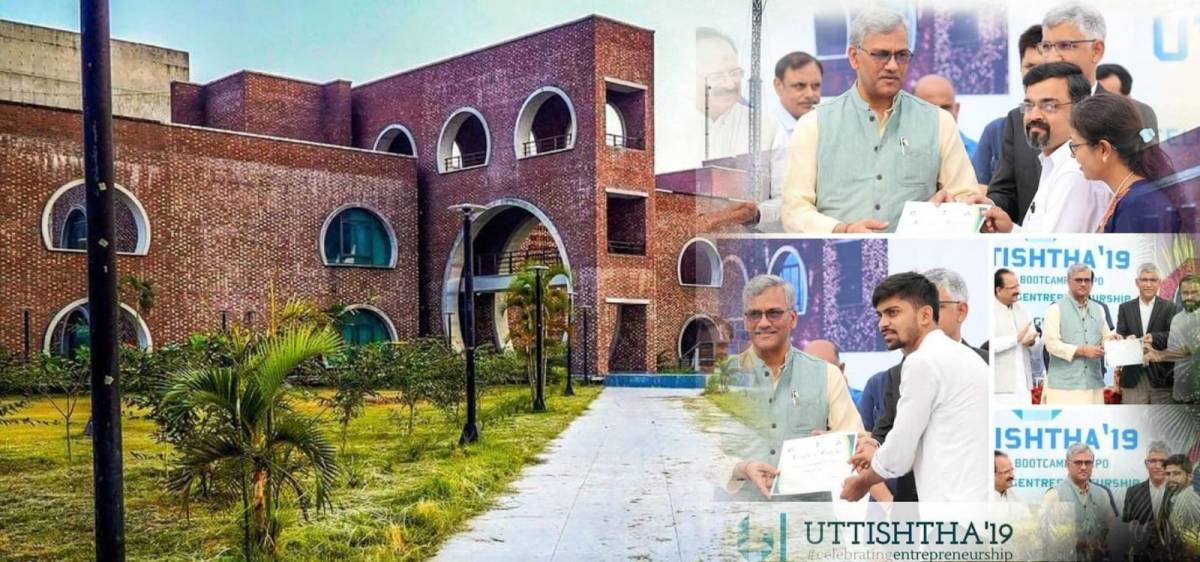
Every student in their lifetime at least once must have had this entrepreneurial instinct in them, whether the idea is good or bad, you would have dreamt to begin your own startup. To add fuel to your entrepreneurial instinct, we have Ecell with collaboration with FIED conducts workshops and I must mention their flagship event “Uttishtha”, which instills and brings out the hidden entrepreneurs to light. All these activities are done by the cell members, one can only imagine such huge and overwhelming responsibility and the impact that they can induce. 

The color green is associated with prosperity and the lush greenery scenes around the campus are the fruits to the effort of our ecology club, at one point you sip your coffee enjoying the scenic beauty, and indulge in few cheat moments while being still in the hustle and bustle environment. The students of the IIM Kashipur are compassionate and kind to the community surrounding them, through the Parivartan club, they give back to the community in multi-folds. 

A student studying at IIM Kashipur gets a chance to witness his managerial instincts in every possible way, from maintaining accounts, promoting events, and managing people, he puts the theoretical knowledge into practice. Managing clubs and committees is not a piece of cake, the outside exuberance is the result of every student’s contribution to the betterment of the fraternity. Every year the students pass the baton of their responsibility to the juniors to carry forward the legacy left behind, two years of journey embarks a special place in the hearts of every student at IIM Kashipur, it’s not just an IIM, it’s THE ONE TRUE IIM IN THE NORTH

About the Author:
Angelin is currently pursuing MBA from IIM Kashipur, with majors in Finance and Marketing. She is a part of the College’s Wellness Team. She is fond of playing Keyboard, going for long drives, cycling and listening to podcasts in her spare time. You can connect with her on LinkedIn

An Internship Experience at Agri-Tech Startup and how it converted to a PPO

PPOs are a major aspect for B-School students in securing a qualified and exclusive offer from companies that they wish to work for in the future. The idea to convert your Summer Internship into a full-fledged Placement Offer is not easy but not impossible too. This article provides a better glimpse of what one needs to keep in mind while looking to secure a PPO.

Agrigator, which is a seed-funded Agri-Tech Startup, is involved in Supply Chain and Logistics stream for providing a B2B Marketplace between the Producers and the Buyers. It was duly catering to HORECA outlets (Hotels, Restaurants, etc.) and FPIs by transporting food grains directly from Farmers and related sources, leading to a reduction in transaction costs, time, efforts, and simplifying the operations of such an unorganized system.

Keeping yourself in such a position, there are a few things that you can follow to slowly chart yourself and the learnings you receive in due course. Firstly, it is important to completely familiarize yourself with the ins and outs of the concerned organization and the sector that it functions in. Usual ways include following Annual Reports, Sector-Specific News from verified sources, Online Government Resources and Databases, and interaction with Industry Experts and the employees of the organization themselves. This will build up a robust base for you to understand your line of work for your project

Next, you must continue to interact with your assigned mentor or individuals who work in the same fields/organization to also understand the core competency, relative competition, domain-specific business strategies, and business models. This will ensure you are now settled enough to understand the assigned problem statement for the project and the outcomes/metrics that will measure your performance for the same.

Post this, it is time to directly jump into your project and use your acquired knowledge and resources to design a flowchart of your activities to arrive at a solution. This will involve a preliminary plan to proceed, important parameters to focus upon, following up on previously devised industrial practices, framework analysis, and carefully constructed notes on emerging trends and developments in the industrial market.

To make things easier, communicate with various stakeholders and experts that provide a concise view on the strategic feasibility, implementation, and impacts that a step of approach creates to resolve different issues. Gradually, clarity evolves to choose the optimal way to proceed that provides or maximizes the utility of the defined outcome. Typical meetings or regular brainstorming of ideas can greatly reduce doubts and little hiccups that you encounter on the way. Therefore, don’t rush to obtaining a solution without confirmation and thorough research of facts to avoid last-minute crisis. These little things go a long way to ensure that your final presentation is well received by the majority of stakeholders that reflects the ways and values the company aligns itself to.

Last but not the least, be prepared with anticipated questions and doubts that you are likely to face regarding the work you have done, outcomes achieved and the notes on the Final Presentation you will present to the concerned officials. It is no wonder that your Presentation skills should be excellent with the concise textual matter but supporting visual reports and facts that enforce your views and looks to the proposed solutions concerning various scenarios.
Keep a cool mind and be confident. The rest is on your meticulous way to manage your time and efforts to the fullest.

Getting a PPO depends not only on how well you did, but how well you reflect your skills and knowledge to be part of the company!

About the Author:

Som Samantray, a Chemical Engineer by qualification has pursued MBA (Marketing and Data Analytics) from IIM Kashipur. He has been part of various student bodies like the Econs-Economics Club and TEDxIIMKashipur. He is a fresher and is an ardent reader of books and novels and a blogger. You can connect with him on LinkedIn.
How to ace Summer Internships from the lens of an ICICI PPO holder

The batch of 2020-22 is looking forward to their internships amid all the uncertainties around. Hopefully, this little helping hand from my experience and learnings of my internship with ICICI Bank Ltd. will help you plan your internship better, especially if you are looking to secure a PPO:

1. Understand your deliverables: Be clear with the deliverables and expectations of your project. It is better to know your focus areas in the deliverables.

2. Schedule to finish your SIP deliverables in 6 weeks: If you are on two months SIP, keep the last two weeks for any unforeseen issues, prepare your presentation, practice it and present it to your mentor before your final presentation.

3. Listen to as many employees as possible: You might be new to an industry and organization. It is tough without the experience of people inside to comprehensively complete your deliverables. Hence, listen to as many associated departments and employees as to widen your understanding. 

4. Let your guide keep track: Most of the time, your mentors might also be busy with their routine work. You must update your day-to-day work to them. You can share a tracker sheet where you can update your work regularly. Also, it is good practice to share your weekly reports and presentation.

5. Maintain your relations: While you connect to many employees in the organization, your approach, behavior, and people management are widely noticed and sometimes regarded above your work. Hence, maintain good relations with people around, especially with your guide and manager.

6. Keep your references handy: During your story creation, back your thought process with your research reference. It adds credibility to your ideas, highlights your understanding, and shows your work.

7. Focus on Story Line: During your final presentation, focus on your story and inferences along with relevant data. Try not to pack your presentation slides with data. Also, mention your challenges and learnings from your internship towards the end of your presentation.

With these tips, I wish good luck with your SIP to the whole of the bright minds of batch 20-22. Hope to see you all on the other side with a PPO.

About the Author:

Vineeth Rao Sudhati is a student of MBA, batch of 2019 -21 from IIM Kashipur with majors in Operations and Marketing. He is a part of various student bodies like the Alumni Relations Committee and Prep Cell. You can connect with him on LinkedIn.
FPM Perspective-Qualitative reflections of a Quantitative Researcher

Being a civil engineer who pursued an MBA in Operations Management, followed by enrollment as an FPM student in the Operations Management area, I had always classified myself as a person who was more (or only) inclined towards quantitative research. I always recognized and was fascinated by the power of numbers.  

Then, in January 2018, We, a group of 15 research students, entered the qualitative research methods class. Some of us were excited about the qualitative aspect of research, and some were absolutely disinterested; I am ashamed to admit that I, then, belonged to the second category. I later realized that I had been keeping a blind eye towards the ‘dark’ aspect of numbers. I, in no way, wish to belittle the quantitative – orientation of research, but qualitative research is beautiful in its own way. The qualitative research articles, if well written, provide a vivid image of the phenomenon that leads the audience to discover deep meanings of human experiences.  

I now understand that a good researcher should learn about both paradigms. The qualitative and quantitative approaches have distinct and complementary strengths. Both come with a different set of challenges and require different skills to overcome those challenges. For example, as a qualitative researcher, I can always adopt a grounded perspective where I do not need to identify the dependent and independent, nor do I necessarily need to propose hypotheses. My primary responsibility as a  qualitative researcher is to capture individuals’ hidden meanings and explore the phenomena’  possibilities, but it is easier said than done. The experience is like deep-sea diving; we know we are looking for something, but we do not actually know what we are looking for.  

During this journey, I came to realize the beauty and power of text. Sometimes I can feel the ‘dryness’  associated with the numbers in quantitative articles because numbers in no way explain the human feelings that should have been captured. I now recognize and appreciate the mental and emotional strength of qualitative researchers because I believe that risks and concerns are more significant in qualitative research, mainly because of the researcher’s level of involvement with the research process and the participants.  

If I am asked to clarify my stand regarding which type of researcher I would classify myself, I will find myself in a great dilemma. I would instead argue that one should appreciate the different values which are drawn out of the two different paradigms. A researcher who has familiarized himself with both the frameworks may develop a more profound intellectual capability. Reflecting on my learnings over the past years, I can conclude that I have developed more patience, and my inclination towards sheer objectivity has reduced. I have indeed developed slight but noticeable acceptance towards subjectivity and abstraction. I have grown to realize that there will always be things that can never be measured or analyzed quantitatively.  

Today, almost three years later, my qualitative exposure surely helps me reflect on the quantitative work better. 

About the author:

Taab Ahmad Samad is currently a Ph.D. Student (Operations Management) from IIM Kashipur. He is currently working in the field of crowdsourced logistics. You can connect with him on LinkedIn.
Acquiring PPO in Flipkart by acing Flipkart Wired 4.0

Corporate competitions had always been a key area of focus in my MBA journey as they gave me a platform to take my classroom knowledge to the real world. Having worked in a fortune 500 organization I was always fascinated with the use of technology to elevate the human experience and hence E-Commerce was a domain of my interest. When Flipkart launched its flagship B-School competition Wired I pounced on the opportunity to apply my acquired management knowledge backed up with my technical skills to solve challenges faced by a giant like Flipkart. Since I was preparing for this competition for a long time (and well yes, the chance of scoring a PPO made it more lucrative), I was closely following the developments in the E-Commerce supply chain industry regularly. After understanding that how crucial E-Commerce had become to an average Indian in the times of COVID-induced lockdown, I wanted to dive deep into the sector and develop models on how E-Commerce can penetrate in a challenging country like ours.

The case competition required us to develop a model using which Flipkart could cater to the Tier 2 Indian customers with their day-to-day purchase needs. Understanding the importance of this problem statement in the context of Flipkart’s business situation and the national lockdown scenario, our team’s objective was to design an easy to implement supply chain model that could be easily replicated across the country within a time frame of 1 year. After clearing a series of rounds our team had the absolute delight to reach the national semifinals of this coveted competition. The very fact that this competition provided me with a platform to present my solutions and ideas to the top leadership of a dynamic organization like Flipkart tremendously added to my learning curve.

Having missed a chance to be a part of the National Finals, I was overwhelmed when I was called up for an interview with Flipkart in the form of a pre-placement interview (PPI). Well as Flipkart rightly claims “Ab har wish hogi poori” they certainly fulfilled my wish by providing me a chance to kick start my career with an organization like theirs. The interview process which had three rounds (a general aptitude test followed by 2 rounds of interviews) gave me enough opportunities to understand how I as an individual could contribute to Flipkart (technically and behaviorally). The interviewers were very keen on understanding what skill sets I bring to the table and what do I look for in terms of growth and opportunity. After those three rounds of virtual interactions, I finally got to experience that most sought-after day of MBA life when finally Flipkart offered me THE job!

The entire experience of participating in corporate competitions, learning bit by bit in each of them is a continuous journey. A journey that I believe is different for every individual. I cannot be thankful enough to be a part of an institute like IIM Kashipur where the entire atmosphere focuses on making you ready for real-world challenges. With competitions taking the center stage of academic focus it was my institute that played the pivotal role in grabbing my dream job opportunity.

About the author :
Pranav Bhardwaj is currently pursuing MBA from IIM Kashipur, with majors in Analytics and Marketing. He is a part of various student bodies like the The Consulting & Strategy Club, TEDx IIM Kashipur and Prep Cell. You can connect with him on LinkedIn.

IIM Kashipur emerges as a rising star in the Dare2Compete Awards 2021!

“Reach high, for stars lie hidden in you. Dream deep, for every dream precedes the goal.”  – Rabindranath Tagore 

Let’s start with the journey of a student who gets admission in a prestigious institute like an IIM after persistent preparation and trading off career opportunities. With dreams of flying higher and higher, this student has a feeling of great achievement and an equivalent responsibility to do justice with this success. He sees a glorifying career ahead in the upcoming two years and is highly enthusiastic about making the most of his MBA life. But how does he paint the canvas of these two years? Which hues does he select? This entirely depends on his strong will and determination towards learning clubbed with the opportunities and motivation offered by his institute. 

IIM Kashipur takes pride in playing a phenomenal role in the life of this student who enters the institute with the thirst for knowledge and the zeal to realise his dreams. During two years of post graduation, the institute instils in the students the feeling of “never settling down”. One of the integral parts of the culture is motivating the students to participate in case study competitions. IIM Kashipur faculties, the Placement Committee and Team Corpus leave no stones unturned to cultivate this culture of corporate and B-school competitions in the current and upcoming batches. They dedicatedly work round the year in this direction to bring the institute to unfathomable heights.

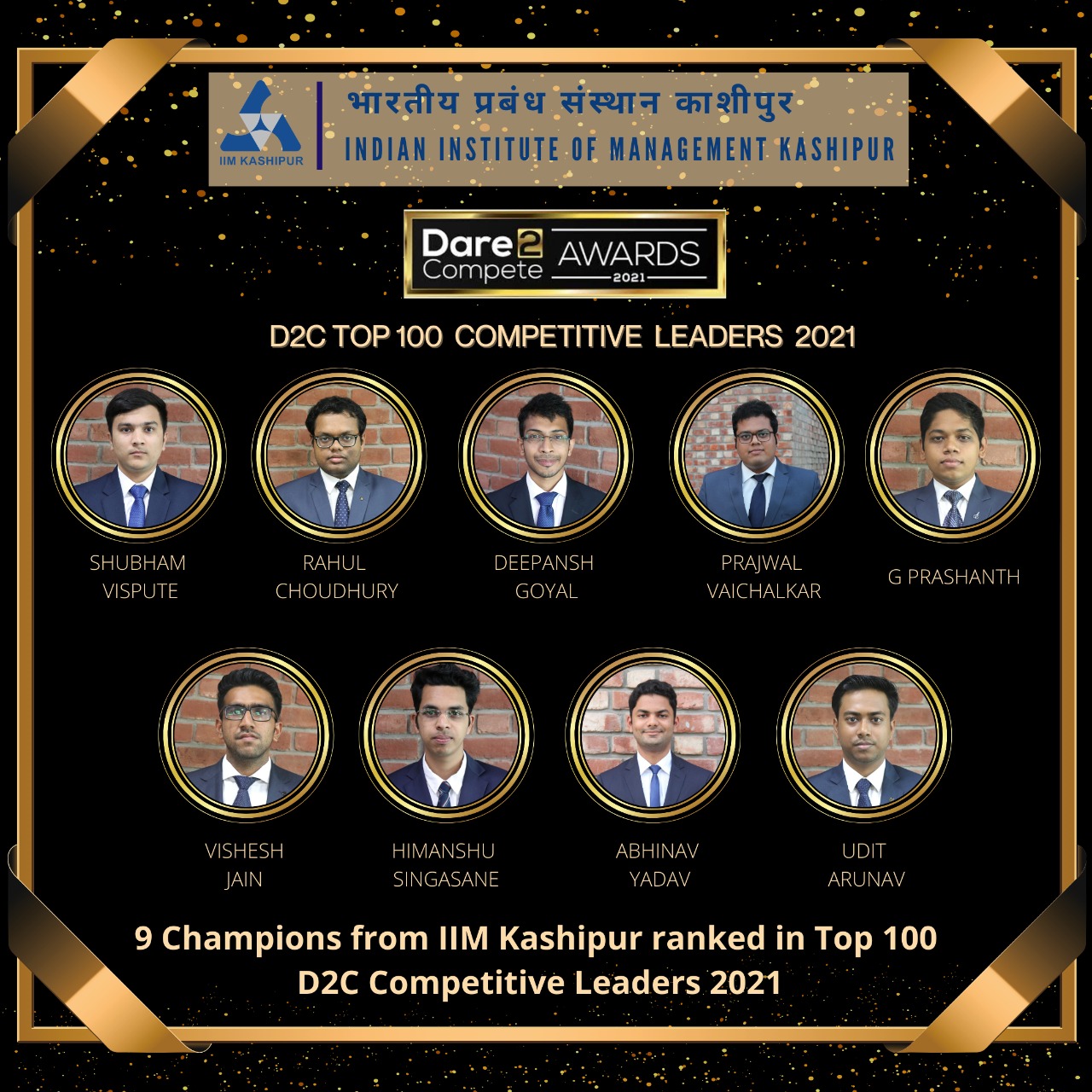
With these constant efforts, the institute has exceptionally performed in Dare2Compete (D2C) Awards 2021 securing 4th rank in D2C Competitive B-Schools 2021 Rankings.

Achieving this milestone, IIM Kashipur has joined the league of other older prestigious institutions like IIFT, IIM Ahmedabad, IIM Bangalore and IIM Kozhikode that appeared in the top 5 ranks. Not only this, IIM Kashipur has become the only 2nd generation IIM to have made its place in the top 10 ranks.  

This remarkable success is a reward for the diligence and determination of the students. Each and every honest participation and winning has contributed to the achievement. Throughout the year, students of both the years have meticulously planned for the competition season burning the midnight oil in the quest for their holistic development. Team Corpus created Corpus Community – a student group that dedicatedly works together to discuss and ace in the case study competitions. This community boosts collaboration among the students and with the resources as well as mentorship provided by them, it helps in optimising the hard work of all the participants. This creates a competitive environment and acts as a continuous source of motivation for the students. Also, viewing it from the other lens, Dare2Compete provides an excellent platform to the students to hone their skills in various domains by giving them a chance to participate in real-life case study competitions floated by eminent institutes and reputed companies. Hence, there is an air of unstoppable learning and fuelling the competitive spirit surrounding the student community. 

The enthusiasm of the students can be reflected in the level of participation in a large number of competitions ranging from B-school to corporate. With these sincere initiatives, IIM Kashipur has got 8 National Winners, 5 National Runners up, 4 National 2nd Runners up, 24 National Finalists and 12 Semi-Finalists throughout the competition season who have bagged positions in reputed competitions like L’Oréal Sustainability Challenge, Xiaomi Mi Summit 2.0, Virtusa Business Cipher Challenge, CarEasy Spark, TVS Credit Analytics challenge, and many more. These competitions encompass different domains of management and thereby help the students to develop various skills like problem-solving, teamwork, creative thinking, fact-finding, and mental agility, especially relevant for employability.

Also, it is a moment of pride for the institute to see 9 Champions from the institute who have secured positions in the Top 100 Dare2Compete Competitive Leaders 2021. Shubham Vispute, Rahul Choudhary, Deepansh Goyal, Prajwal Vaichalkar, G Prashanth, Vishesh Jain, Himanshu Singasene, Abhinav Yadav and Udit Arunav have exhibited a commendable performance and their relentless hard work has helped the institute in accomplishing new heights. 

IIM Kashipur is soon going to complete its 10 glorious years of establishment. This achievement has added to the magnificence of the celebration and has entrusted bigger responsibilities upon the fraternity.

This recognition is just the beginning of an extraordinary journey that will go on and on adding colourful feathers to the hat of laurels!

Journey in IIM Kashipur

“Leadership and learning are indispensable to each other.John F. Kennedy 

I came across this quote by Kennedy as a part of a case study in our management curriculum. At that point in time, this quote did not mean as much as it does now, as I retrospect on what has been the most crucial learning curve in my life. 

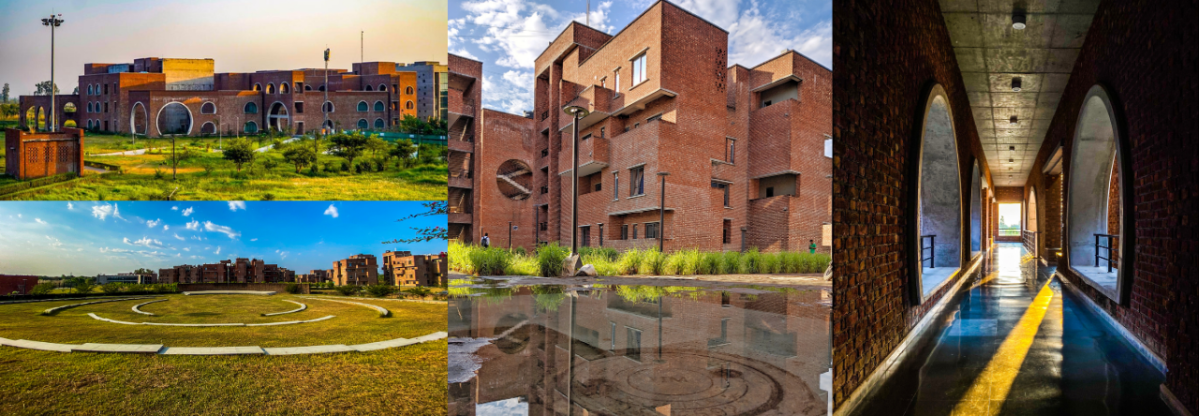
Readers of this article would associate with terms like ‘rigor‘, ‘job opportunities‘, and ‘return on investment‘ with an MBA degree. While all these terms are equally important, there is so much more propagated here in the Red-brick campus of IIM Kashipur that leave an everlasting impact in honing your skills and abilities, all the while accelerating your growth as a manager worthy of the title of an MBA.

Speaking from experience, the culture here at IIM Kashipur is structured in a manner to promote hands-on learning through the functioning of various student bodies, which has helped many students like me to improve our soft skills, learn how to delegate and prioritize pending work, how to respect deadlines and most importantly, how to push the boundaries of what is considered impossible through sheer hard work, resilience, and dedication. 

Yes, at times things can get difficult, but here at IIM Kashipur, we believe that it is our network that defines our net worth. It is this thought process that has enabled me to meet different kinds of people, learn their ways of handling difficulties associated with different problem statements, and ultimately pull through, no matter the novelty of the challenge.  

My greatest learning at IIM Kashipur has been to not get overawed by what all needs to be done in a short period, that too at a breakneck speed. Yes, it involves a mountain of work with hurdles aplenty, but when you surmount the peak, the view is beautiful from atop. 

These invaluable additions to my skillset lead me to believe that my two years worth investment at IIM Kashipur will remain etched in my mind as a bunch of happy memories, replete with learnings, challenges, and victories galore. 

About the Author:
Sahil Sondhi is currently pursuing MBA from IIM Kashipur, with majors in Marketing and Analytics. He is a part of various student bodies like the OYM-The Marketing Club and Team Insite-Admissions Support Body. He is fond of playing the guitar, going for long drives and reading novels in his spare time. You can connect with him on LinkedIn