“Parivartan”: A wave of change, An IIM Kashipur student’s initiative

“Parivartan” is a Student’s Social Responsibility initiative of IIM Kashipur. The objective of this programme is to work on social issues prevalent in and around Kashipur. The motto of the programme is “Envision, Act, Emerge”. The programme intends to make a difference by envisioning a change in the society, acting on it and thus helping the society as a whole to emerge and develop.

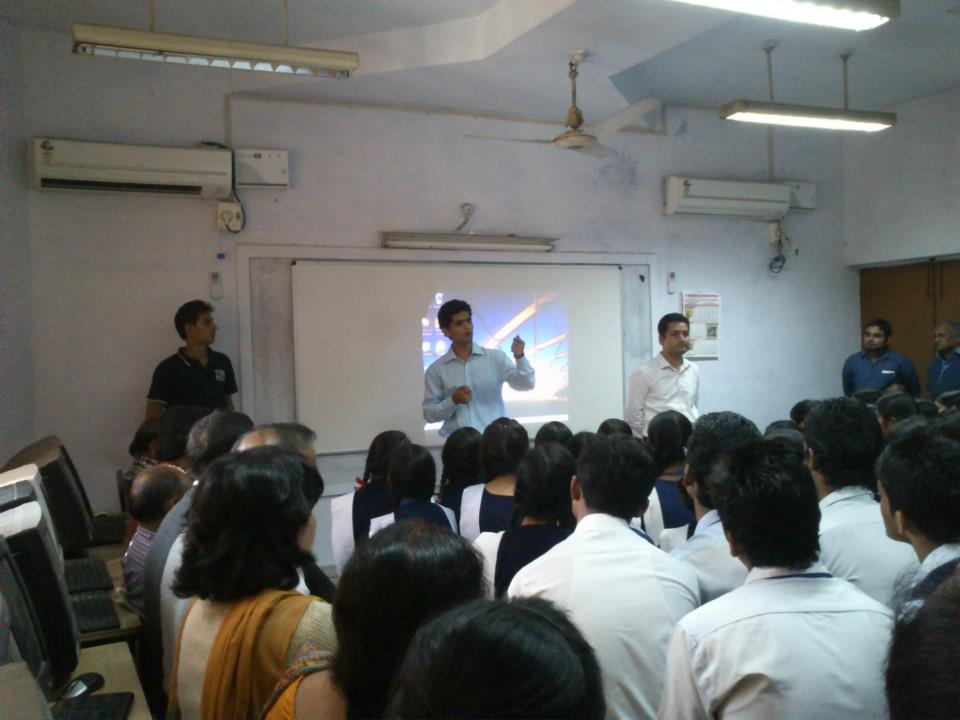
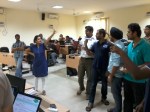
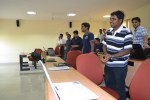
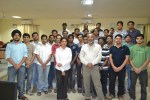
PARIVARTAN team addressing students of Kendriya Vidyalaya, Kashipur

This year under Parivartan, students of IIM Kashipur have initiated a series of Career development and Personality development sessions for school children in the locality of Kashipur. Kendriya Vidyalaya, Kashipur was the first school to have such a session. When approached by the students of IIM Kashipur, the Principal Mr. B.D.Oli mentioned that in today’s competitive world students in 12th and 10th standard are exposed to intense pressure and may get depressed in case of failures. He also added that students of this age group are highly vulnerable to emotions and they should know how to control them. Addressing these issues, a session on ‘Self Management’ was conducted by the students of IIM Kashipur. Two volunteers Rakesh Dhinwa and Ravi Kumar, 1st year students of IIM Kashipur delivered the session on motivation and controlling emotions through inspiring videos and fun oriented student activities. Few faculty members who also attended the session mentioned that such sessions were very useful to the students at this stage of their life. The students found the session very thought provoking and helpful.

Interaction with Anurag Goel (Member, Competition Commission of India)

On the 26th of October 2012, the students of IIM Kashipur had the privilege of interacting with Mr. Anurag Goel (Member, Competition Commission of India). Mr. Goel joined the Indian Administrative Service in 1972 and has been Member, Competition Commission of India (CCI) for more than two years. He has rich experience of corporate governance and competition regulation, including nearly 3 ½ years as Secretary to the Government of India, Ministry of Corporate Affairs and varied earlier assignments in the Ministries of Finance, Home, Defence, Civil Aviation etc. He has also been Member of Boards of SEBI, DMRC, Air India, Indian Airlines, Airports Authority of India and a large number of other entities. He is also a member of the board of governors of the Indian Institute of Corporate Affairs.

At the beginning of the session, Mr. Goel provided a brief overview of the CCI and the Competition Act, 2002. He described the role of CCI in making the markets work for the benefit and welfare of consumers. He gave examples of how the CCI had intervened to break anti-competitive agreements, such as the Cartelisation of Cement industry. He impressed on the students, the need for markets to be fair and free, which would aid the country in achieving faster growth and development. He also touched upon the need for competition policies to make sure that the scarce natural resources are used in the most effective manner possible.

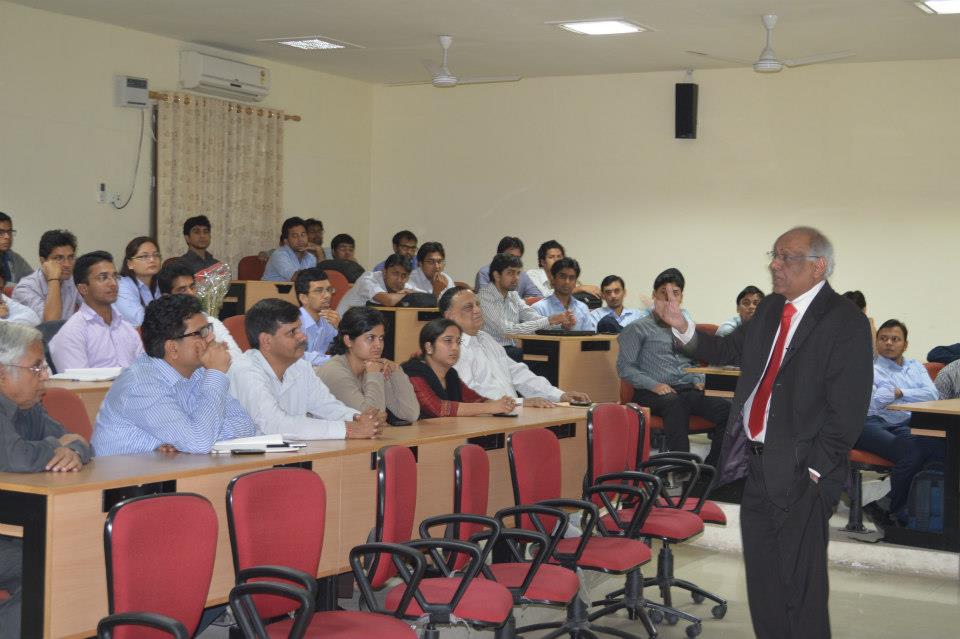
        Mr. Anurag Goel interacting with the students and faculty of IIM Kashipur

Mr. Goel was keen to spend most of the available time in interacting with the students, and hence he limited his session on the CCI, instead preferring to answer the many questions that the students wished to ask him. The students quizzed Mr. Goel on topics ranging from the role of CCI in Mergers and Acquisitions, to the implications of FDI in retail sector. While answering the students, Mr. Goel spoke of how Regulation needs to exist for promoting healthy competition and innovation, rather than stifling it. The students were also privileged to hear Mr. Goel talk about his efforts as the Corporate Affairs Secretary, in the Government intervention which helped save Satyam Computers in the wake of the corporate scandal in 2009. By the end of the session, the students had a clear idea of the important role performed by CCI. They thoroughly enjoyed the session, as it gave them an opportunity to interact with a stalwart of corporate governance in India.

Interaction with Industry expert: Prasana Krishnan, Chief Operating Officer at Neo Sports Broadcast Pvt Ltd.

Mr Prasana Krishnan, COO at Neo Sports Broadcast Pvt Ltd. visited IIM Kashipur and shared his experiences in the Business of Sports.

Mr. Prasana Krishnan has more than a decade of experience in the Broadcast Media industry during which he worked for the Times of India group before moving to his current firm, the Nimbus group, which owns two leading 24×7 sports broadcasting channels in Indian sub-continent – Neo Cricket and Neo Sports. He has also worked as a consultant with Arthur Andersen in the Power & Utilities practice.

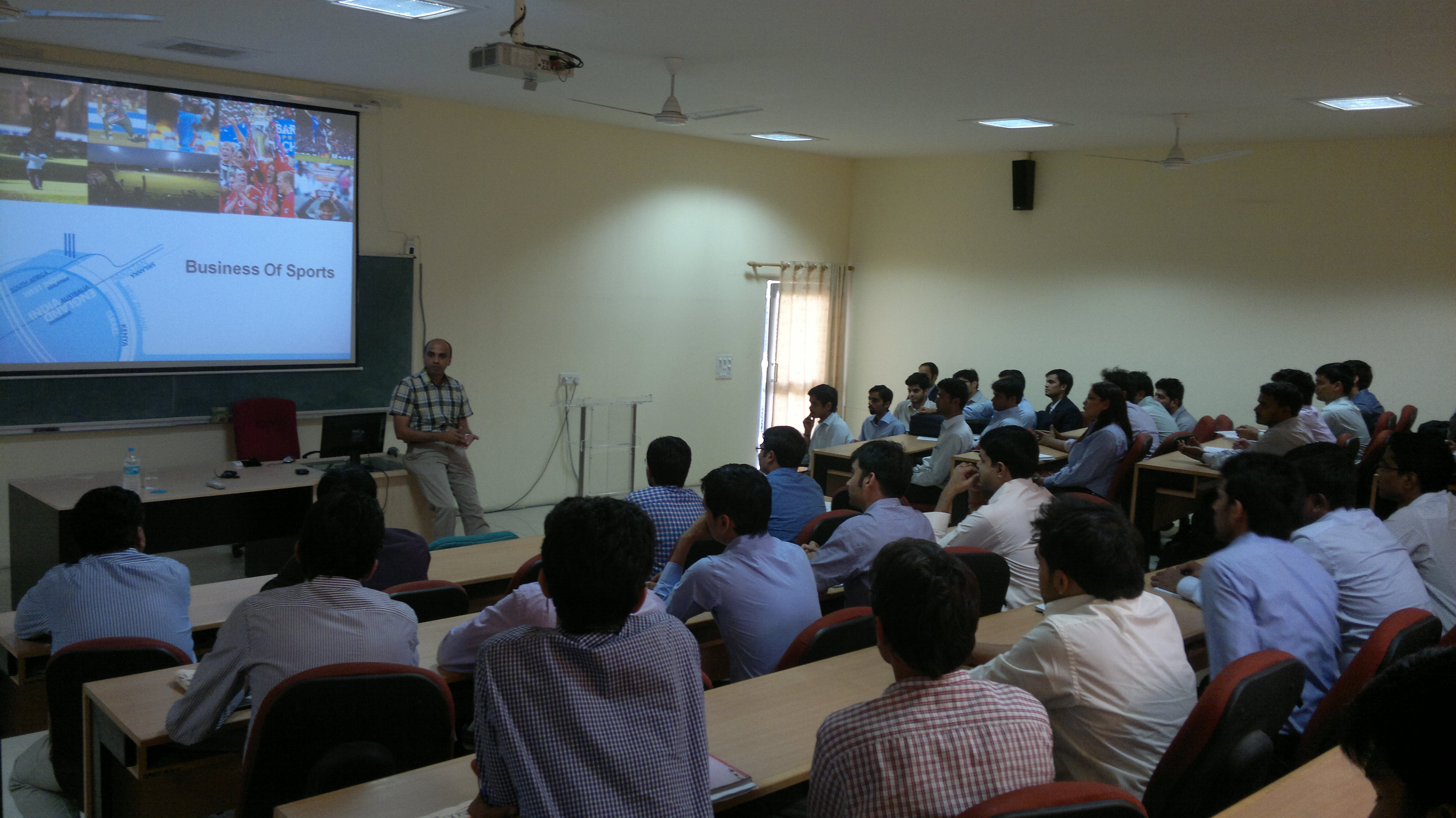
 Mr. Prasana Krishnan Interacting with the students of IIM Kashipur

                        Mr. Prasana Krishnan Interacting with the students of IIM Kashipur

Mr. Prasana Krishnan drew attention to the peculiar nature of the sports business. In stark contrast to most other industries, the stakeholders of the holding companies try to maximise the performance of their teams, rather than trying to maximise their profits. Indeed, in no other Industry than the Football clubs of Europe, does the regulator insist on limiting the loss incurred by teams, as a financial fair-play mechanism. He also spoke at length on the irresistible lure of sports, which even attracts politicians of the country, who often preside the Governing bodies of various sports.

Mr. Krishnan showcased the sheer scale with which the Sports Industry operates- Globally, it is estimated to be worth more than 600 billion US dollars. The sports infrastructure includes Infrastructure construction, Sports goods, licensed products and Events, of which Sports Infrastructure is the most expensive, often requiring generous funding from Governments. Later, Mr. Krishnan gave an overview of the Sports Value chain- which includes Rights Holders, Service Providers and Media channels. Mr. Krishnan described the various facets of Live production, and the technical prowess which makes available to us, a replay of cricketing action from the best angles, merely seconds after the original event occurs. He also enlightened the students about the financial side of the business- the risks involved in buying broadcasting rights. Mr. Prasana Krishnan cited a live example of how the purchase of IPL broadcasting rights turned out to be a stellar success story for Sony, whereas the Champions League T20 turned out to be exactly the opposite for its broadcaster.

The students quizzed Mr. Krishnan on the threat faced by all Media Channels from Live telecasts on platforms such as YouTube. He spoke of the evolving nature of the broadcasting industry and of the possible opportunities brought about by the advent of technology such as YouTube and the Digitization of cable TV in India. The students of IIM Kashipur enjoyed the lecture as they are now still closer to the Industry which rules their hearts.

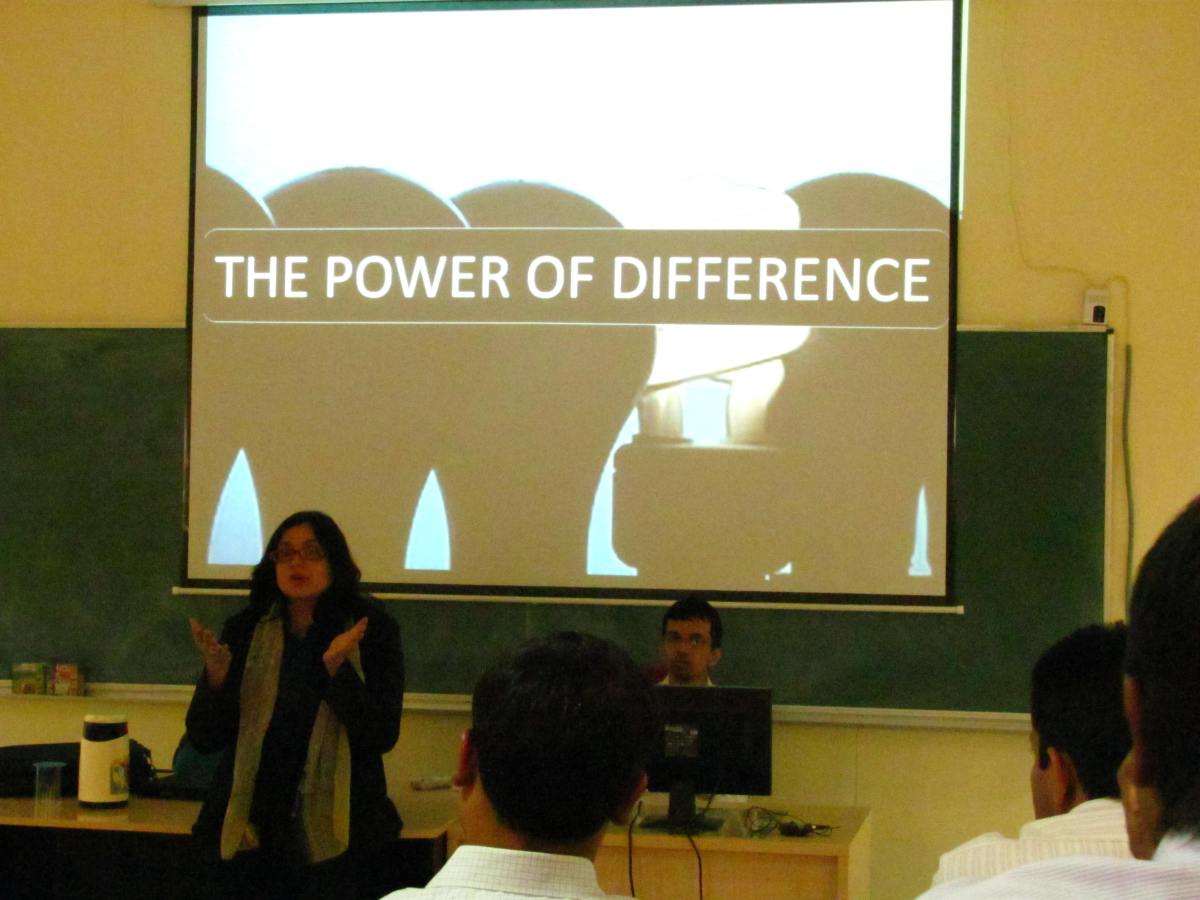
Interaction with Industry expert: Usha Subramanian (Head- Graduate Hiring, MphasiS) on ‘Bridging the Skills Gap’

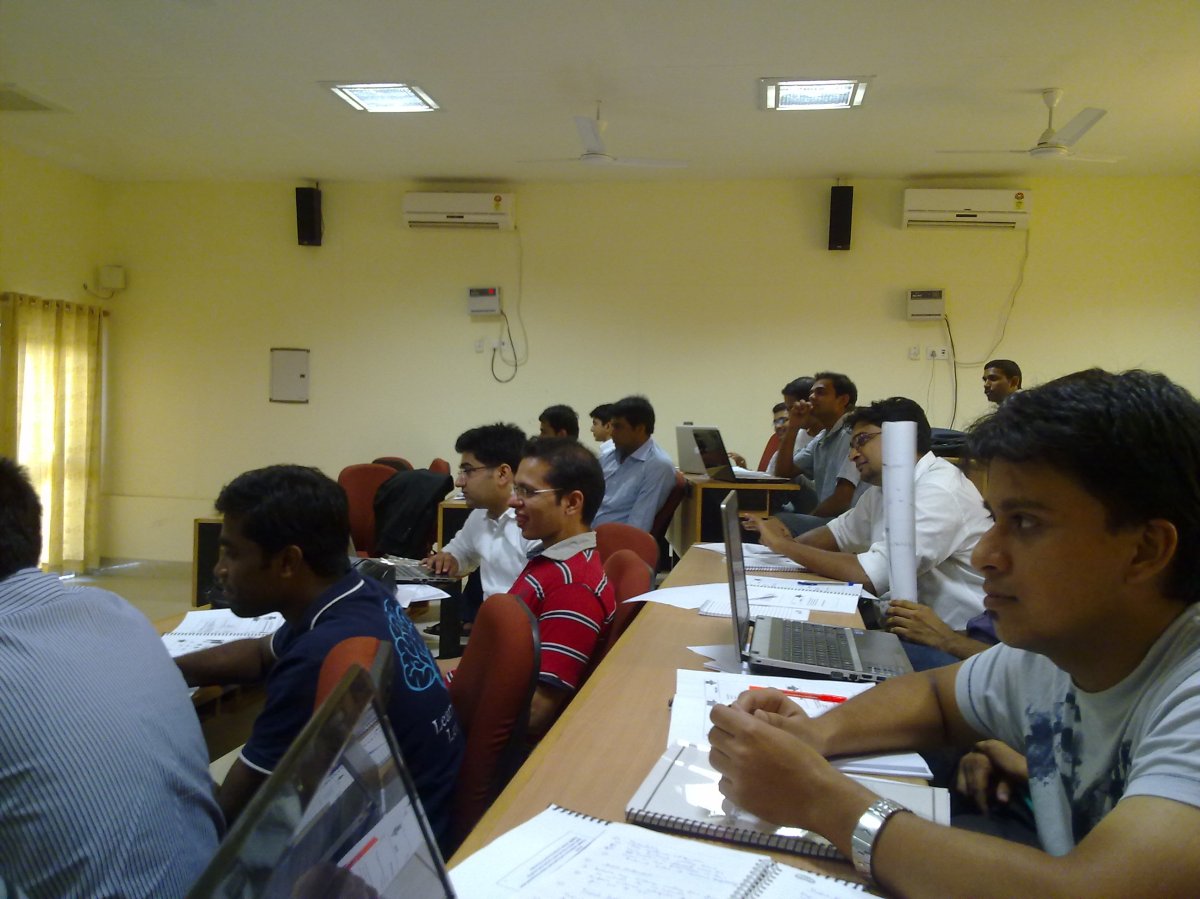
Ms. Usha Subramanian (Head- Graduate Hiring and Technical learning, MphasiS) spent a day with the students of IIM Kashipur. She conducted a guest lecture covering the emerging trends in Talent Acquisition among IT companies.

Ms. Usha dons multiple hats at MphasiS. As the head of technical learning, she leads domain learning for multiple business units including the market units. Her team takes care of campus hiring and subsequent training of the graduates. She is also the head of HR Excellence and looks after HR policies, process governance and managing external and internal audits. Additionally, she is the HR CIO and manages system requirements from different HR functions.

Interacting with the students of IIM Kashipur, she reminisced about the start of her career in 1989 as an administrator in Birla Institute of Technology and Science and her emotional connection to the field of teaching. She spoke of the need to have a risk-taking attitude, and mentioned how she and her husband ventured into unknown territory by launching an internet-based start-up during the tumultuous time of 2001.

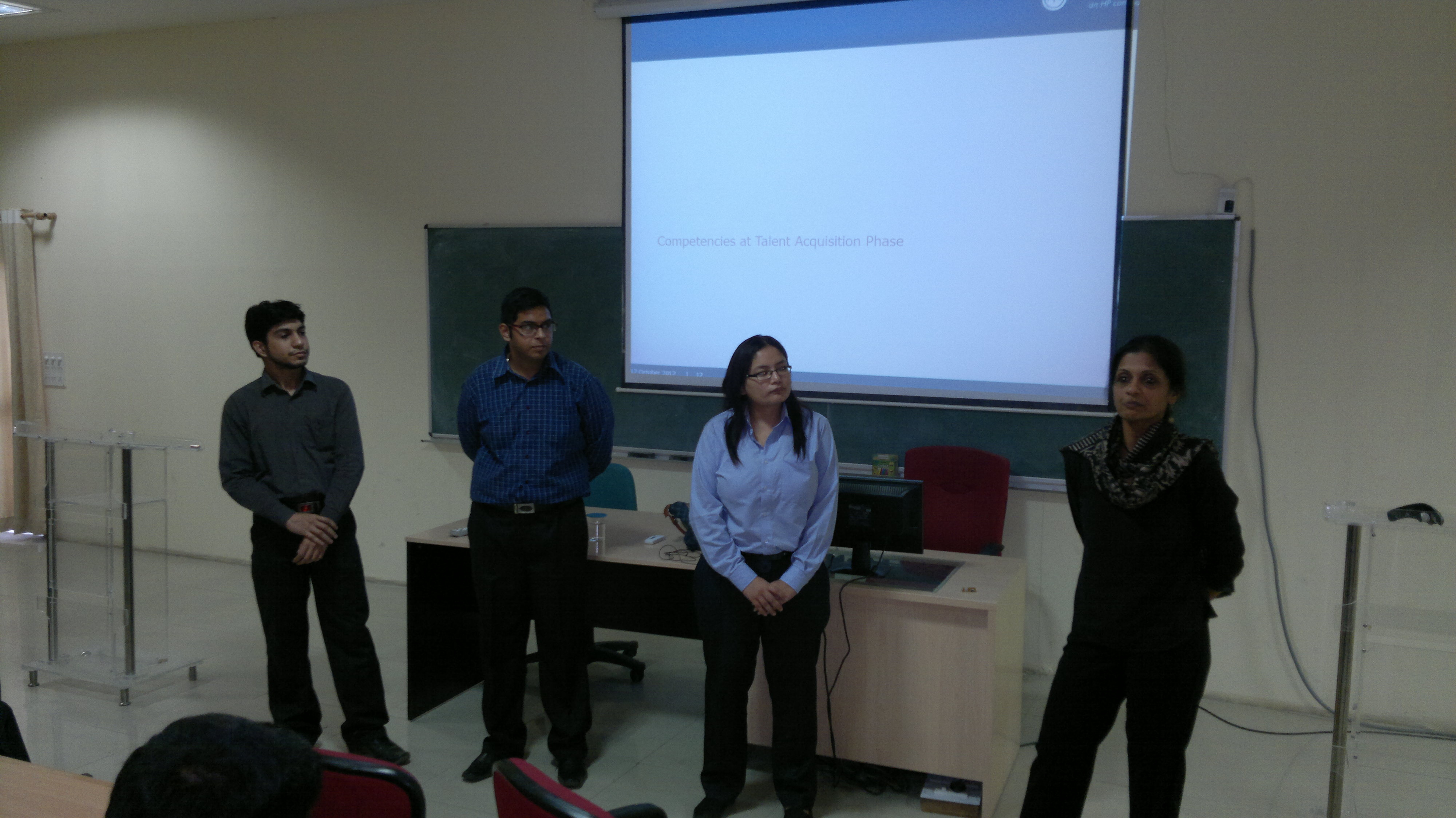
Students attempting the Elevator pitch during the session

                                        Students attempting the Elevator pitch during the session

Having worked in both the academia and the corporate HR field, Ms. Usha compared the two fields and showcased the nature of the gap which exists between the students’ skill set and the expectations from the Industry. Students themselves drew on their prior work experiences in which they found themselves to be lacking in some aspect of technical competency as a result of flaws in the curriculum. Later, Ms. Usha conducted an impromptu session on the ‘Elevator pitch’. She asked 3 students to sell their favourite brands and then sell themselves effectively to a corporate head in 30 seconds. It was seen that the students did quite well in promoting their favourite brands, but came up short when asked to sell their own competencies. The result did not surprise Ms. Usha at all, for she has witnessed the same incident happening each time she conducts a session on the same.

The students at IIM Kashipur quizzed Ms. Usha on the competencies required to make it as successful managers in the IT industry. In reply to this, Ms. Usha stressed upon the need for better communication skills and the ability to lead effectively by inspiring others. She also expressed the need to have a substantially more number of cases based on Indian context, as business scenarios depicted in Western case studies have a lot of cultural differences when compared to the actual business scenarios in India. She also provided the students with insights on MphasiS and its work culture along with the various career opportunities in MphasiS, such as its Future Leaders Programme. The students of IIM Kashipur enjoyed the session as it provided them with a clearer picture of what will be expected of them in the near future, as they step into the role of managers.

A few words by Ms. Usha: –

“It is my pleasure to be amongst young minds raring to make it big in their professional world. I wish each one of you all the very best.”

Guest lecture by Ms Lubna Khan, Associate Vice President & Strategic Planning Director, JWT

Ms Lubna Khan, Associate Vice President & Strategic Planning Director, JWT interacted with PGP students of IIM Kashipur and shared her experiences in the field of advertising.

J Walter Thompson (JWT) is the fourth largest advertising agency in the world with a strong presence in India, having started its operations in 1929. Since then it has been an acknowledged leader of the Indian advertising scene. It has continuously helped break new ground in advertising practices with a string of creative Ad campaigns to its credit.

Ms Lubna Khan has more than fourteen years of industry experience, in which she has served as a cognitive behavioural therapist, a researcher, and a communications consultant, before assuming her current role of being a strategist. She has worked across a diverse set of categories, on some of the most recognized brands globally – Horlicks, Nestle Kit-Kat, Samsung, Microsoft, Nokia, Airtel, and LG. She has two postgraduate degrees in psychology, one from Delhi University and the other from the University of Leeds, UK.

The interaction started with a screening of some ground-breaking ads which helped in creating a cult following for the products. With insights from the ads, Ms Lubna Khan dwelled on the pitfalls of ‘playing it safe’ attitude and how it causes failure of many a campaign in capturing the attention of the consumers. She explained the need for creativity to model perfect business solutions for the clients. Later on, Ms Lubna talked about her educational background and her role as a strategic planner in JWT. The students were also informed of the non-creative side of the Advertising agencies.

The lecture left a lasting impact on the students as they developed a better understanding of the challenges involved in communicating brand image.

A few words by Ms Lubna Khan: –

“It’s nice to interact with a young bunch of enthusiastic students out here in IIM Kashipur. I will look forward to have such interactions in the future.”

My Internship Experience at Reserve Bank of India

IIM Kashipur, PGP ’11 Student, Sudarsan Puvvada, shares his  summer internship experience at RBI

Life was full of assignments, projects, presentations, surprise quizzes and I was eagerly waiting for some good news to have a short retreat from grinding life in IIM Kashipur. On one fine day, moments to rejoice had come with an internship offer from my dream company, Reserve Bank of India. Congratulations all around with friends started bashing, a common way of congratulating and parents wishing me all the best. Exhilaration subsided to half the levels as I would need to report in RBI, Kanpur rather than in Mumbai office. Being a south Indian, my Hindi speaking skills were very bad (better to say worst) and I had to spend 2 months in core part of Hindi speaking India. However, joy of getting an offer from RBI has allayed all the fears and scepticism.

After taking a week long refreshing break at home, I started on a 26 hour journey to Kanpur. I had to spend first 2 days at my friend’s home as there was a bit of delay in allocation of quarters. First day of internship was an induction program where I was introduced to Regional Director RBI, my mentor and some other employees with whom I had to work. I was very excited after my first meeting with my mentor as he is very inspirational, work oriented and I always looked forward for an interaction with him. Other interns from IIM Lucknow, IIT Kanpur, IT-BHU and other colleges have started joining and we slowly started moving together. Interns were given 2-bed room flats (too big for a person to stay) in RBI officers’ quarters which are located in a plush area in Kanpur. Adding to the comfortable stay, quarters were full of activity with children enjoying summer vacation in the calm and undisturbed surroundings often engaging us in cricket and badminton.

I was part of a team working on a live project to come up with suggestions to bring efficiency in government collections and payments. I had to conduct interviews to various stakeholders involved in the process along with an intern from IIM Lucknow. I enjoyed working with him and we shared views on various issues ranging from Currency system in India to Indian GDP. I got great amount of exposure in RBI as I participated in central level discussions on monetary reviews, gold imports, currency fluctuations which included deputy governors of RBI and other meetings with heads of State Government departments and national banks to discuss progress on financial inclusion and issues with electronic funds. I got a clear idea of how regulator thinks and should think as decisions taken at regulatory level touch all lives and enjoyed this experience in RBI to the fullest.

Three things that I liked most in RBI were library, people and food. RBI’s library is a book lover’s paradise with books ranging from Indian culture to Indian currency in abundance. Employees (with average age of more than 50) were extremely proficient in banking knowledge and always guided me in my project. Hindi was never a problem in office as everyone can communicate in English and I have learnt a bit of Hindi (seriously not an exaggeration). Food in RBI was simply superb with around 12 different types of curries serving all palettes at the cheapest possible cost and lunch time was most awaited by one and all in RBI. Apart from these, never ending chats among interns at quarters, daily visit to rave-3 mall, a movie in a week, outings to Varanasi, Lucknow, Agra and Mathura made my sojourn in Kanpur the most memorable.

IIM Kashipur successfully conducts Six Sigma course

IIM Kashipur successfully conducts Six Sigma course

When it comes to Quality education, IIM Kashipur put its best practices to provide quality knowledge through a quality source. This was again proved by the 3 day Six Sigma Certification workshop organized at IIM Kashipur for the PGP ‘11 batch in partnership with Think Excellence Pvt. Ltd., specialized in lean six sigma training program. IIM Kashipur became one of the few b-schools to provide Green Belt Six Sigma certification to its students.

The idea of the workshop cropped up when the student showed their interest in“Quality Management”. Under the leadership of Dr.Gautam Sinha, Director, IIM Kashipur, a number of actions have been taken for the realization of the vision. One such action is the collaboration with Think Excellence in order to give the best education to the student. Under this association, Six Sigma Green Belt workshop was held from 25th to 27th September 2012. “Quality education is our for-most priority and student should learn best in class methodologies and techniques” said K.N. Badhani, In-charge of Academics.

Three day workshop was taken up by the Master Black Belt in Six Sigma, Aparna Thandavan who is also the director of Think Excellence. Aparna has 13 years of work experience in Industry and has done projects with various organizations such as Phillips, Bharti Retail etc. She has a vast experience in conducting training for corporate and education institutes.

The workshop kicked off with the small game on process improvement. She tried to emphasize that process improvement is not a rocket science and quality can be improved if the end cause is identified before it affects the quality. The very structure of course was designed to give students the insights of what is meant by Six Sigma, how the quality can be managed, how to undertake a project, when to take up, various statistical methods etc. Workshop also explained the six sigma methodology which provides the technique and tools to improve the capabilities and reduce the defects in any process.

“It was a great experience, the course learning’s can be applied in the assignments taken up while doing live project with the companies” said Kapish Saini, PGP second year student.

“Just Tools and techniques can’t give you the improvement until it is used at the right place, and this workshop gave the structured approach on when to use and where to use these techniques in a project” said Kapil Vaish student of operations. The methodology student learnt is known as DMAIC- Define->Measure->Analyze->Improve->Control which is the structural methodology for six sigma projects undertaken at any organization. Student also accomplished three real life case studies on process improvement.

PGP ‘11 student, Cobi Sarangal told that “This program will also help us once we enter the industry as it provides the methodology wherein we can streamline a running process in a company and generate value to the company, which is what makes Six Sigma even more useful”.

Dinesh a student of operations also pointed out that “This program not only provides the structure, but also provides us tools and techniques which can be used in isolation under any standalone process”.

At the end of the workshop student underwent through the evaluation process to secure their Green Belt Certification. On concluding note Aparna told “students showed great enthusiasm towards learning and their knowledge is at par with industry standards”.  IIM Kashipur now boasts of 75 percent of the batch having Six Sigma green belt certification.

Excel Modeling for extended Johnson Rule of sequencing

PGP ’11 student, Kapil Vaish,  An Operations enthusiast shares his insight on Excel Modeling

Excel Modeling for extended Johnson Rule of sequencing

Johnson Rule as of 1954 is used for optimal solution for sequencing n jobs on two machines. Extended Johnson rule for more than two machines club the problem and make it two machine problem to again carry out same algorithm.

Johnson rule algorithm has a specified rule of allocation of job on machine. Least processing time job on first machine will go first in sequence, Least processing time job on second machine will go last in sequence and hence on. It looks easy for small no of job and only two machines but becomes time consuming and complex n jobs and n machine.

Here I have attempt to develop a Mix integer linear programming model for Johnson rule and extended Johnson rule on more than two machines.

2 Machine “n” job sequencing:

Basic assumptions are:

1.)   A job must follow the sequence over machine i.e. before moving to second machine it has to go through 1st machine

2.)   Job will have same sequence on 1st as well as on 2nd machine

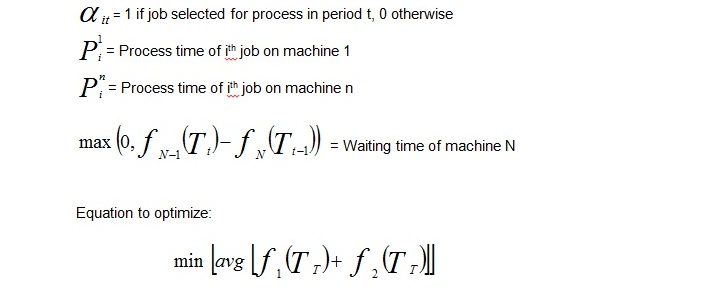
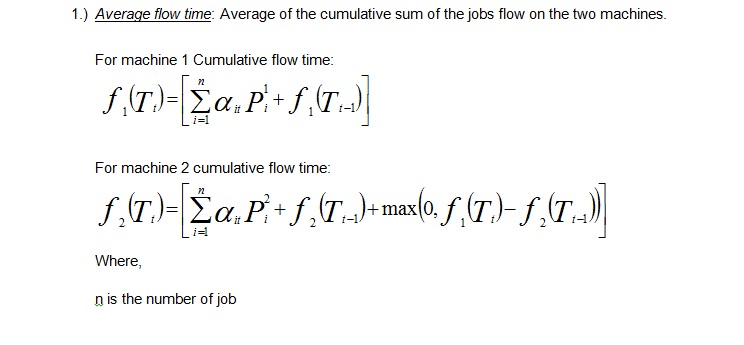
Optimizing Equations:

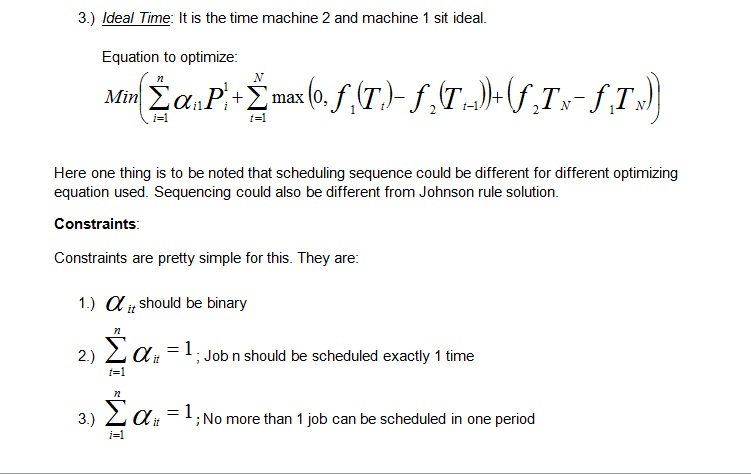
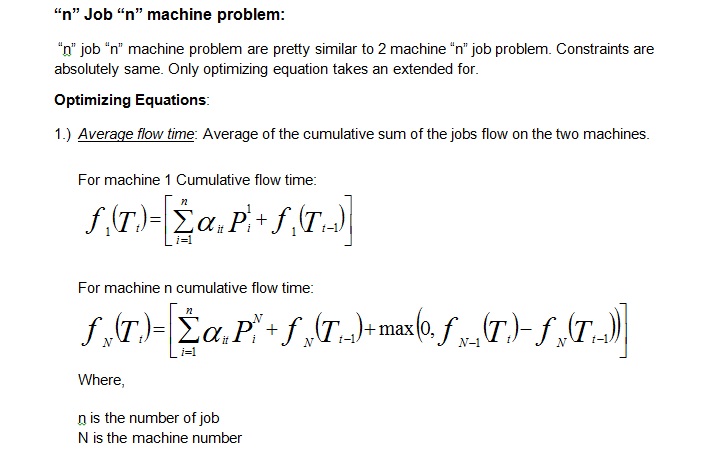
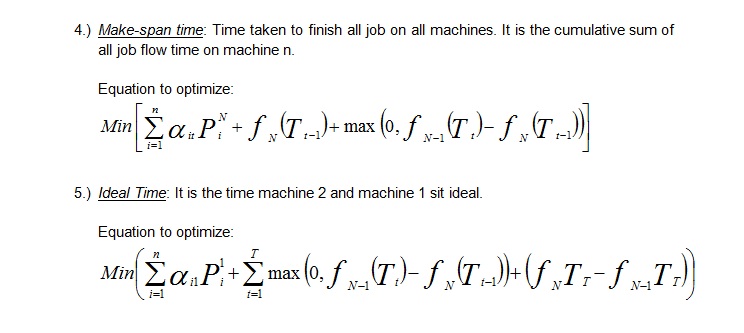
In sequencing problem we can get the optimal solution by minimizing either of the below three attribute. Deciding which one to minimize is solely depends on the management i.e. on what they want to minimize.


Here one thing is to be noted that scheduling sequence could be different for different optimizing equation used. Sequencing could also be different from Johnson rule solution.

An excel example is attached with this article. I have taken a hypothetical example to illustrate how to use MILP for sequencing n job. Sheet 1 have an example of “n” Job on 2 machine and sheet 2 have an example of “n” job “n” machine sequencing.

Hope you have enjoyed the article and gained out of it. Please feel free for any comment and clarification.

You can download the Excel here MILP model for sequencing


MILP Model for Clark Algorithm: Vehicle routing Algorithm

PGP ’11 student, Kapil Vaish,  An Operations enthusiast shares his insight on MILP Model for Clark Algorithm

MILP Model for Clark Algorithm: Vehicle routing Algorithm

In a vehicle routing algorithm you would have come across Clark’s algorithm at some point of time. It is a very effective tool to decide the vehicle routing when fleet size is infinite for us but carrier carrying the load is fixed. Algorithm uses the saving method to decide the optimal no of carriers and best possible combination of nodes to get the minimum cost (Distance traveled).

I have attempt a mix integer linear programming model on vehicle routing algorithm. Let’s see how I formulated the model to get the optimal solution. I took help of the research paper by Francois Cote and Yves Potvin on “A tabu search heuristic for the vehicle routing problem with private fleet and common carrier” published in May 2007.

Problem Formulation:

The problem can be formulated as a directed graph having n vertex (nodes) where 0 is the depot from where the carrier starts and end, and others are customers to be visited. Distance (Cost) associated between the pair of vertices are given by Cij where i,j are vertex and i≠j. Every vertex has a defined demand Di. Also every carrier has a limited capacity of Q units to carry, fleet size is infinite. The goal of the routing problem is to design at most m routes for the fleet such that:

  • Carrier serves single route that starts and end at the depot,
  • Every customer is visited exactly once,
  • Total demand on each route should not exceed  the capacity Q of carrier,

Such that total distance (cost) is minimized

Subject To:

A formulated model is given in the link below. Model is developed on a small problem with 6 nodes only. But it has a great potential to be applied on day to day companies vehicle routing decision.

Hope excel attached would be very helpful for you. Sheet clark algo is the formulated model and sheet Practice is a practice exercise for you.

Download Excel : Clark

Samanvaya 2012

Inaugurating the second annual HR summit of IIM Kashipur, Dr.Gautam Sinha, Director- IIM Kashipur emphasized on the fact that HR nowadays is being at forefront at the Corporate Strategy. This year the summit was organized in national capital, New Delhi.

SAMANVAYA, according to Mr. Sinha is the answer to the question on how the manage the most volatile capital in an organization: the human capital.

SAMANVAYA is an annual HR Summit organized by IIM Kashipur to impress upon the fact that HR recently has acquired a strategic position in navigating an organization through testing times and that managing the human capital is equally important for an organization to succeed.

The summit witnessed the confluence of the Industry heads and eminent business leaders from prominent companies spread across diversified sectors like steel, power and software. All the delegates agreed upon the common point that hierarchy has become flatter and that people have become the barometer for success.

Reflecting on the HR in a network organization Mr. Venkatnarayanan, President HR, IT & Education, Rane Holdings Limited said that talent management, talent retention, high performance culture and effective Training and Development are the four major challenges of HR.

Mr. Ranjan Bandhopadhyay, Global HR Head ,BPO Services TCS was of the view that managing the huge amount of data through better security management is the need of the hour and TCS is doing its every bit to make sure client data is secure.

Mr. Piyush Dutt, Chief HR officer, TPG Sales said that HR nowadays contributes substantially to the top line and bottom line of the company which is gradually becoming a barometer for the HR performance of an organization.

Mr. Manmohan Bhutani, Vice President, People & Operations, Fiserv Global Services said today’s business world is all about people and the war is for talent. Hence business strategy and people strategy has to be merged. He credited the IT/ITES companies in bringing this competitive nature to Indian corporate culture.

IIM Kashipur is the new entrant in the league of IIM’s and has commenced operations from July 2011. The institute offers its flagship two years Post Graduate Program in management (PGPM). The institute is set up with the objective of providing quality management education while sensitizing students towards the need of the society.